Anemia linked to higher death risk in older adults
In a 10-year observational study, mortality was higher below hemoglobin thresholds of 13.3 grams per deciliter in women and 13.9 in men.
10 years
Limit: Untracked iron supplementation, blood transfusions, and health changes could influence the mortality association
Edited by Boris Djordjevic · AgingResearch.News
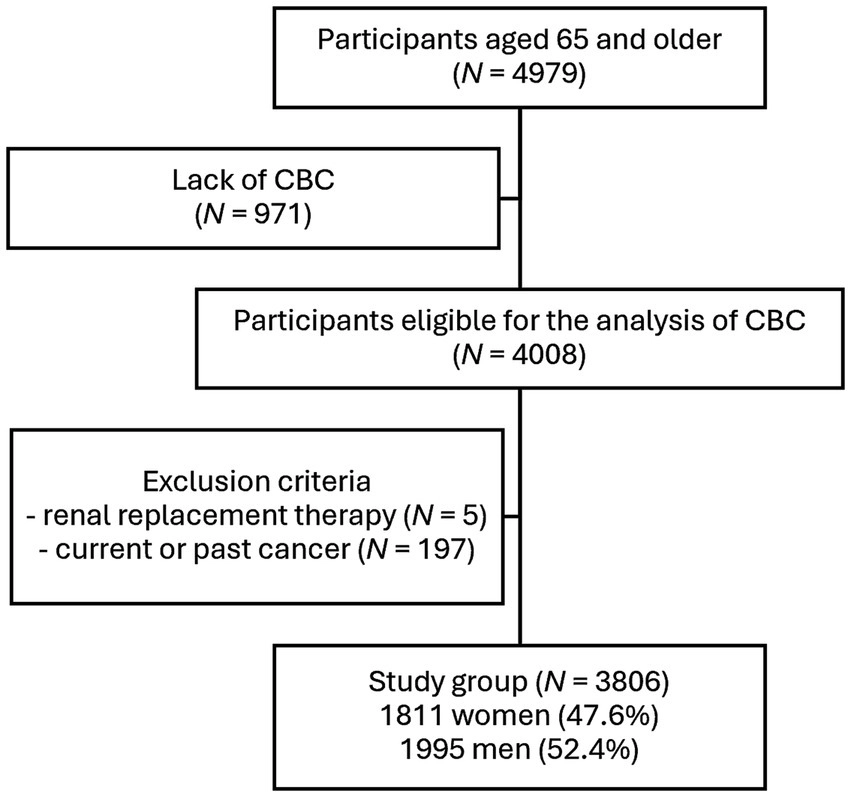
The PolSenior observational study included 3,806 community-dwelling adults aged 65 to 103: 1,811 women and 1,995 men. Researchers assessed their health and functional abilities at one point and tracked deaths for 10 years. During follow-up, 56.9% of participants died.
Low hemoglobin, the oxygen-carrying protein in red blood cells, was associated with higher mortality even after accounting for major chronic diseases and inflammation. The authors reported higher mortality below 13.3 grams per deciliter in women and 13.9 grams per deciliter in men. Participants below these thresholds also had more dementia, depression, malnutrition, falls and severe difficulty with everyday activities.
Why it matters
Preserving independence is a central goal of healthy aging. The authors called for community-based anemia screening to help delay disability in older adults.
Caveats
This observational study cannot establish that low hemoglobin caused deaths or loss of independence, or that screening would prevent either. The abstract also gives conflicting descriptions of whether mortality rises above or below its proposed thresholds.
From the paper
- Participants
The analysis of overall survival included 3,806 participants – 1811 women (47.6%) and 1995 men (52.4%) with complete blood count (CBC), not on renal replacement therapy (RRT), without current or past cancer, and with known survival time ( Figure 1 ).
- Limitation
First, the baseline laboratory and clinical data were collected during the initial phase of the PolSenior project (2007–2012), meaning that changes in clinical practice, subsequent therapeutic interventions (such as iron supplementation or blood transfusions) …
Quoted word for word from the full text on frontiersin.org.
The paper
Poznan University of Medical Sciences
Frontiers in Public Health, Oct 28, 2026, Open access, CC BY
