Genetic score improved atrial fibrillation prediction in diabetes
In two prospective cohorts of 20,009 Chinese patients with type 2 diabetes, adding genetic information improved predictions beyond a validated clinical risk score.
Our read
Biomarkers- Studied:
- Cohort study of 20,009 people
- In the record:
- The 9th paper on atrial fibrillation polygenic risk score with results in people; 10 on record in all.
Editor of record: Boris Djordjevic · AgingResearch.News
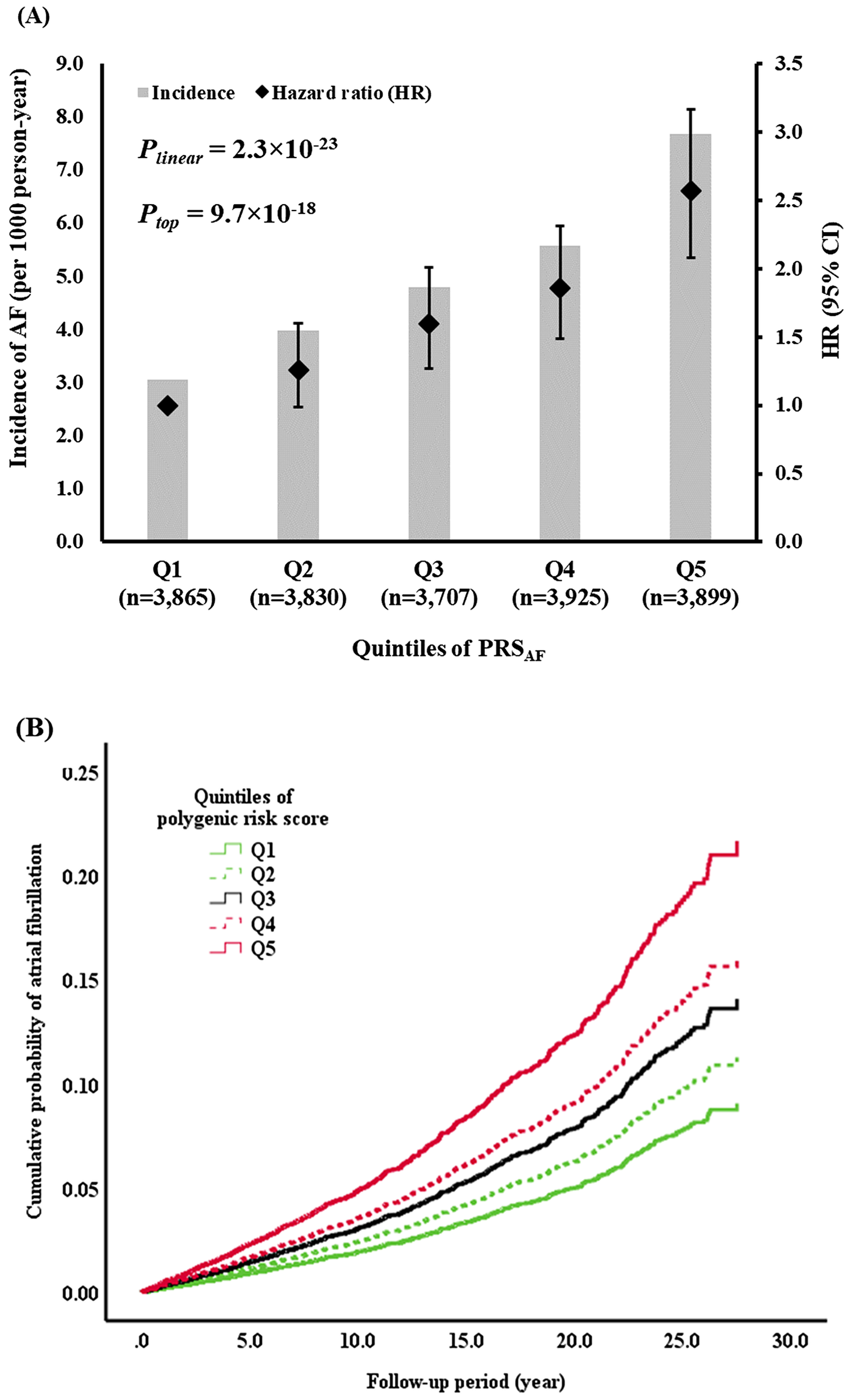
Among 20,009 Chinese patients with type 2 diabetes in two prospective cohorts, a genetic risk score improved prediction of atrial fibrillation, an irregular heartbeat. The score combined 97 DNA variants previously linked to the condition.
Atrial fibrillation developed in 986 patients (5.1%) across the cohorts. Patients in the highest fifth of genetic scores were over 2.5 times as likely to develop the condition as those in the lowest fifth. Higher genetic scores remained associated with atrial fibrillation after accounting for other patient characteristics. Adding the genetic score to a validated clinical risk score better distinguished patients who developed atrial fibrillation from those who did not and improved classification into risk groups.
Why it matters
For people aging with type 2 diabetes, the work addresses how to identify those at higher risk of a heart rhythm disorder.
Caveats
The analysis assessed prediction, not whether using the score to guide care would improve health outcomes. The cohorts included Chinese patients with type 2 diabetes, so the findings do not necessarily extend to people without diabetes or other populations.


Comments
Be the first to comment.