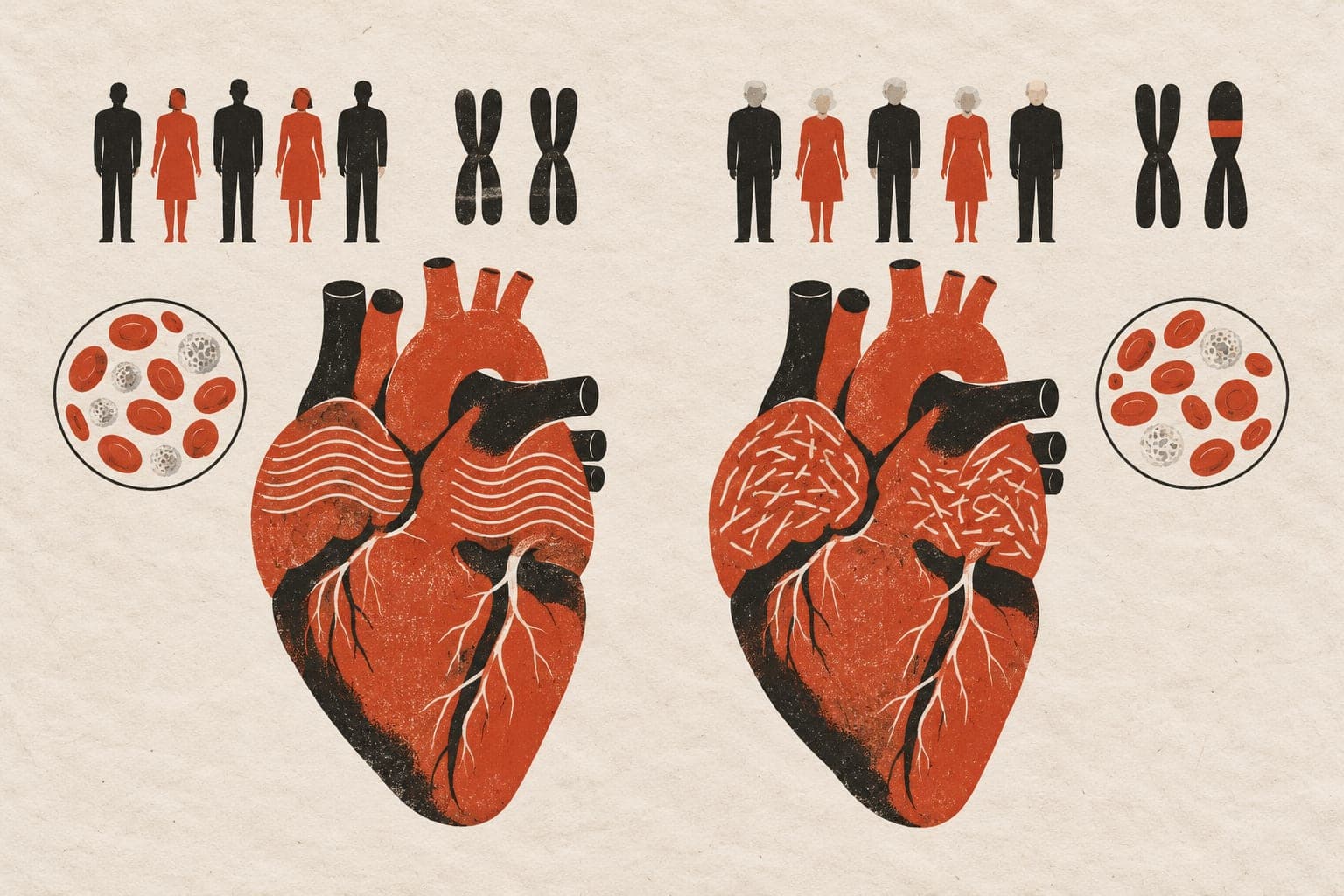
Genetic links to irregular heartbeat vary by age and sex
An observational study followed 386,154 adults aged 40 to 69 for a median 15.6 years, finding different age patterns in women and men.
Limit: The study did not measure whether score-guided prevention reduces atrial fibrillation
Edited by Boris Djordjevic · AgingResearch.News
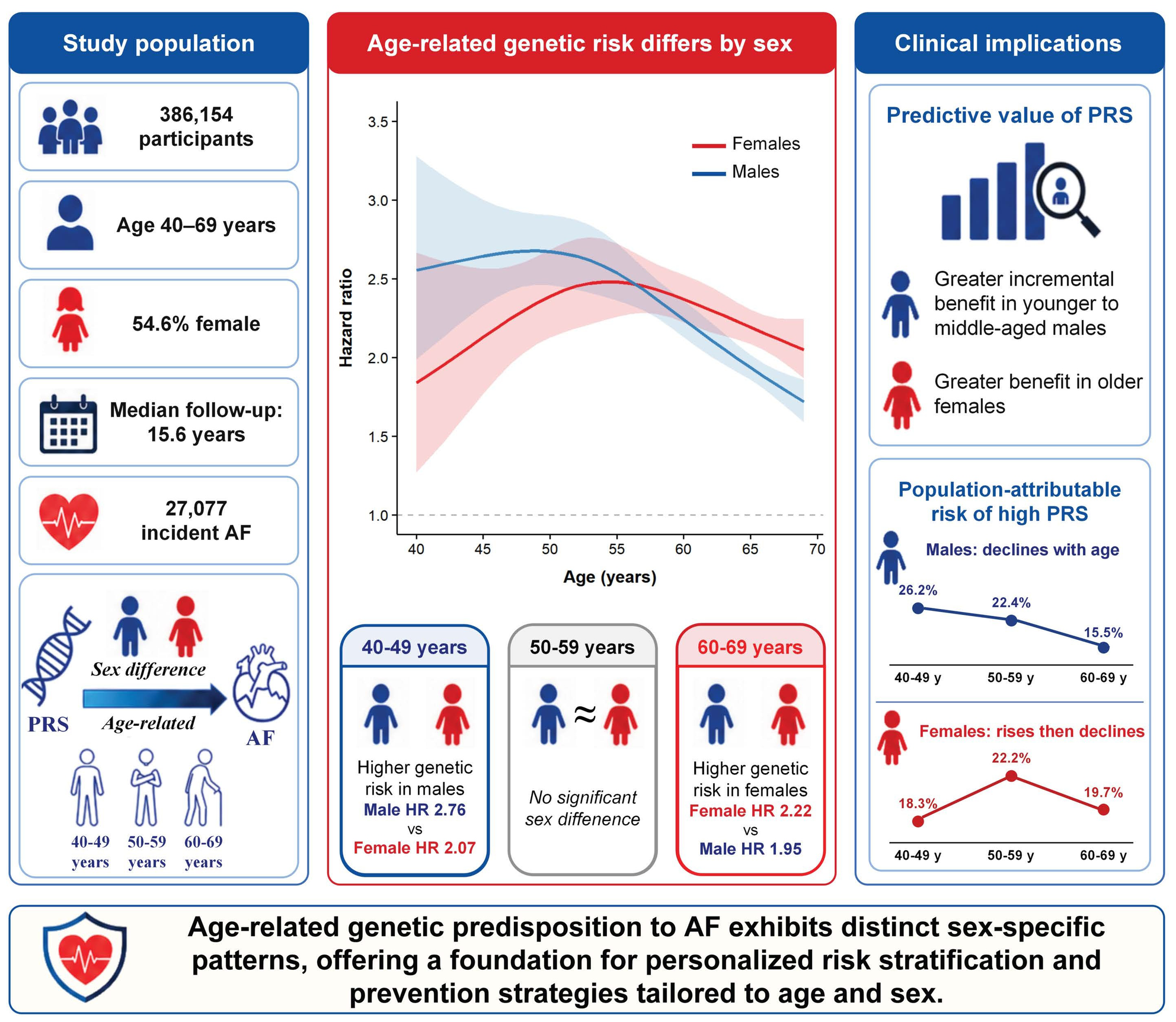
The prospective observational study followed 386,154 UK Biobank participants aged 40 to 69 at enrollment. Researchers examined new cases of atrial fibrillation, an irregular heartbeat, over a median 15.6 years. They assessed a polygenic risk score, which combines information from many genetic variants, and defined high scores as the top fifth.
High scores were associated with developing atrial fibrillation, but the association’s pattern across age differed between women and men. At ages 60 to 69, the association was stronger in women: hazard ratios, measures of relative risk, were 2.22 in women versus 1.95 in men. At ages 40 to 49, the association was numerically stronger in men, but that sex difference was not statistically clear.
Why it matters
For atrial fibrillation prevention, the work offers a foundation for testing risk assessment and prevention strategies tailored to age and sex.
Caveats
This observational study cannot establish cause and effect or show that using the score would improve prevention. Participants were UK Biobank adults aged 40 to 69 at enrollment, limiting generalization beyond that population.
The paper
First Affiliated Hospital of Anhui Medical University
Journal of the American Heart Association, Oct 23, 2026, Open access