Dietary restriction enhances melanoma immunotherapy in mice
Experiments in mouse melanoma models found that dietary restriction suppressed tumor growth through effects that depended on the immune system.
Limit: The dietary restriction regimen and mouse sample sizes were not specified
Edited by Boris Djordjevic · AgingResearch.News
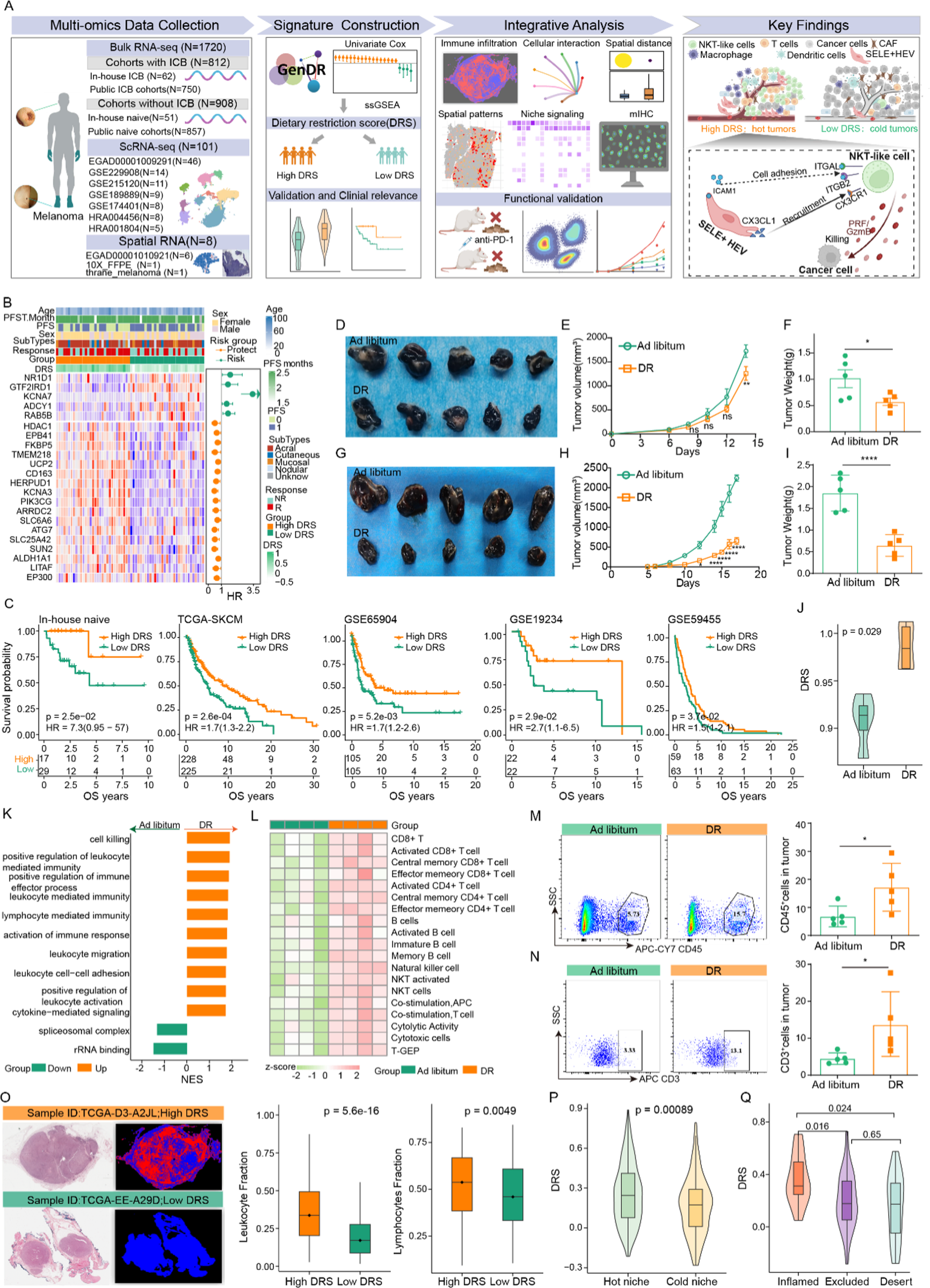
In mouse melanoma models, researchers tested how dietary restriction affected tumor growth and the effectiveness of immunotherapy, a treatment that uses the immune system against cancer. Dietary restriction suppressed tumor growth through effects that depended on the immune system and enhanced the treatment’s effectiveness.
The team also developed a score from gene activity patterns associated with dietary restriction. Across human melanoma cohorts, higher scores were associated with a better prognosis and better responses to immunotherapy. Analyses of individual cells and their locations within tumors identified cancer-killing immune cells and specialized blood vessel cells enriched in high-scoring tumors. These populations were found near one another in high-scoring tumors, a pattern not observed in low-scoring tumors. Analysis of possible communication between cells suggested that the blood vessel cells may help recruit and activate the immune cells.
Why it matters
The findings support further investigation of dietary restriction as a possible addition to melanoma immunotherapy.
Caveats
The human findings were associations with a gene activity score, not evidence that dietary restriction improved outcomes in people. The dietary intervention was tested in mice; the abstract did not specify the regimen or sample sizes.
The paper
Central South University
Genome Medicine, Oct 23, 2026, Open access, CC BY-NC-ND