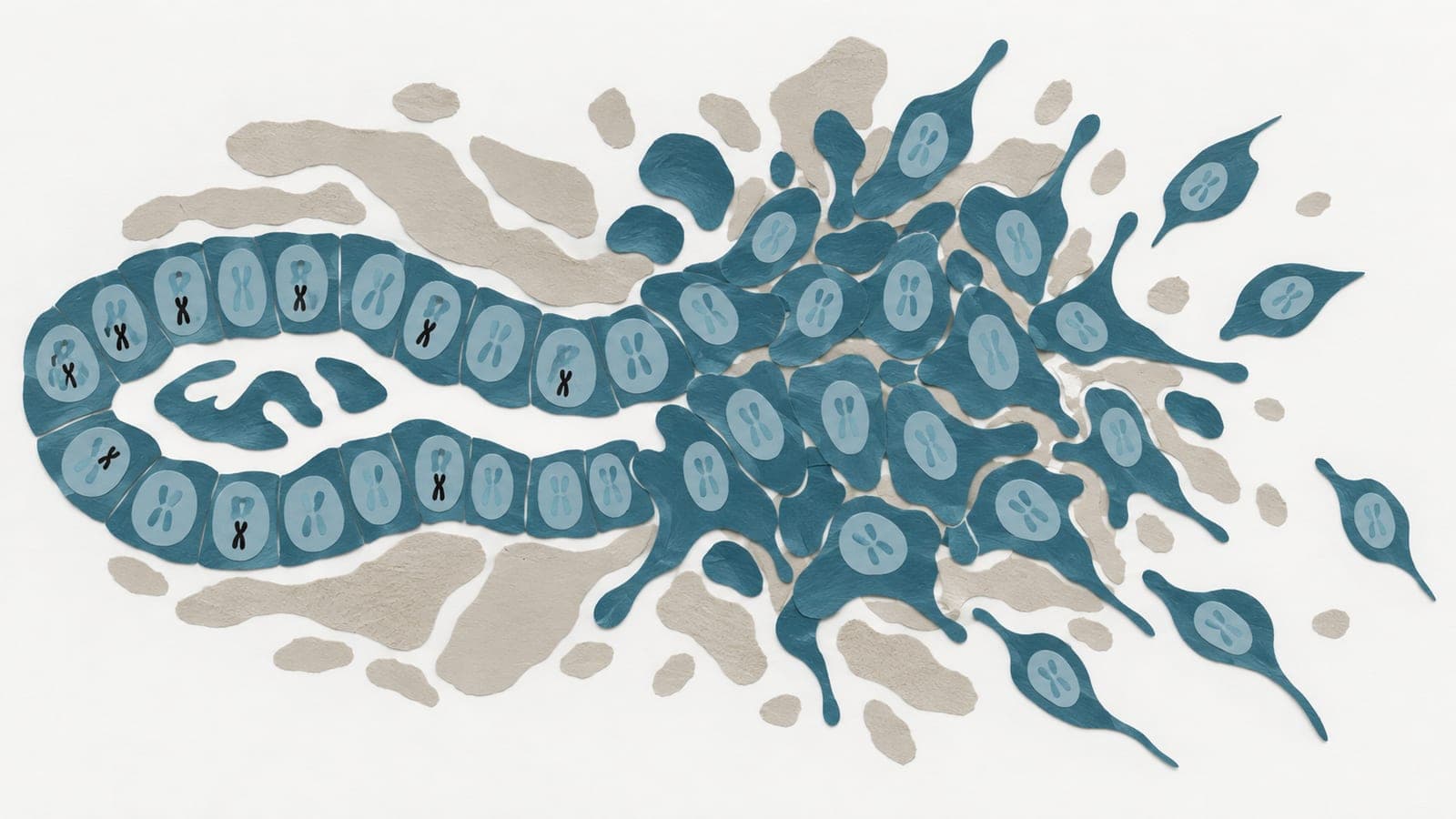
Common mutations less favored as esophageal cancer develops
An evolutionary analysis of 2,171 human samples linked common mutations to expansion of normal cells, but found little advantage during progression to cancer.
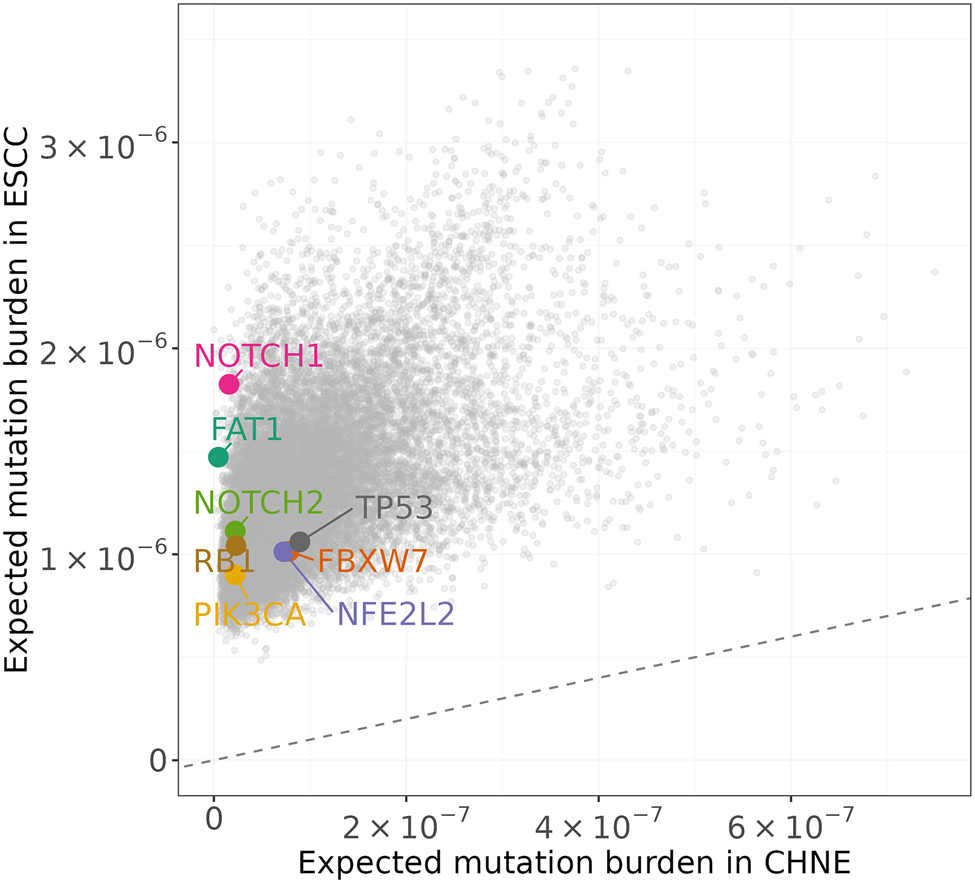
2,171 samples, genetic association study
Limit: Mutation-based selection estimates substituted for direct measurements of cell division and survival
An observational analysis of 2,171 human esophageal samples used an evolutionary model to compare mutations in normal tissue and esophageal squamous-cell carcinoma, a cancer of the esophagus’s lining. Researchers distinguished how often mutations arose from selection—the advantage associated with greater cell division or survival.
The model inferred strong selection for mutations in NOTCH1, a gene involved in communication between cells, as related cells expanded in tissue that looked normal under a microscope. It inferred little to no positive selection for these mutations during progression from established normal cell groups to cancer. Earlier NOTCH1 mutations were also linked to weaker selection for later mutations in two genes that normally help restrain tumors. The researchers concluded that early mutations may sometimes limit progression by reducing selection for later cancer-related changes.
Why it matters
For cancer detection in aging tissues, the work helps frame a question: which mutations are informative at each stage of disease?
Caveats
These were model-based estimates from observational data, not experimental tests of whether mutations cause or prevent cancer.