Immune cell gene activity linked to DNA-based aging measures
The analysis identified 22 links between immune cell gene activity and aging measures, with strong evidence of a shared genetic signal for 14.
Our read
Mechanisms- Studied:
- Mendelian randomization in OneK1K cohort participants (Independent replication)
- What changed:
- Immune cell gene activity had 22 links to DNA-based aging measures
- The catch:
- Outcomes were DNA-based aging measures, not disease or lifespan outcomes
- Why it’s aging research:
- It measures an outcome that worsens with age.
Editor of record: Boris Djordjevic · AgingResearch.News
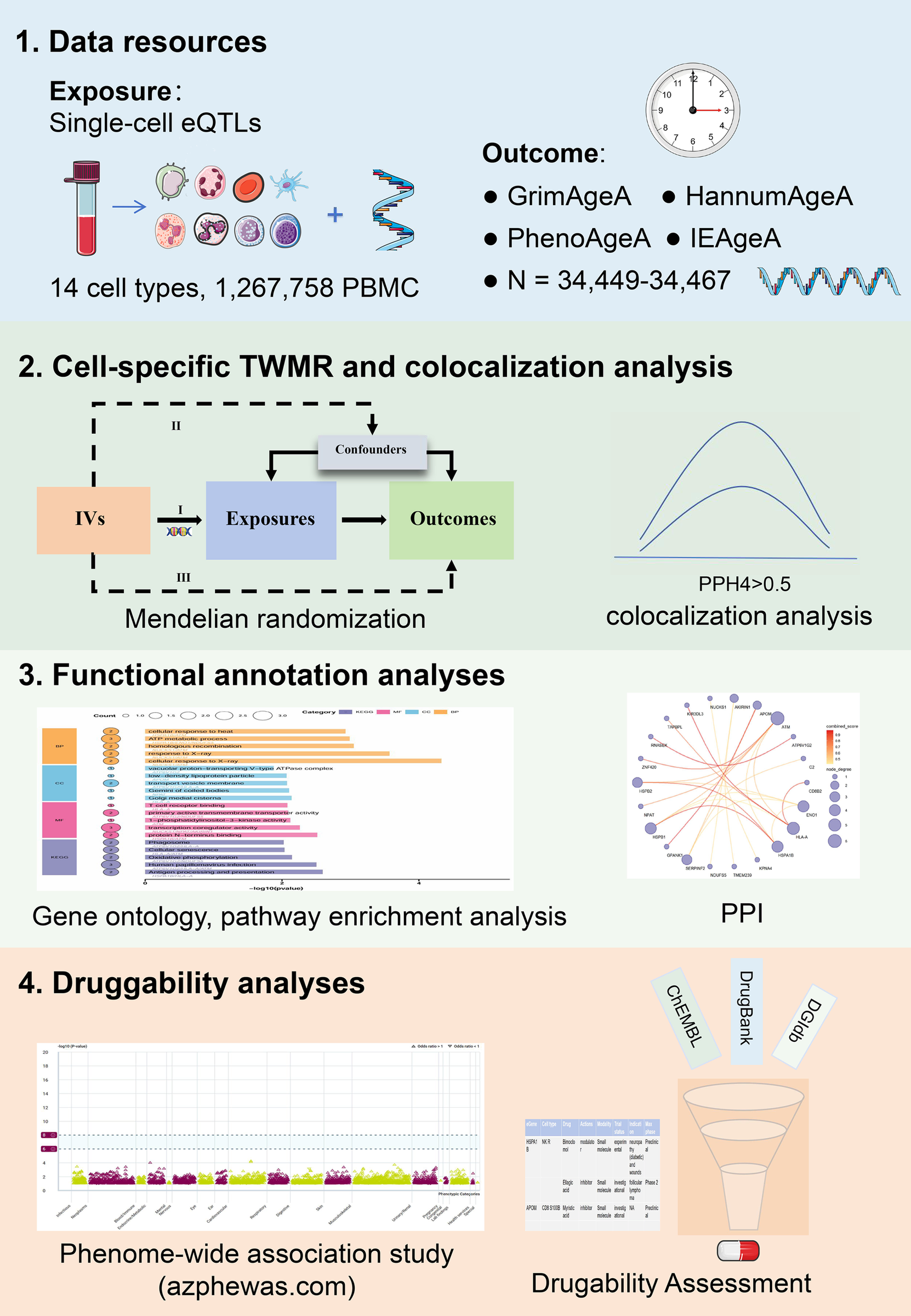
Immune cell gene activity was the focus of a Mendelian randomization analysis, which used genetic differences to assess associations with four epigenetic clocks. These measures assess biological aging using chemical tags on DNA. The researchers combined data linking genetic differences to gene activity in individual immune cells from the OneK1K cohort with genetic data on the clocks.
They identified 22 links between genes in particular immune cell types and the clocks. A separate analysis assessed whether gene activity and clock readings shared a genetic signal. It found strong support for 14 links and suggestive support for eight. Checks using whole-blood data from GTEx V11 and immune cell data from TenK10K supported the direction of most leading associations.
Why it matters
DNA damage responses, immune regulation and metabolism emerged as pathways of interest. The authors highlighted candidate genes and pathways that may offer targets for interventions in age-related diseases.
Caveats
The outcomes were DNA-based aging measures, not disease or lifespan outcomes. The genetic analysis did not test whether interventions targeting the candidate genes would benefit people.
The paper
Epigenetics & Chromatin, Nov 6, 2026, CC BY-NC-ND


Comments
Be the first to comment.