Fewer US adults had no heart, kidney or metabolic risk factors
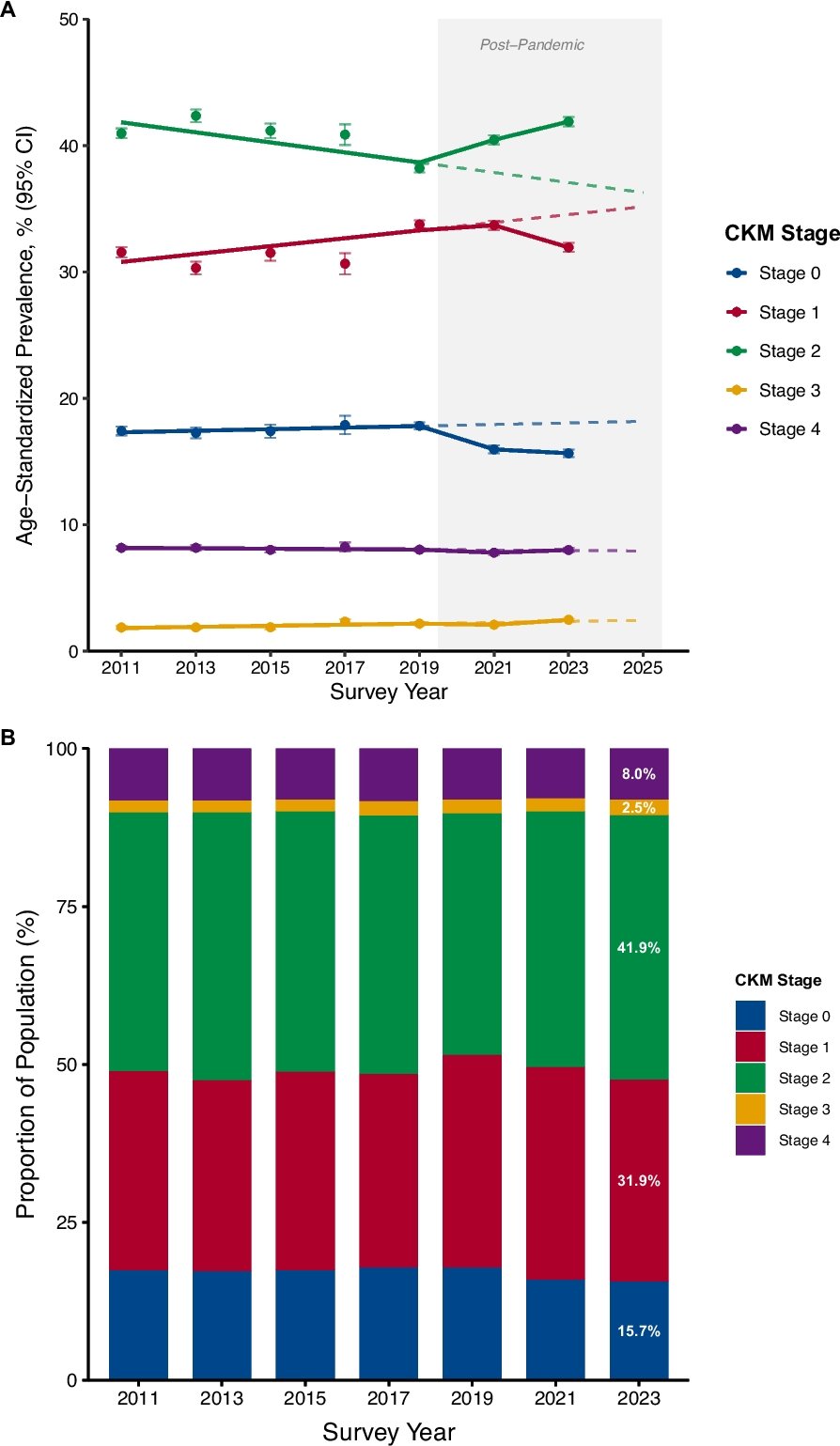
The share with no risk factors fell to 15.7% in 2023, compared with a modeled projection of 18.2%.
Our read
Populations- Studied:
- Cross-sectional study of 2,179,431 US adults
- What changed:
- The share of US adults with no risk factors fell to 15.7% in 2023, versus a modeled 18.2%
- The catch:
- The benchmark was a modeled projection, not an observed control group
- In the record:
- One of 4 papers on pandemic on record: 2 with results in people.
- Why it’s aging research:
- It bears on staying healthy in midlife and later life.
Editor of record: Boris Djordjevic · AgingResearch.News
US adults—2,179,431 surveyed from 2011 to 2023—were included in an observational analysis of cardiovascular-kidney-metabolic syndrome. This classification groups risks involving the heart, kidneys and metabolism, the body’s use of energy.
The share with no risk factors declined after the pandemic began. By 2023, 41.9% had diabetes, high blood pressure or high cholesterol, the conditions defining the study’s metabolic-risk stage. Geographic clusters with high levels of metabolic risk expanded north into the Midwest and Rust Belt. Heart and blood vessel disease remained concentrated in the southeastern “Stroke Belt.” Physical inactivity and socioeconomic disadvantage, measured by low education and income, were the factors most strongly associated with advanced disease.
Why it matters
Preventing heart disease and stroke is an important concern as people age. The authors called for public health efforts that address socioeconomic barriers and inactivity in emerging hotspots.
Caveats
The time-trend analysis could not rule out other changes coinciding with the pandemic as explanations for the decline. Associations with inactivity and socioeconomic disadvantage may also reflect other differences between those groups.

Comments
Be the first to comment.