Motor and cognitive dual tasks differentially affect gait performance across age groups: implications for public health
Non-randomised trial
Abstract
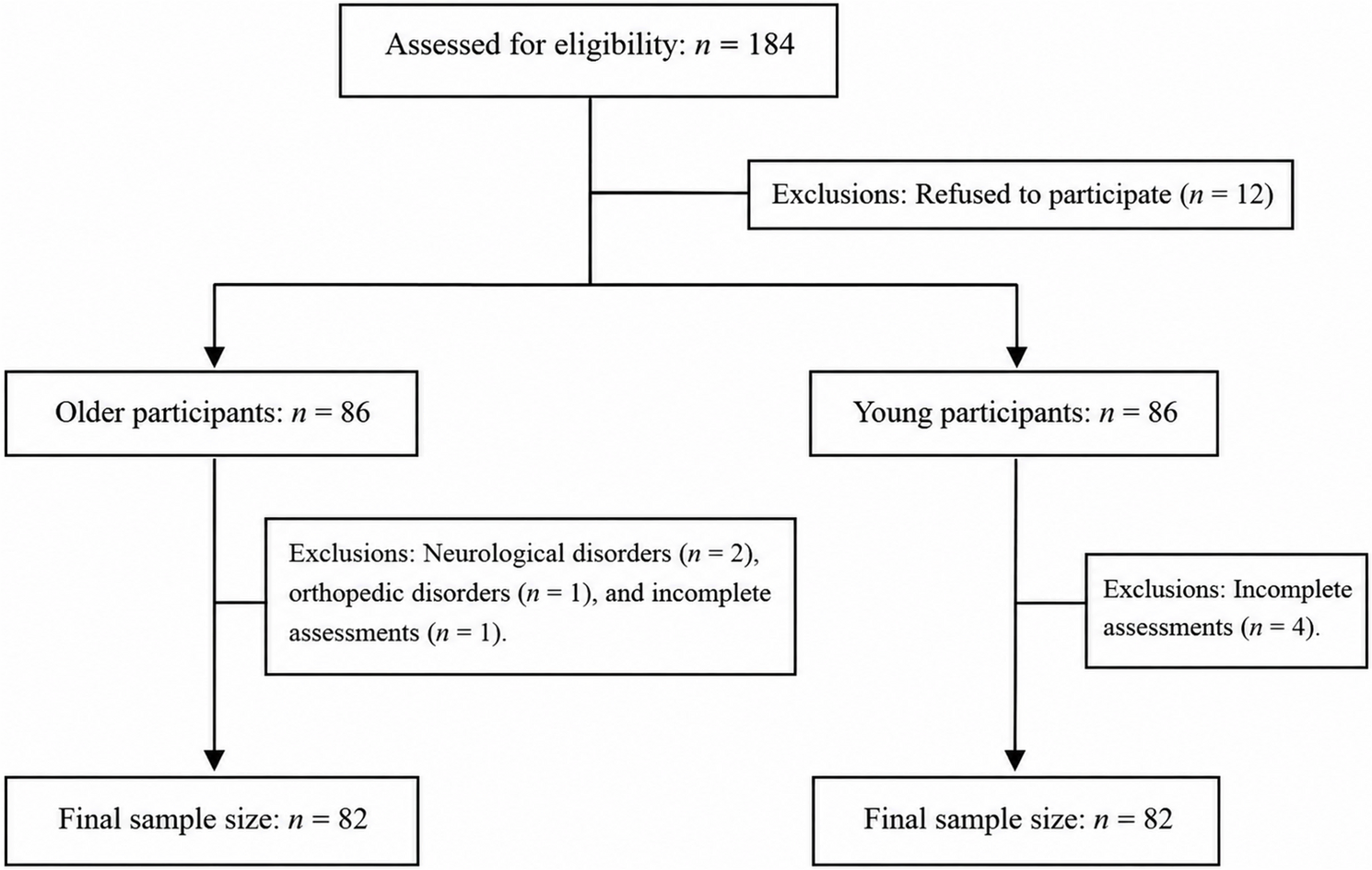
Aging is associated with reduced gait efficiency, particularly during simultaneous activities. These situations, commonly referred to as dual-task walking, are frequent in everyday life and require the concurrent allocation of motor and cognitive resources. Although dual-tasking is known to affect mobility, the relative effects of motor and cognitive demands on gait performance remain unclear. This study investigated the effects of motor (weight-carrying) and cognitive (semantic verbal fluency) dual-task conditions on gait performance in young and older adults. A total of 164 participants ( n = 82 young and n = 82 older adults) completed a standardized walking protocol under three conditions: single-task, motor dual-task, and cognitive dual-task walking. Wearable motion sensors were used to assess the stride length, cadence, gait speed, and foot-strike angle. Between-group and within-group comparisons were performed using the Mann–Whitney U and Friedman tests, respectively. Significance was set at 5%. Gait parameters differed between older and young adults across all experimental conditions ( p < 0.001 for all comparisons). The semantic verbal-fluency condition produced larger changes in gait performance than the weight-carrying condition. The cognitive dual-task cost was 4.3% in young adults and 7.1% in older adults. Motor dual-tasking did not affect gait performance in young adults, whereas older adults completed the walking course in less time, resulting in a negative dual-task cost of − 4.6%. Under the specific experimental conditions, the semantic verbal fluency produced larger changes in gait performance than the weight carrying in both age groups. Responses to the motor dual-task were characterized by stable gait performance in young adults and shorter course completion time in older adults. From a public health perspective, incorporating dual-task conditions into gait assessments may help identify age-related functional vulnerabilities and inform strategies to promote safe mobility and preserve functional independence.
- Semantic verbal fluency dual-task walking
- Weight-carrying dual-task walking
- Cadence
- Dual-task cost
- Foot strike angle
- Humans
The paper
Universidade Federal de Mato Grosso do Sul
BMC Public Health, 14 Oct 2026, Open access, CC BY-NC-ND