Healthy aging and quality of life in University of the Third Age students versus community peers: a cross-sectional study
Abstract
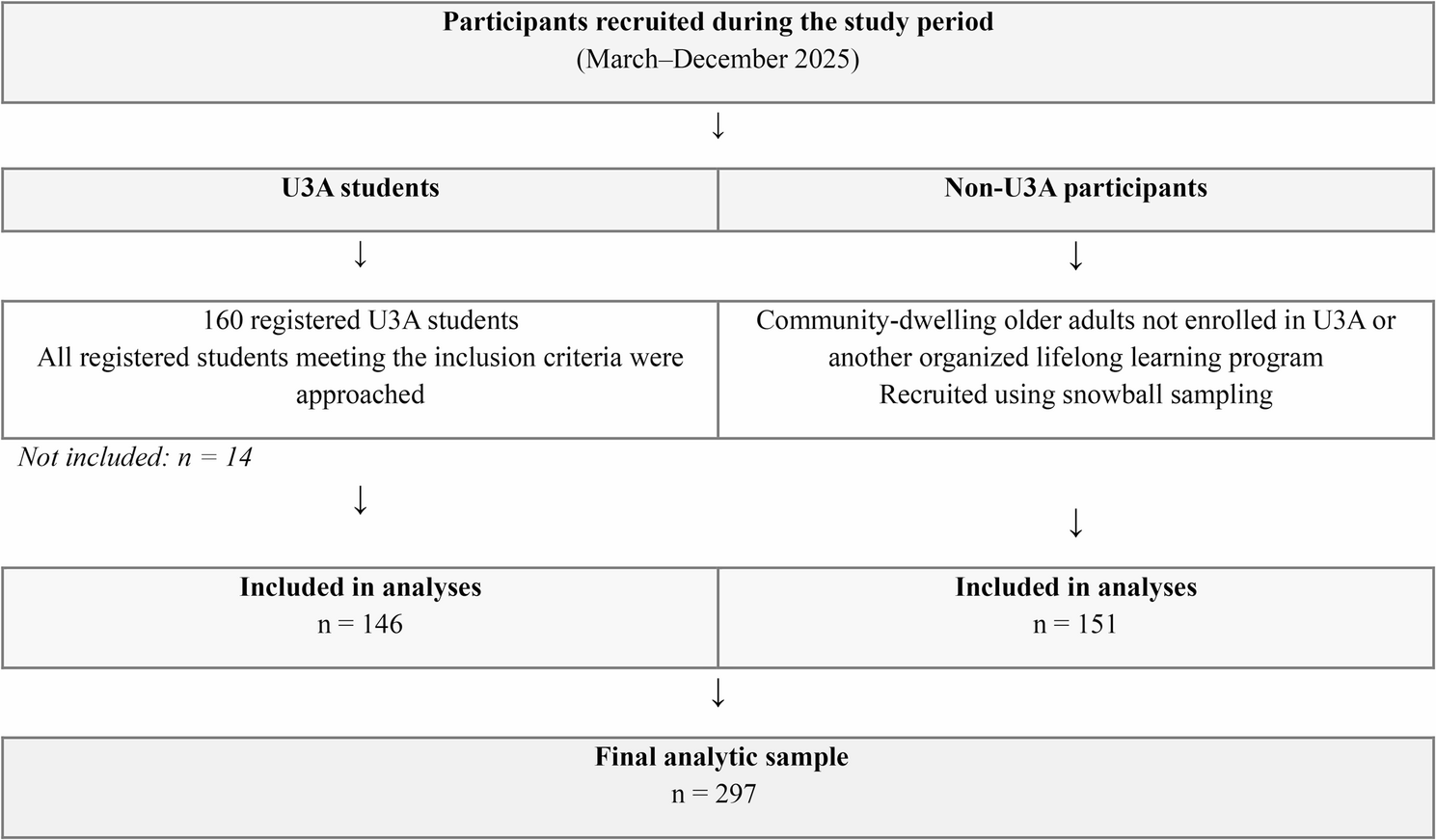
Objective: This study aimed to compare healthy aging and quality of life levels between University of the Third Age (U3A) students and older adults not enrolled in the program and to examine the relationship between healthy aging and quality of life. Methods: This descriptive, analytical, and cross-sectional study included 297 older adults aged 60 years and older (mean age: 68.51 ± 5.21 years): 146 U3A students and 151 older adults not enrolled in the program. Data were collected using the Participant Information Form, the Healthy Aging Instrument (HAI), and the Quality of Life Scale in Older People (CASP-19). Descriptive statistics, the Mann–Whitney U test, chi-square test, Spearman’s correlation analysis, and multiple linear regression analysis were used. Results: U3A students had significantly higher HAI and CASP-19 total and subscale scores than older adults not enrolled in the program ( p < 0.05 for all comparisons). A moderate positive correlation was found between healthy aging and quality of life (rho = 0.559, p < 0.001). After adjustment for age, gender, marital status, education level, chronic disease status, self-rated health status, cigarette/tobacco use, and regular health check-ups, U3A student status remained independently associated with both healthy aging and quality of life ( p < 0.001). Conclusion: U3A students had higher healthy aging and quality of life scores than their peers who were not enrolled in the program, and these differences remained significant after adjustment for sociodemographic and health-related variables. A moderate positive correlation was also found between healthy aging and quality of life. These findings indicate that U3A programs may be considered within the scope of community-based healthy aging initiatives. However, causal inferences cannot be made because of the cross-sectional design.
The paper
Mardin Artuklu University; Bursa Uludağ Üniversitesi
BMC Geriatrics, 14 Oct 2026, Open access, CC BY