Healthy living accounts for part of socioeconomic gaps in aging
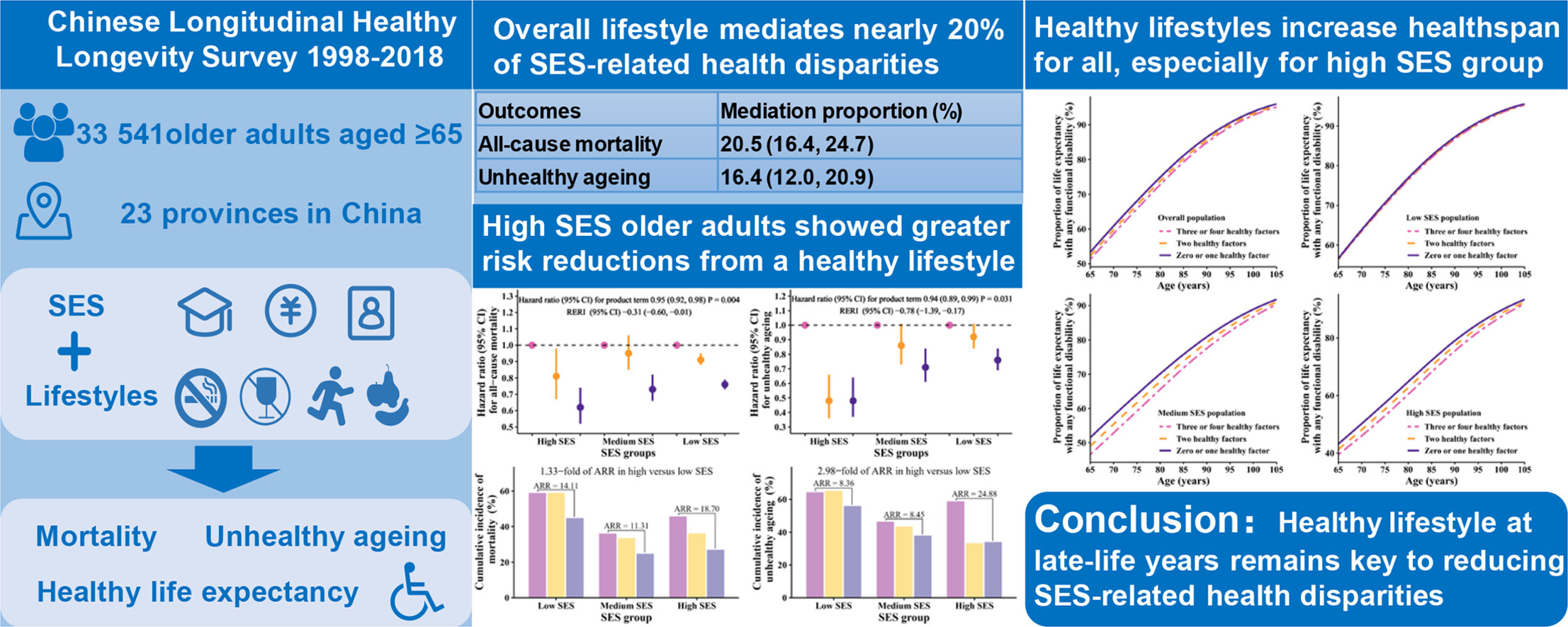
A healthy lifestyle mediated 20.5% of socioeconomic inequity in all-cause mortality and 16.4% in unhealthy aging across a 20-year Chinese cohort.
Fundamental Research
In an observational cohort study, researchers tracked 33,541 older adults aged 65 years and older across 23 provinces in China over 20 years. They categorized socioeconomic status as low, medium, or high based on education, occupation, and financial status. Lifestyle was scored using smoking, alcohol intake, diet, and physical and leisure activity. Compared with high socioeconomic status, low status was linked to higher risks of all-cause mortality, with a hazard ratio of 1.25, and of unhealthy aging across physical, mental, cognitive, visual, and hearing functions, with a hazard ratio of 1.46. In the low socioeconomic group, people with the healthiest lifestyle had 3.18 more years of life and 1.40 more years of healthy life at age 65 than those with the least healthy lifestyle. In the high socioeconomic group, these differences were 5.65 and 3.90 years.
Why it matters
For aging populations, the findings reinforce the importance of promoting healthy habits in late life to support healthy aging and longevity. They also highlight lifestyle support as a possible route to help mitigate health inequities linked to socioeconomic status.
Caveats
Because this was an observational cohort study, it cannot show that lifestyle habits caused the differences in mortality, unhealthy aging, or life expectancy.
The paper
Show 7 more authors
Wenhui Shi, Jun Wang, Chen Chen, Virginia Byers Kraus, John S Ji, Yuebin Lv, Wanqing Chen,China CDC Key Laboratory of Environment and Population Health
Fundamental Research · 23 Oct 2025