Social ties linked to higher physical and mental capacity
A one-point higher social connection score was linked to a 0.04-point higher standardised capacity score, but not clearly slower decline.
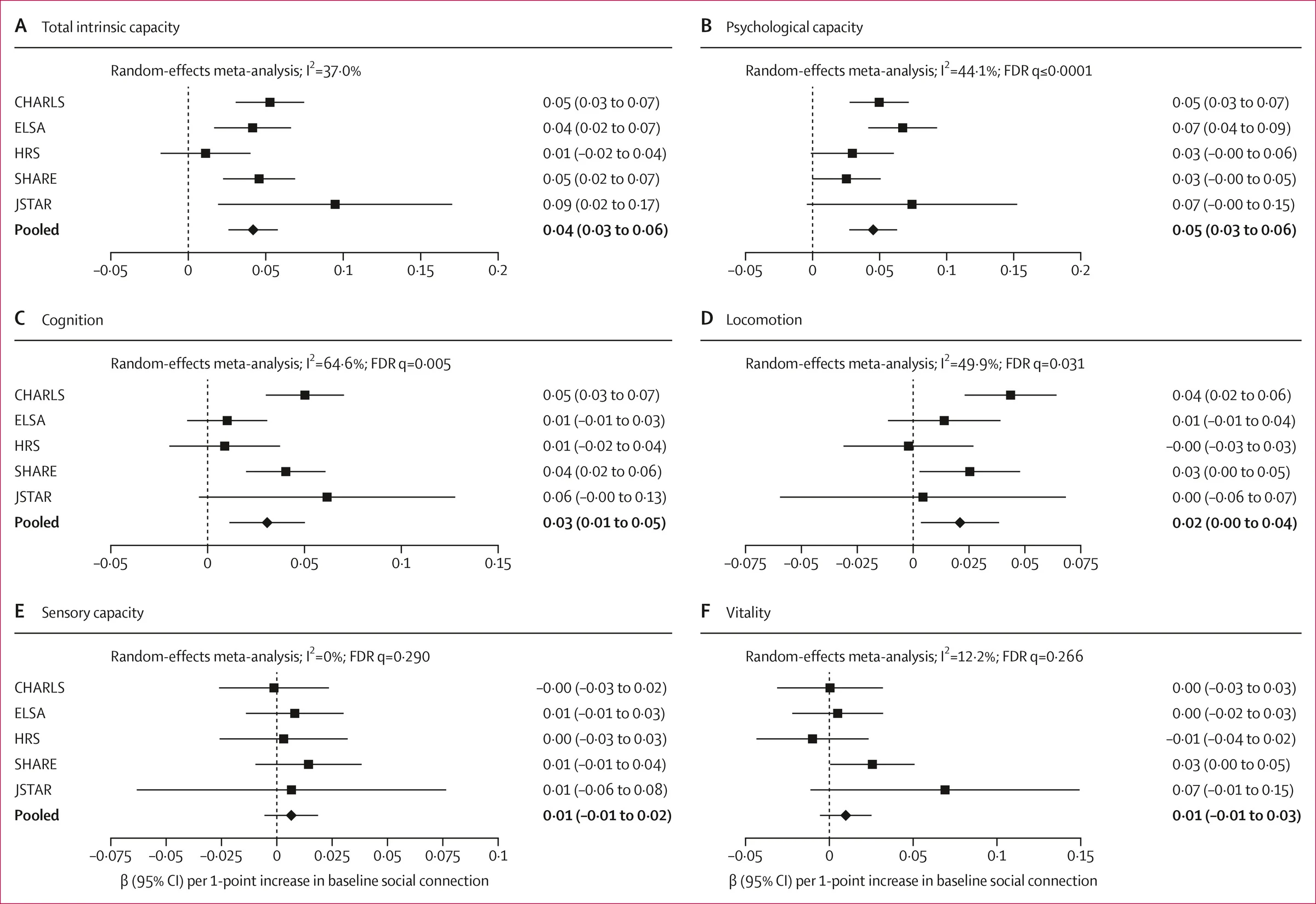
Researchers conducted an observational cohort study of 39,021 adults aged 50 or older in the USA, England, Europe and Israel, China, and Japan. Follow-up ranged from two to 12 years. They scored social connection using partnership, living arrangements, contact with family and friends or relatives, and social participation. They measured intrinsic capacity, a person's combined physical and mental abilities, across movement, thinking, psychological health, senses and vitality. They rescaled capacity scores relative to others in each cohort at each survey round.
Stronger social connection was associated with higher starting capacity after accounting for age, sex, education, wealth and chronic disease burden. Links were strongest for psychological health and thinking. Social participation and being married or partnered showed the most consistent links. Initial social connection was not clearly associated with the rate of capacity decline.
Why it matters
Social connection is a potentially modifiable aspect of healthy aging. The researchers said the findings support greater attention to it in healthy aging policies and community services.
Caveats
This observational study cannot show that stronger social connection improved capacity. Further evidence is needed to determine whether strengthening social connection can do so.
- Social connection
- Social participation
- Family contact
- Psychological intrinsic capacity
- Vitality intrinsic capacity
- Humans
The paper
The Chinese University of Hong Kong
The Lancet Healthy Longevity, 12 Oct 2026