Age-associated differences in lower-extremity muscle mass, force, and power in older adults: a cross-sectional analysis of sex differences
Registered NCT05343286
Abstract
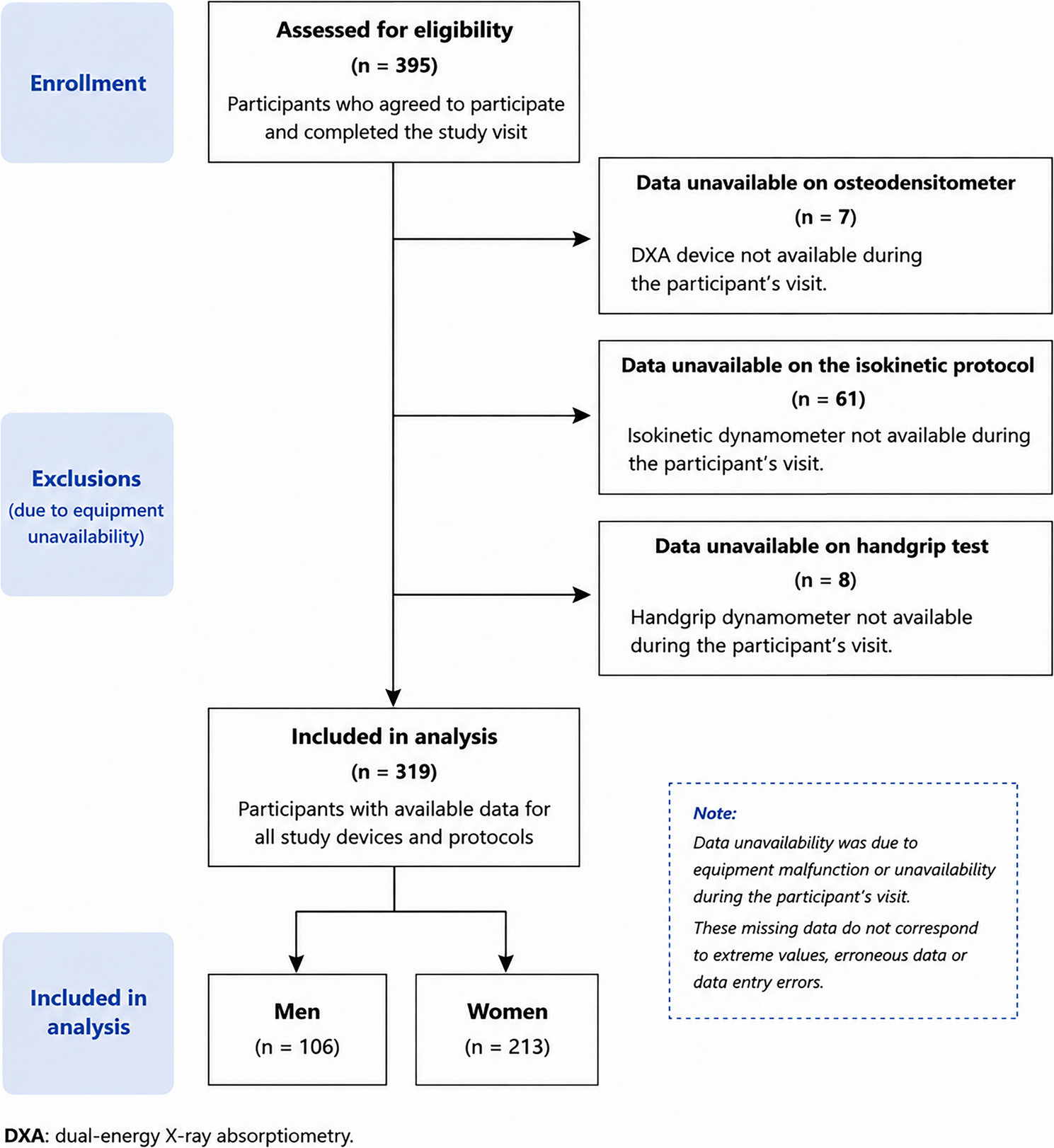
Background: The decline in musculoskeletal function with aging is a key contributor to mobility impairments and loss of independence. While sarcopenia and dynapenia are well described, recent evidence highlights muscle power as a more sensitive indicator of functional deterioration. Aims: This study aimed to compare age-associated differences in muscle mass, force, and lower-limb muscle power in older adults over different assessment methods, while accounting for sex-related differences. Methods: Three hundred nineteen community-dwelling adults aged 60–97 years were assessed for muscle mass (DXA-derived lean mass, appendicular skeletal muscle mass index), muscle force (handgrip force, knee extension maximal isometric contraction), muscle moments and angular velocity (isokinetic dynamometry), and lower-limb muscle power (isokinetic testing and sit-to-stand power). Associations with age and sex were examined using regression models and ANOVA. Results: Lower-limb muscle power showed a stronger negative association with age than muscle force or mass (β = − 0.433 vs. − 0.303 and − 0.119, respectively; p < 0.001). However, the present study could not determine whether muscle power begins to decline earlier than muscle force or mass. For several variables, age associations were stronger in males than in females, most consistently for lower-limb power, although these interactions were not systematically reproduced in age-stratified analyses. The strongest negative age associations were observed between 71 and 80 years, whereas fewer significant associations (only for handgrip) were observed after age 80. Conclusions: Lower-limb muscle power appeared more sensitive to age-associated differences than muscle force or mass, supporting its role as a key biomarker of neuromuscular aging. This study also highlights that sex may contribute to variability in age-associated patterns of muscle power, raising questions about the universality of its definition that warrant further confirmation. These findings emphasize the clinical importance of including power assessments in strategies to preserve independence in older adults. Trial registration: ClinicalTrials.gov, NCT05343286, https://clinicaltrials.gov/ct2/show/NCT05343286 .