Patient muscles show early signs of cell senescence
An analysis of patient muscle gene activity found senescence-related patterns linked to disease severity and present even without inflammation visible on scans.
Our read
Mechanisms- Studied:
- Cross-sectional study of people with facioscapulohumeral muscular dystrophy
- What changed:
- Senescence-related gene-activity patterns appeared even in patient muscles without inflammation visible on scans
- The catch:
- Patient findings used senescence-related gene-activity patterns as a proxy for cellular senescence
- In the record:
- One of 16 papers on lamivudine on record: 2 with results in people, 10 in animals. Its result on inflammation agrees with all 3 other findings on record.
- Why it’s aging research:
- It studies something that builds up in the body with age.
Editor of record: Boris Djordjevic · AgingResearch.News
Muscle from people with facioscapulohumeral muscular dystrophy showed gene-activity patterns associated with senescence, a state in which cells stop dividing, in an observational analysis. These patterns correlated with activity of Double Homeobox 4, a protein that controls gene activity, as well as disease severity and tissue changes. The patterns appeared even in muscles without inflammation detectable by magnetic resonance imaging.
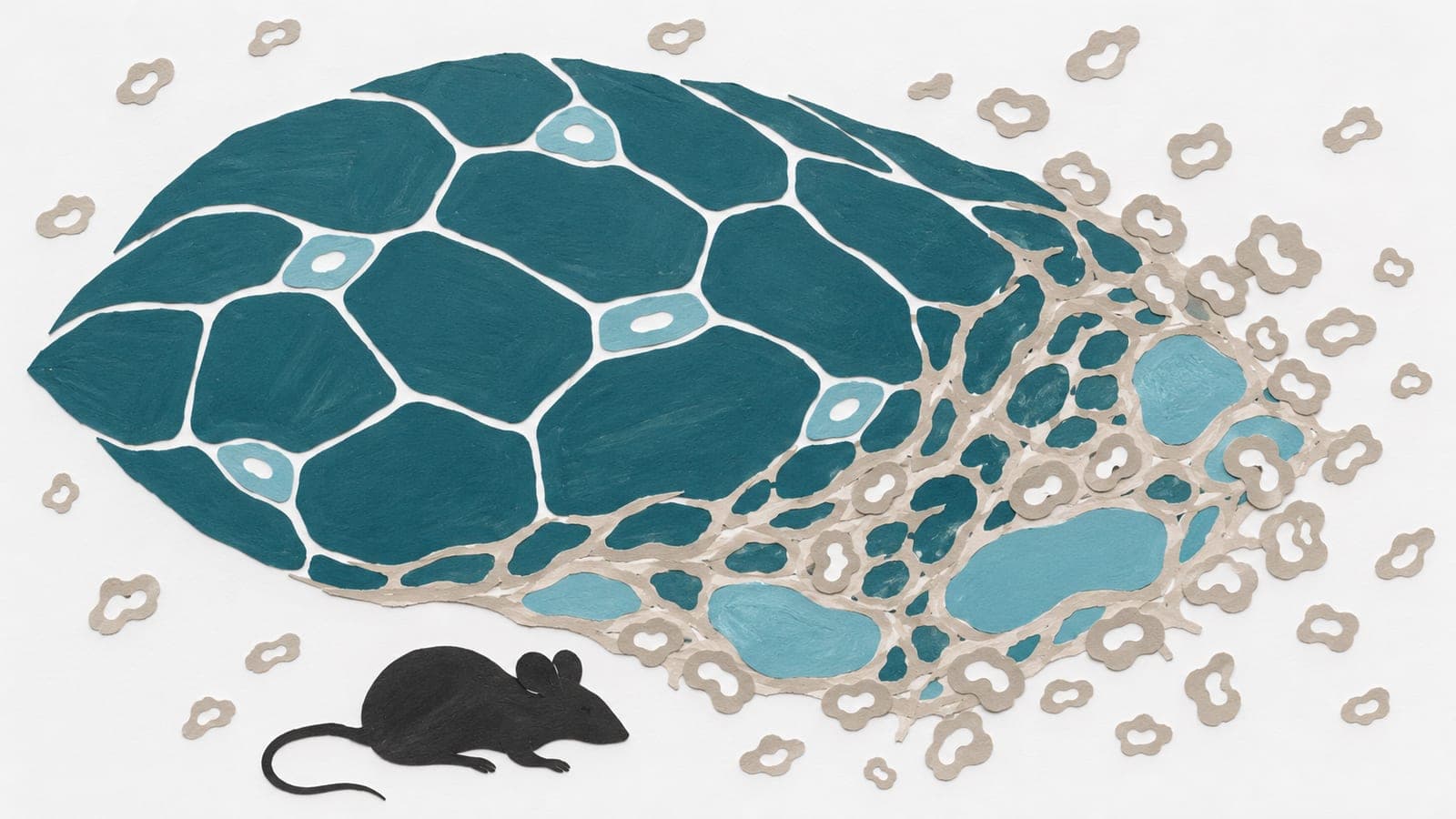
In experiments in a mouse model of the disease, muscle injury triggered by this protein rapidly induced senescence, which then progressively spread. Immune cells called macrophages and cells that can form fat or scar tissue were the main senescent populations. Treating the mice with lamivudine reduced senescence, inflammation and fibrosis, or tissue scarring, while promoting muscle regeneration.
Why it matters
Cell senescence offers a potential target for addressing progressive muscle degeneration in this disease. The authors called for clinical intervention strategies targeting senescence, particularly lamivudine.
Caveats
The patient findings concerned gene-activity patterns, while lamivudine’s effects were reported in mice, not patients. The abstract does not give the drug dose or treatment duration.
- Lamivudine
- Inflammation
- Cellular senescence
- Facioscapulohumeral muscular dystrophy
- Senescence and SASP transcriptional signatures
- Mice
The paper
Cellular senescence mediates facioscapulohumeral muscular dystrophy
University of Minnesota
The Journal of Clinical Investigation, Nov 5, 2026, CC BY
Comments
Be the first to comment.