Light-activated cells speed wound healing in mice and pigs
Experiments in mouse and pig wound models tested engineered stem cells designed to transfer energy-producing cell structures and sustain energy supplies in damaged cells.
Limit: The abstract does not report sample sizes or how much faster wounds healed
Edited by Boris Djordjevic · AgingResearch.News
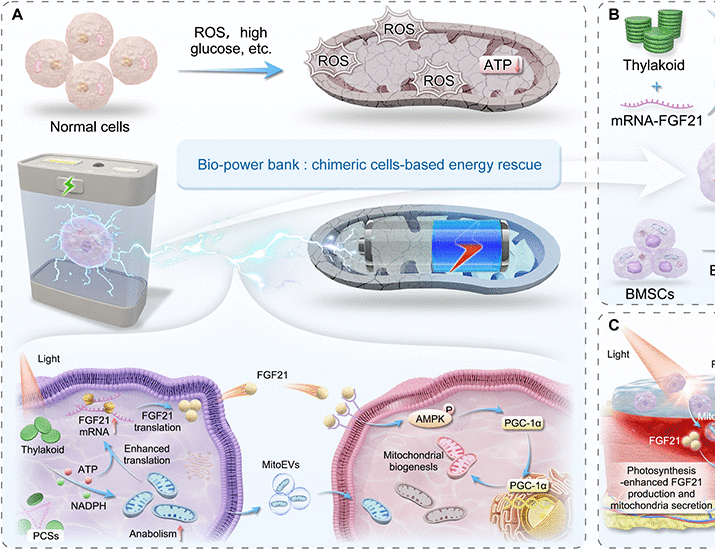
In mouse and pig wound-healing models, researchers tested engineered bone marrow stem cells that used photosynthesis to capture light energy and accelerated wound repair. To build them, the team removed the cells’ nuclei, which house DNA, and introduced artificial nuclei built with plant-derived structures used in photosynthesis. They also added messenger RNA, genetic instructions for producing a protein called FGF21.
Photosynthetic activity increased the transfer of mitochondria, cells’ energy-producing structures, to damaged cells and helped restore metabolism. It also increased FGF21 production. Sustained release of this protein promoted the formation of new mitochondria and helped maintain cellular energy over time. The authors reported that the engineered cells did not establish themselves in tissue or develop into unintended cell types.
Why it matters
Restoring energy supplies in damaged cells is a proposed route to tissue repair. The work raises a question for aging research: whether sustaining cellular energy could help preserve repair capacity with age.
Caveats
These were animal wound-healing experiments, not tests in people or of aging. The abstract does not report sample sizes or how much faster wounds healed.
The paper
Photosynthetic chimeric stem cells function as mitochondrial batteries
Shanghai Ninth People’s Hospital; The Second Affiliated Hospital of Zhejiang University College of Medicine
Science Advances, Oct 30, 2026
