COVID-19 deaths exceeded excess deaths in older Dutch people
Deaths from COVID-19 reached 0.98% of the study population, compared with 0.34% excess mortality from all causes.
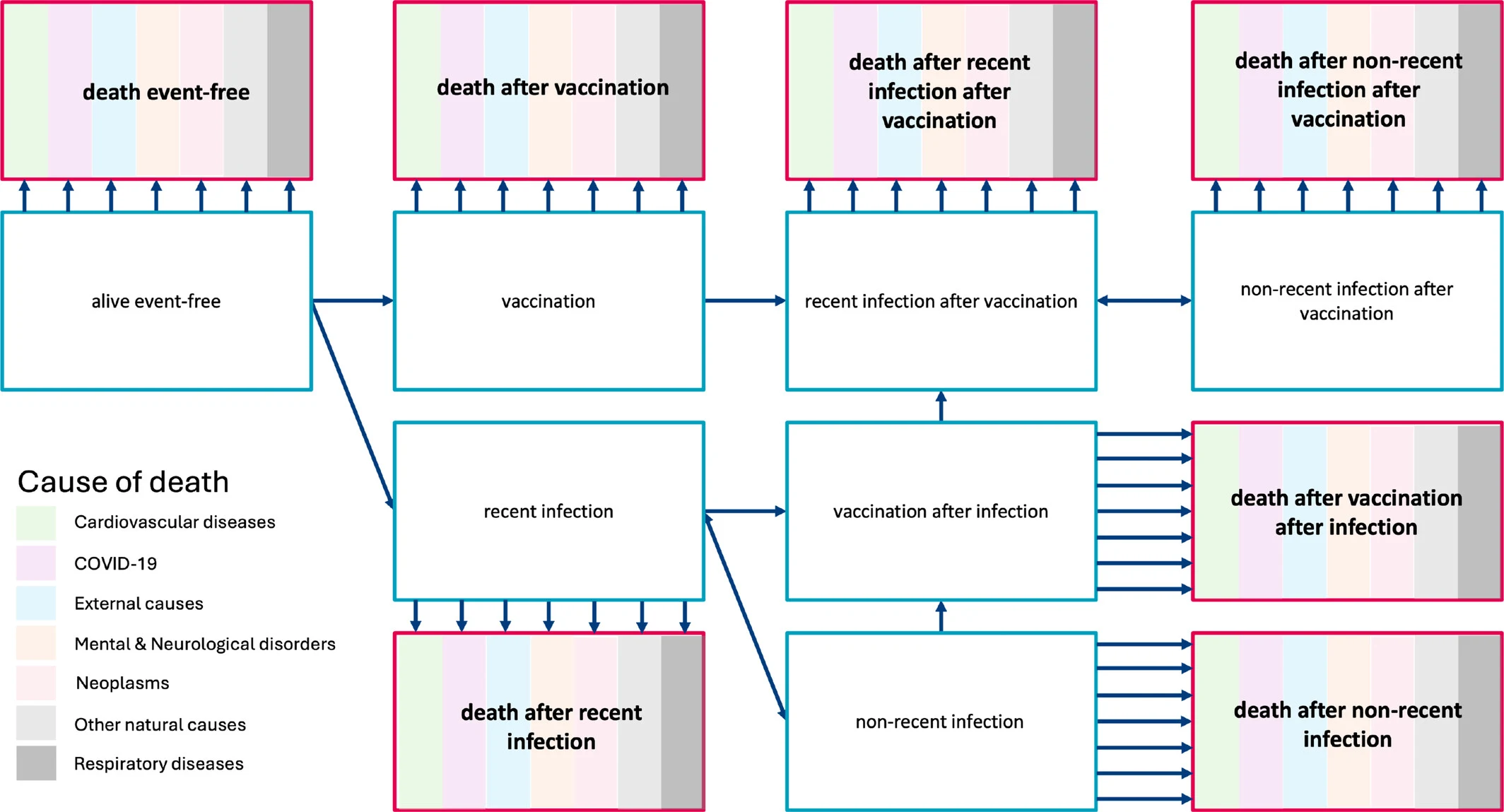
Limit: Deaths involving COVID-19 were generally assigned to it, potentially exaggerating displacement of other causes
Edited by Boris Djordjevic · AgingResearch.News
In the older Dutch population, researchers used a new statistical model in an observational analysis of mortality during the COVID-19 pandemic’s first two years. The model estimated deaths above expected levels for different causes. Deaths from causes other than COVID-19 occurred less often than expected. This meant COVID-19 deaths exceeded the overall excess in deaths.
Infection was associated with higher short-term mortality across all causes of death, with elevated risk persisting beyond 28 days after infection. Vaccination was associated with lower COVID-19 mortality during both the early and longer-term stages of infection.
Why it matters
For older populations, distinguishing deaths attributed to COVID-19 from changes in other causes may help assess the pandemic’s overall mortality burden.
Caveats
This observational analysis cannot establish cause and effect, and its scope was older people in the Netherlands. The results suggested bias because vaccine recipients may have been healthier, although this appeared much smaller than vaccination’s association with reduced COVID-19 mortality.
From the paper
- Limitation
Some vaccination data are missing as data sharing required informed consent (Statistics Netherlands (CBS), 2022).
Quoted word for word from the full text on onlinelibrary.wiley.com.
The paper
Leiden University Medical Center
Statistica Neerlandica, Oct 20, 2026, Open access, CC BY