Aging is linked to more impaired immune cells in humans
Laboratory tests found that these cells were less able to multiply and send immune signals, and had a limited response to a type of immunotherapy.
Our read
Mechanisms- Studied:
- Study of human CD8 T effector memory cells
- What changed:
- Senescent effector memory T cells were more abundant at older ages
- The catch:
- Age-related disease and smoking could confound the link between age and senescent-cell abundance
- Why it’s aging research:
- It studies something that builds up in the body with age.
Editor of record: Boris Djordjevic · AgingResearch.News
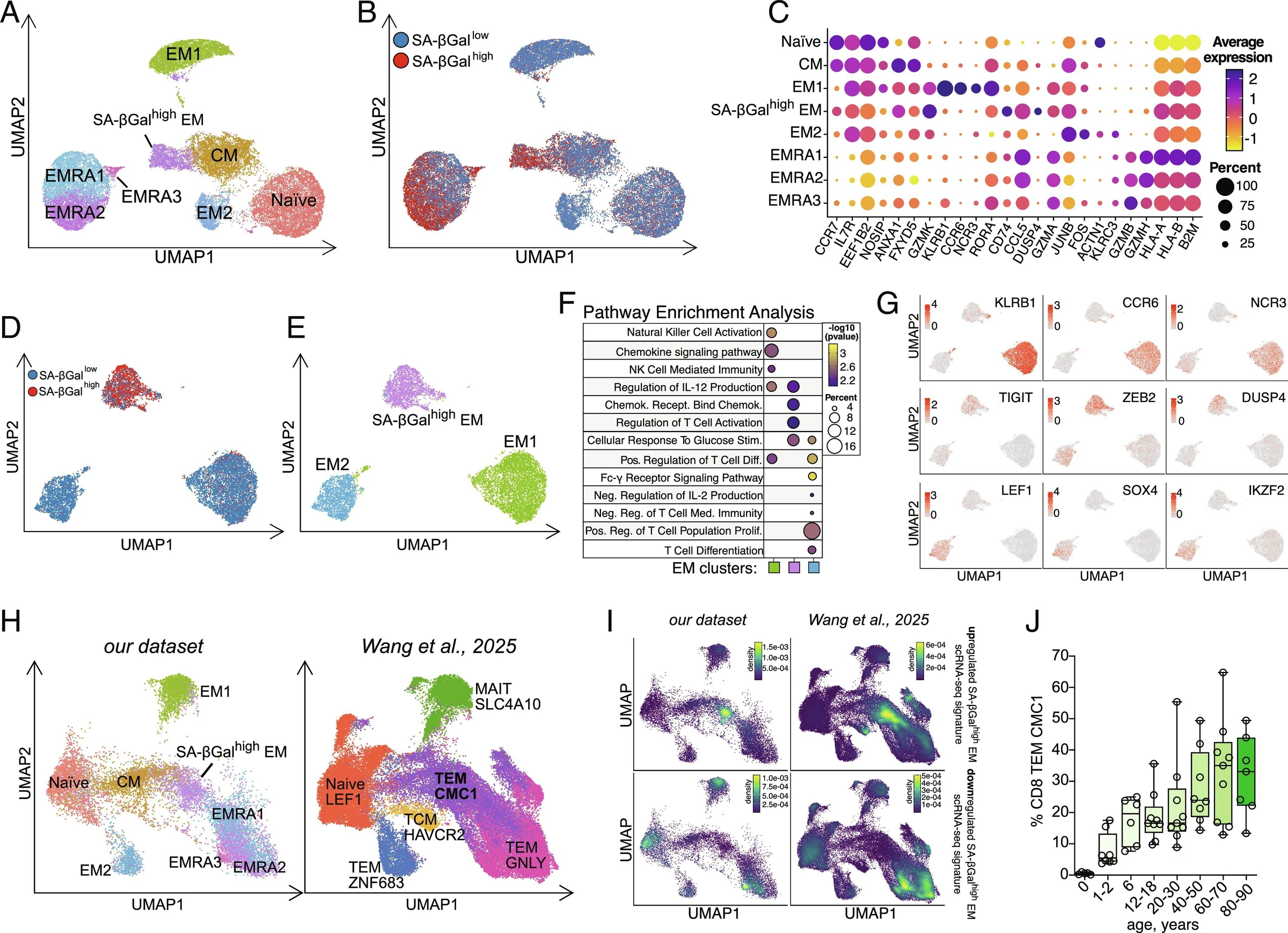
In human effector memory killer T cells—immune cells that respond to previously encountered threats—researchers examined senescence, a state in which cells stop dividing. The study combined observational analyses of human immune cells with laboratory experiments. Senescent cells of this type were more abundant at older ages.
In laboratory tests, these cells were less able to multiply, produce immune-signaling proteins and eliminate senescent human stromal cells, which support tissues. Gene-activity patterns characteristic of the senescent cells were more evident in killer T cells from older donors, people with age-related disorders or cancer, and smokers. The authors also found that senescence limited the cells’ response to immune checkpoint blockade, a type of immunotherapy that releases brakes on immune activity.
Why it matters
Immune cells help remove senescent cells to maintain tissues. This work addresses whether senescence within the immune system may hinder that task as people age.
Caveats
The age and disease links were observational and do not establish cause and effect. The immunotherapy result came from experiments in human cells, not a treatment trial in patients.
The paper
Rutgers-New Jersey Medical School
PNAS, Nov 3, 2026, Open access, CC BY-NC-ND

Comments
Be the first to comment.