Restoring cell cleanup helped lung scarring resolve in mice
Animal experiments linked persistent lung scarring to poor clearance of dying cells, while activating a metabolic regulator promoted scarring resolution in aged mice.

Our read
Mechanisms- Studied:
- Experiments in mice
- In the record:
- One of 64 papers on CD47 on record: 6 with results in people, 8 in animals.
Editor of record: Boris Djordjevic · AgingResearch.News
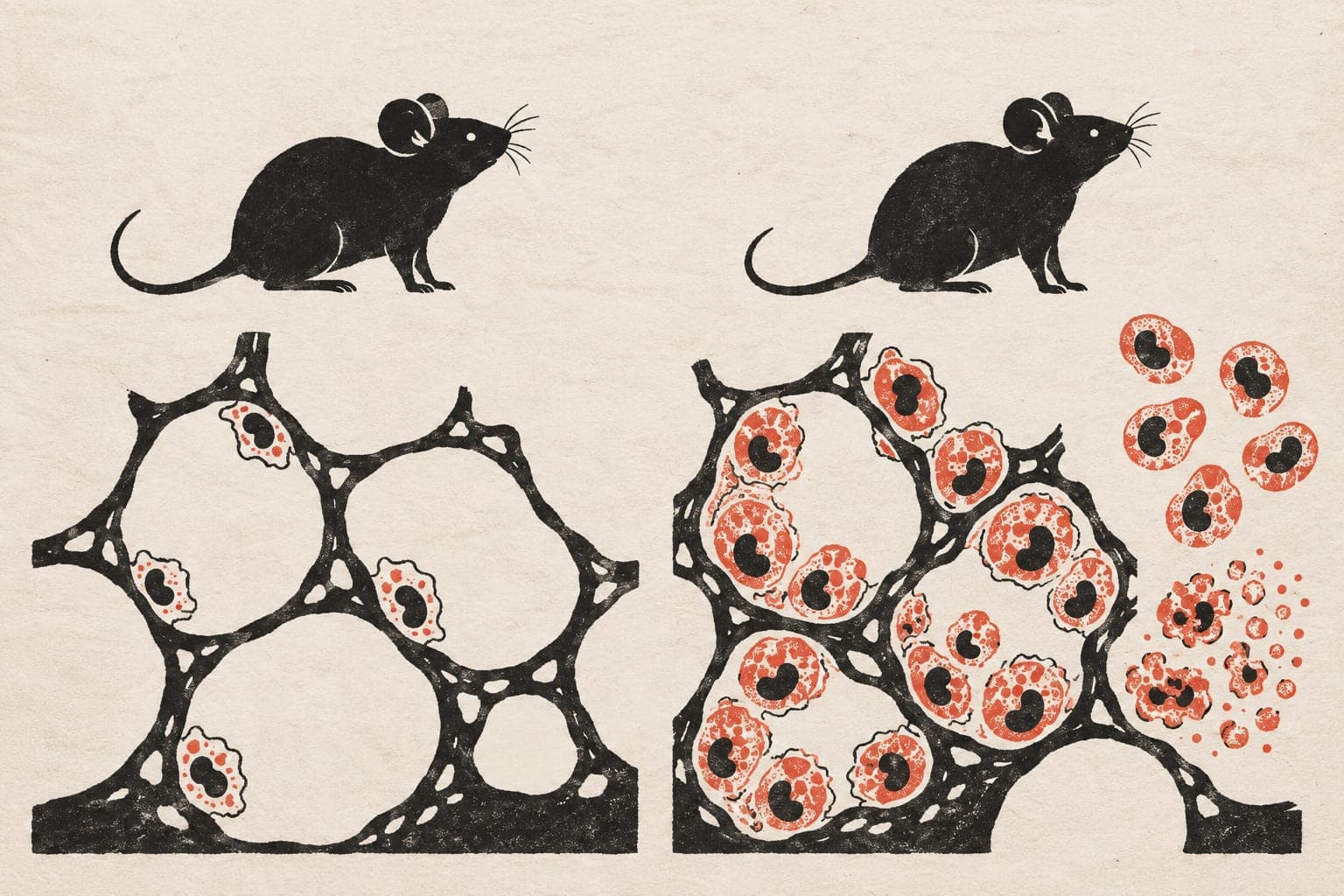
Aged mice with persistent lung fibrosis, or scarring, had a sustained reduction in their ability to clear dying cells in experiments examining fibrosis resolution. This cleanup process is called efferocytosis. In animal experiments, lack of CD47, a protein that sends a “don’t eat me” signal, accelerated the natural resolution of fibrosis. Drugs that disrupted cleanup caused fibrosis to develop and persist. Activating AMPK, a regulator of cell metabolism, promoted fibrosis resolution by reducing age-related inflammation and CD47 availability. This restored clearance of dying fibroblasts, cells that make connective tissue. AMPK activation also shifted macrophages, immune cells that perform this cleanup, toward a state favoring fibrosis resolution.
In idiopathic pulmonary fibrosis, suppressed clearance coincided with abundant release of tiny cell-derived particles carrying CD47.
Why it matters
Idiopathic pulmonary fibrosis is a progressive, age-driven lung disease. The authors suggest that a pathway linking metabolism with immune-cell cleanup may have therapeutic relevance for fibrotic diseases.
Caveats
Results in mice leave open whether activating the same pathway would help people with idiopathic pulmonary fibrosis.
Where the evidence stands
CD47
- 14 independent labs in 8 countries
- 1 finding against
- Funders: National Institutes of Health and others
- 10 of 38 findings with company ties
Inflammation
- 1,046 independent labs in 77 countries
- 205 findings against
- Funders: National Institutes of Health and others
- 382 of 4,608 findings with company ties
Comments
Be the first to comment.