Resting blood irisin levels were lower in older adults
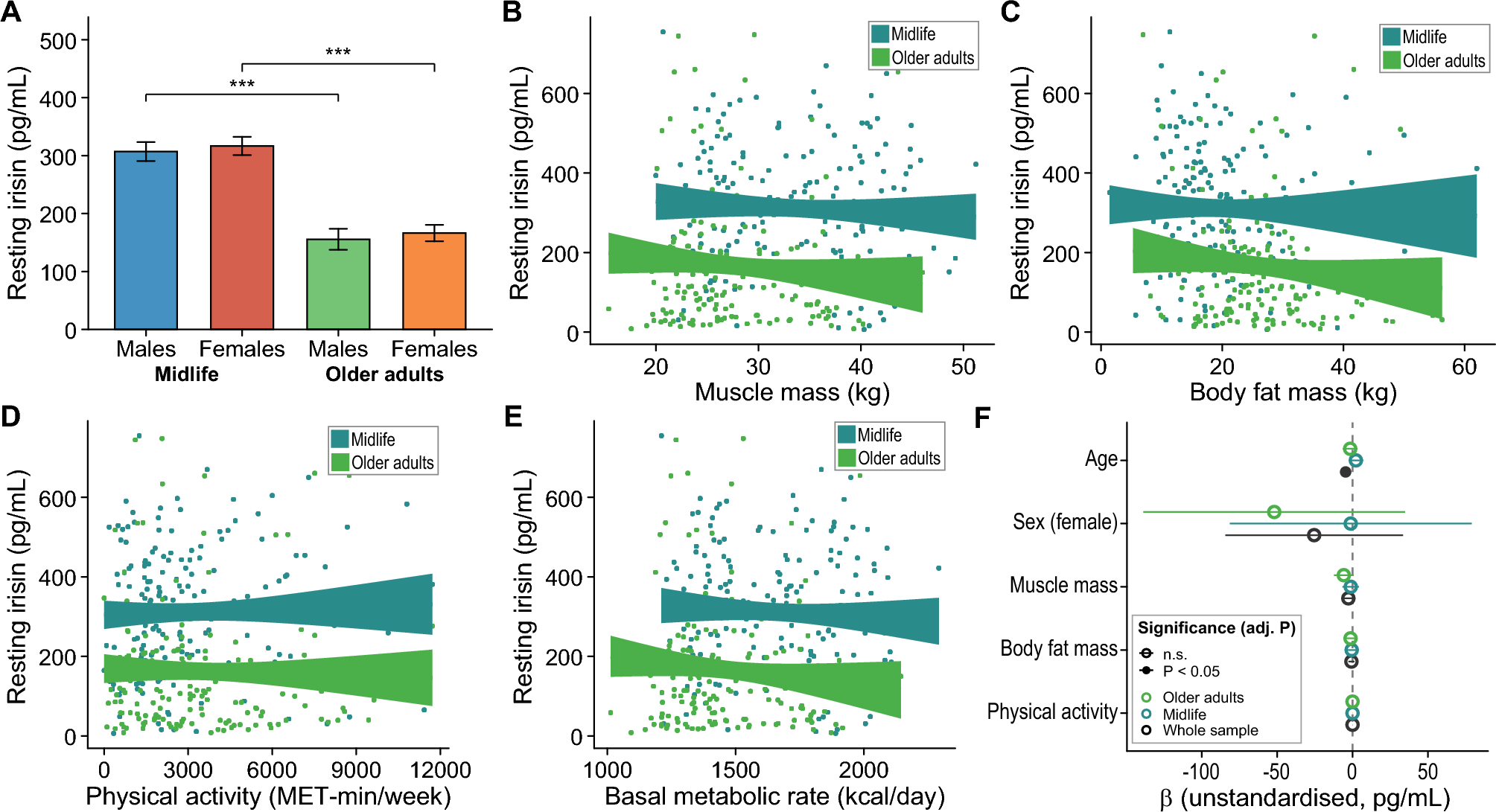
Each additional year of age was associated with 4.57 picograms per milliliter less resting plasma irisin, after accounting for body composition and physical activity.
Our read
Mechanisms- Studied:
- Cross-sectional study of middle-aged and older adults
- What changed:
- Resting blood irisin levels were lower at older ages
- The catch:
- Individual changes in resting irisin with aging were not measured
Editor of record: Boris Djordjevic · AgingResearch.News
Among 186 middle-aged and 178 older adults, a population-based cross-sectional study examined resting levels of irisin, a protein, in plasma, the liquid part of blood. The middle-aged group averaged 42.1 years of age and was 48% female. The older group averaged 71.5 years and was 64% female.
Older age was associated with lower irisin levels after accounting for sex, muscle and fat mass, habitual physical activity and basal metabolic rate—the energy the body uses at rest. Irisin levels did not differ significantly between women and men within either age group. Resting irisin was not associated with any measured cognitive outcome in either group, including after accounting for body composition and physical activity.
Why it matters
The authors suggest that resting irisin and exercise-induced irisin may play different biological roles during aging. Cognitive benefits attributed to irisin in exercise and animal studies may not extend to resting concentrations.
Caveats
Comparing middle-aged and older adults at one point in time could not show whether an individual's resting irisin levels declined as they aged.

Comments
Be the first to comment.