Exercise hormone reduces nerve cell loss in mice
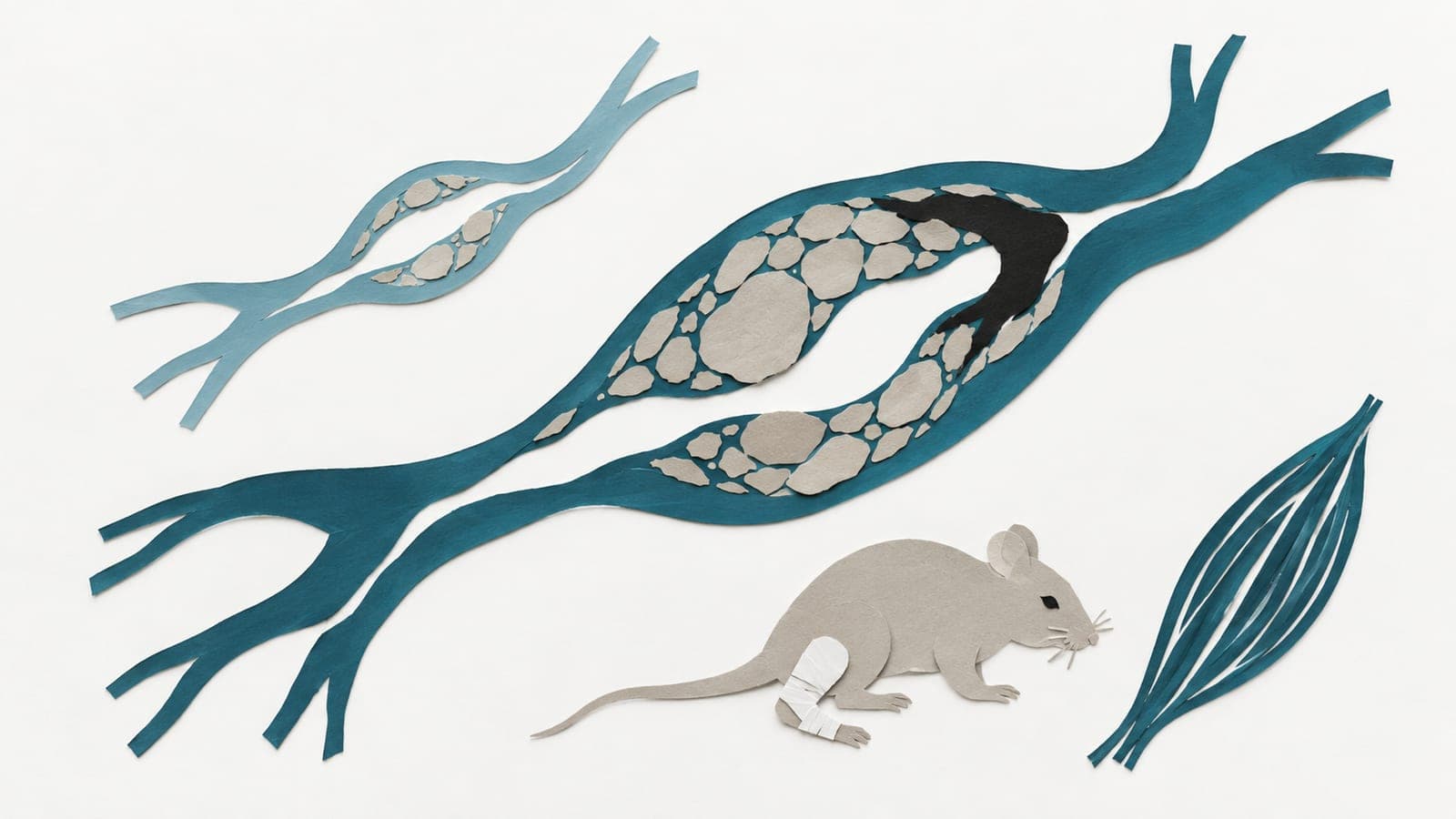
Experiments in a mouse model of multiple sclerosis found that irisin reduced symptoms and nerve cell loss without changing immune responses.
Our read
Interventions- Studied:
- Experiments in female mice with experimental autoimmune encephalomyelitis, until day 38 (Randomized, blinded)
- What changed:
- Irisin-treated mice lost fewer nerve cells in the spinal cord, hippocampus, and retina than control mice
- The catch:
- Irisin came from liver gene delivery at pharmacological levels, not ordinary exercise-induced release
- Stake:
- An author founded Aevum Therapeutics.
- In the record:
- One of 80 papers on irisin on record: 8 with results in people, 29 in animals.
Editor of record: Boris Djordjevic · AgingResearch.News
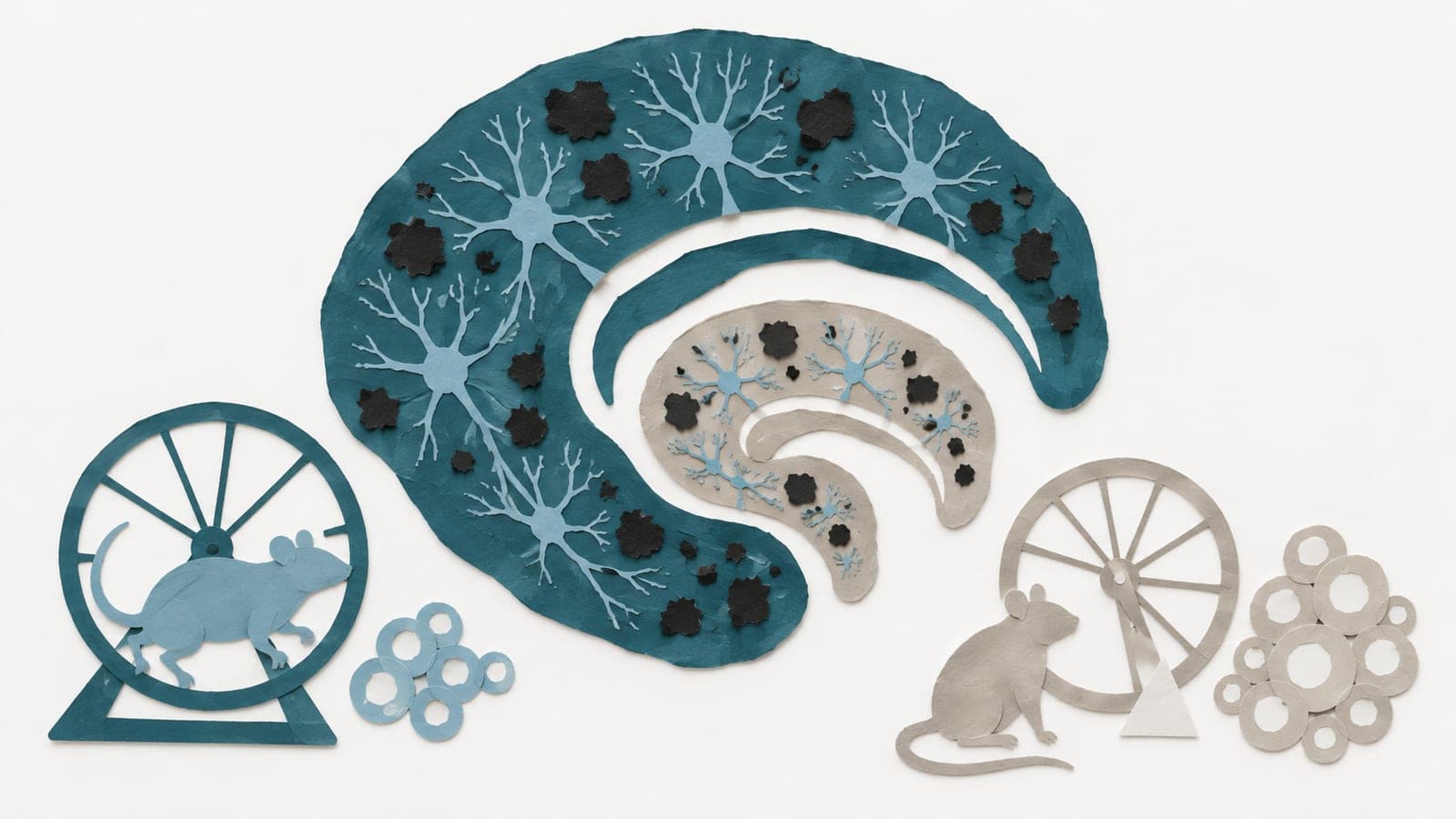
Mice were studied in experiments testing whether irisin, an exercise hormone, protected nerve cells in an induced disease that models multiple sclerosis. Mice ran voluntarily for eight weeks before disease induction. Running reduced inflammation-related nerve cell loss compared with sedentary mice. This protection disappeared in mice lacking irisin.
In a separate experiment, mice received a vein injection carrying instructions for making irisin on the day disease was induced. Raising blood irisin reduced symptoms and nerve cell loss compared with controls. It did not alter immune responses inside or outside the brain and spinal cord. Irisin also triggered a protective pattern of gene activity in spinal cord nerve cells. It preserved synapses, the connections between nerve cells, and activity in mitochondria, the cells’ energy-producing structures. The authors suggested these effects probably involved irisin binding directly to nerve cells that control movement.
Why it matters
Irisin is involved in cognitive function during aging. The authors propose it as a candidate for protecting nerve cells against inflammation-driven damage in multiple sclerosis.
Caveats
Irisin delivery began when disease was induced, before symptoms appeared, in female mice aged 7–13 weeks. These experiments did not test whether irisin benefits people with multiple sclerosis.
The paper
The exercise hormone irisin has neuroprotective effects in a mouse model of multiple sclerosis
Harvard University
Nature Metabolism, May 21, 2026, Open access
Comments
Be the first to comment.