A protein mutation curbs brain damage in mice with dementia
Young and 18-month-old mice with an altered UCHL1 protein showed less white matter injury and better sensorimotor and cognitive performance in a dementia model.
Scientific Reports
In an experiment in young and 18-month-old mice, researchers tested whether mutating a specific protein could reduce brain damage in vascular cognitive impairment and dementia. The condition is characterized by extensive subcortical white matter injury and progressive sensorimotor and cognitive impairment.
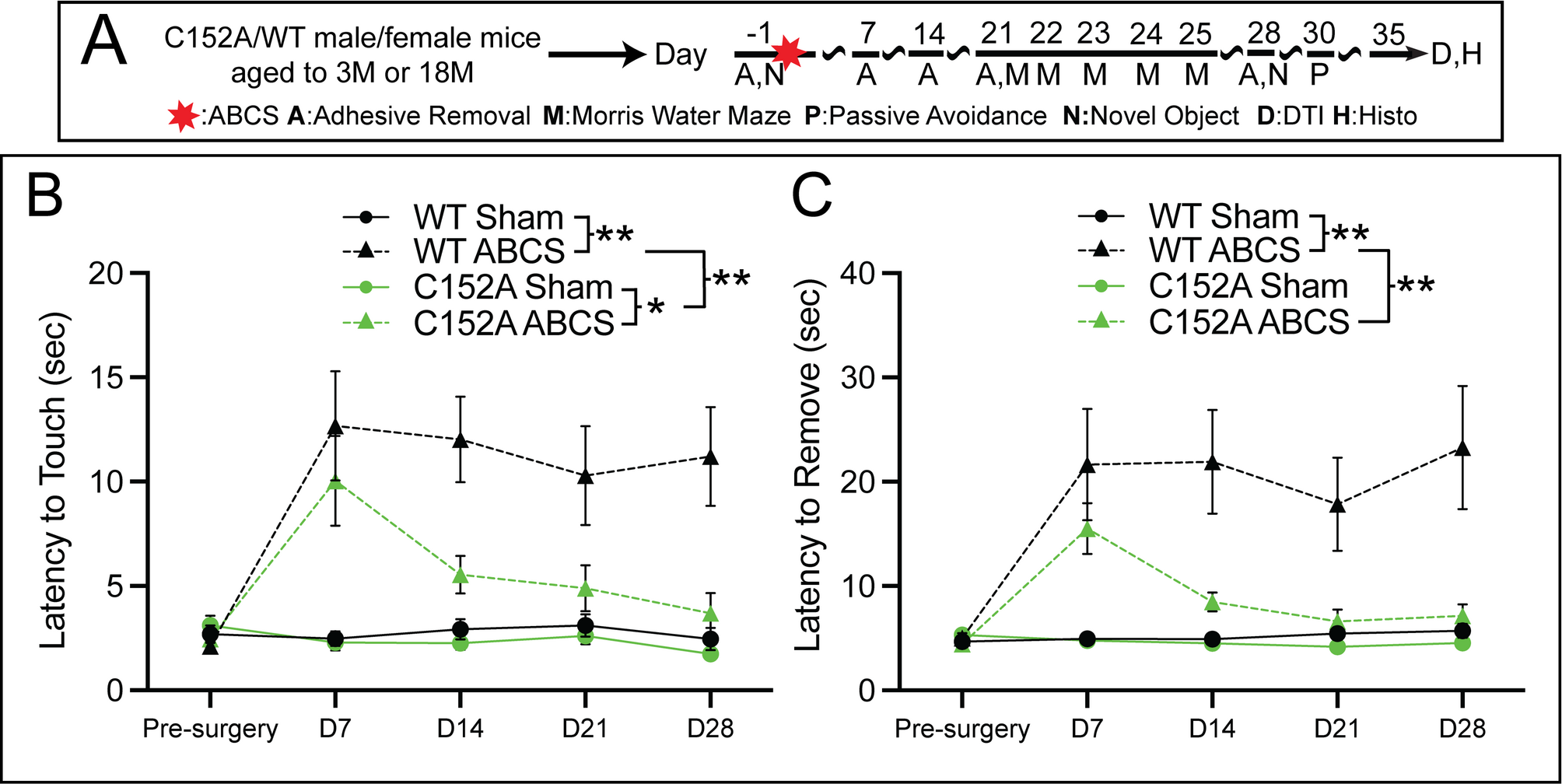
The researchers produced an experimental model of the disorder, called asymmetric bilateral common carotid artery stenosis, in mice bearing a UCHL1 cysteine 152 to alanine mutation and in wild-type controls.
Mice with the mutation exhibited reduced white matter injury as detected by diffusion tensor brain imaging in both age groups. Mutated mice also showed improved performance compared to controls on tests of sensorimotor function, water maze navigation, passive avoidance, and novel object recognition.
Why it matters
Because the researchers tested 18-month-old mice alongside young adults, the findings bear on whether targeting the UCHL1 protein could help protect nerve tissue and preserve cognitive function when blood flow is compromised in older brains.
Caveats
The study relied on an induced mouse model of carotid artery stenosis, which may not capture all features of human vascular cognitive impairment and dementia. Furthermore, the animals carried the genetic mutation from the start rather than receiving a treatment after injury had occurred.
- UCHL1
- Vascular cognitive impairment and dementia
- Passive avoidance test
- Adhesive tape removal test
- Morris water maze
- Mice
The paper
Show 6 more authors
Zhongfang Weng, Madeline G. M. Bozenko, Lesley M. Foley, Marie E. Rose, T. Kevin Hitchens, Guodong Cao,University of Pittsburgh
Scientific Reports · 7 Oct 2026 · CC BY-NC-ND