Physical activity and blood pressure as predictors of cognitive function in the all of us research program
14 years
Abstract
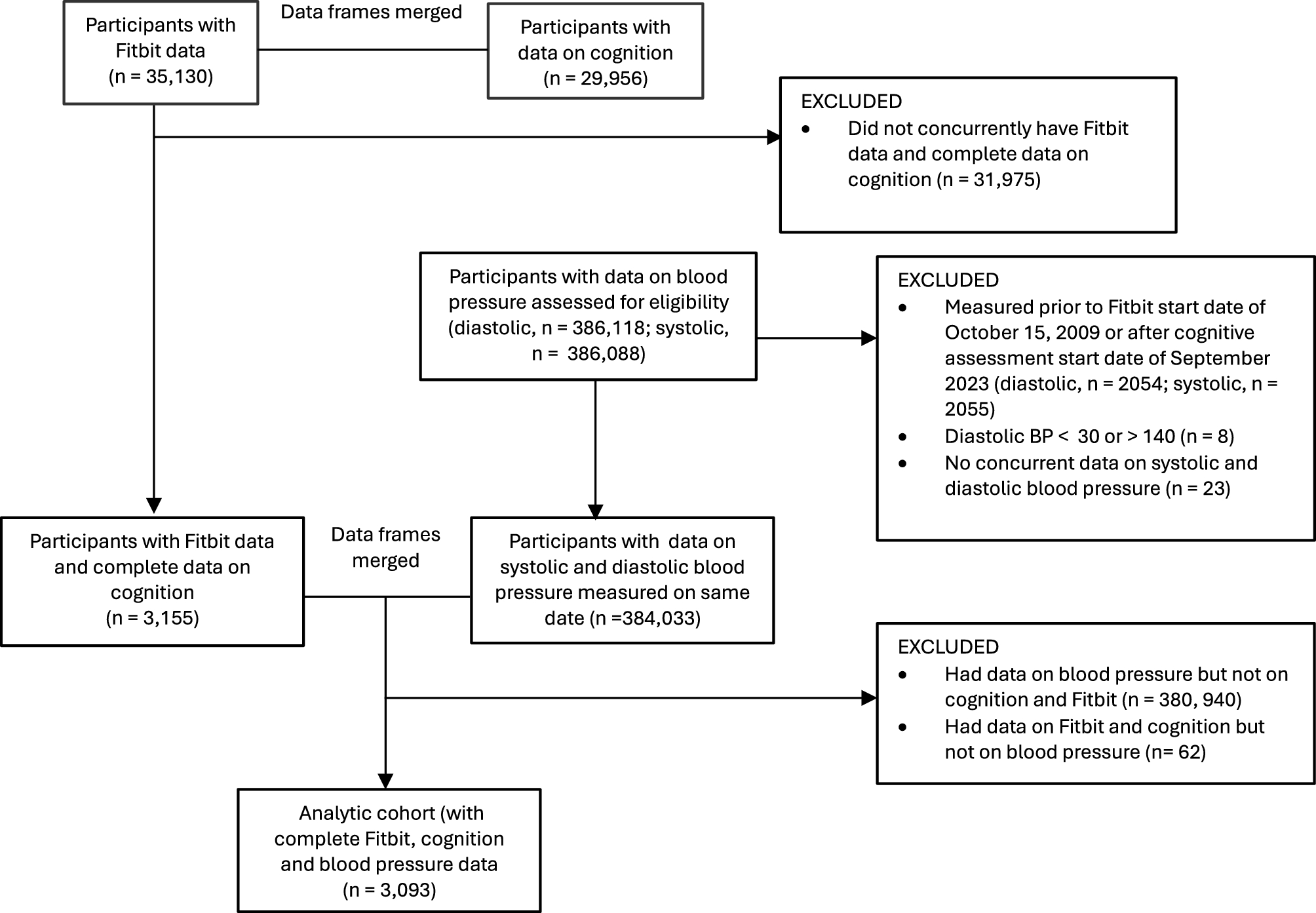
Physical activity (PA) is positively associated with cognition, whereas elevated blood pressure shows a negative association. However, most studies relied on subjective, self-reported measures of PA. In this study, we examined associations of PA (daily step count from Fitbit wearable devices), systolic (SBP) and diastolic (DBP) blood pressure spanning 14 years, with end-of-study cognitive performance in 3,093 participants in the All of Us Research Program (AoU). Cognition was assessed by the Gradual Onset Continuous Performance Task (Grad-CPT), Delay Discounting Task (DD-Task), Multiracial Emotional Recognition Task (Emorecog-Task) and Flanker-Task. Baseline PA metrics were positively associated with Grad-CPT (β = 0.31, 95% CI: 0.18 to 0.44), DD-Task (β = 0.05, 95% CI: 0.04 to 0.07), and Flanker-Task (β = 0.26, 95% CI: 0.17 to 0.35). Baseline SBP was negatively associated with DD-Task (β = -0.01, 95% CI: -0.02 to -0.004). Longitudinal k-means clustering identified 3 clusters of individuals—A, B and C— with mean daily steps of 5108, 8875 and 14,161 respectively. Individuals in clusters B and C had higher scores than those in cluster A on the DD-Task, Grad-CPT and Flanker-Task. These findings underscore the potential role of PA promotion and optimal blood pressure management in supporting cognitive health.
The paper
Scientific Reports, 11 Oct 2026, CC BY