Obesity linked to education gaps in long-term illness rates
Participants with no qualifications had an approximately 71% higher rate of developing multiple long-term conditions than degree-educated participants in the UK Biobank cohort.
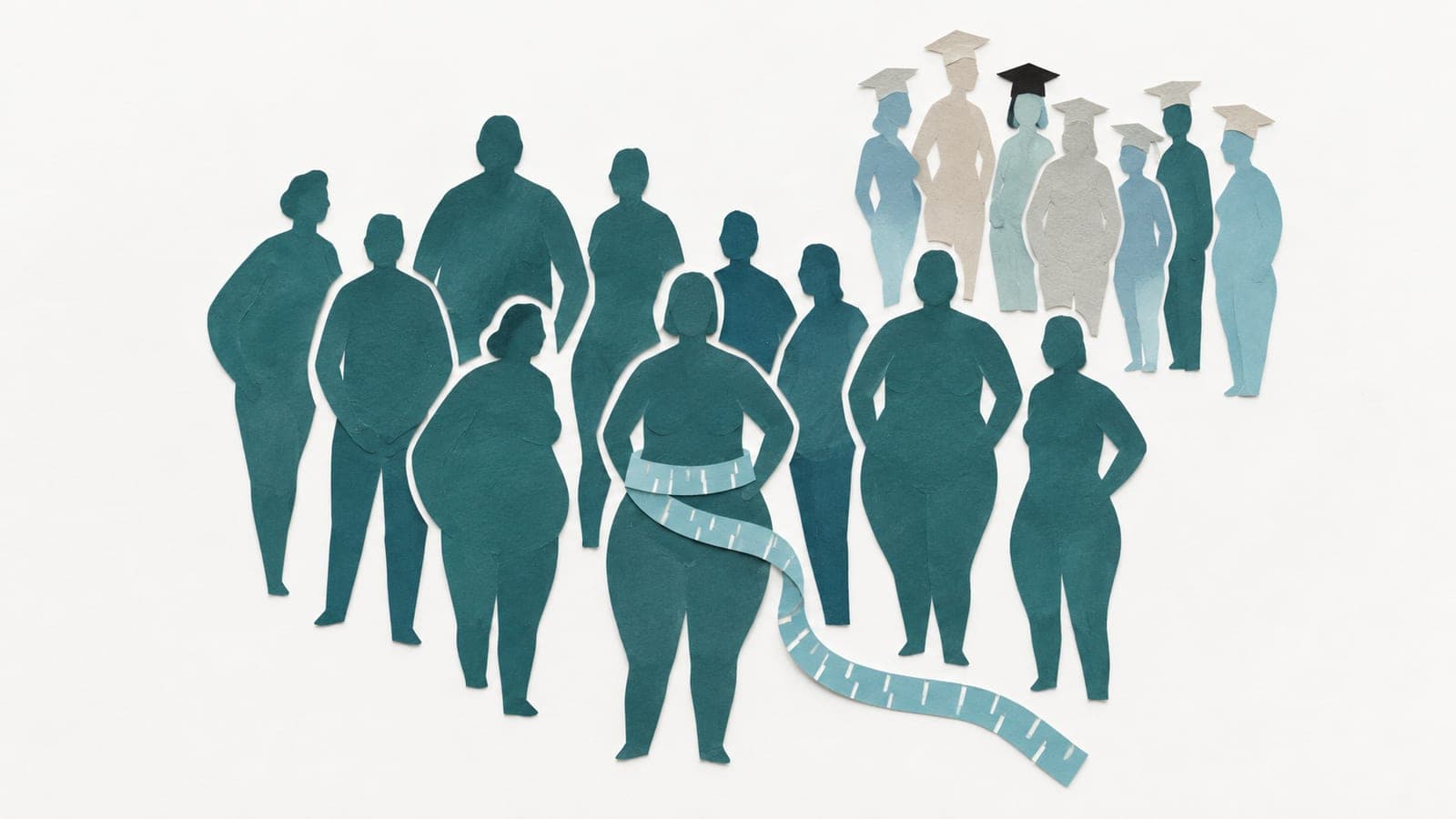
In an observational study of 194,038 UK Biobank participants, researchers examined links between education, obesity and developing multiple long-term conditions. They used educational attainment as a measure of socioeconomic position. They examined whether overall obesity and central obesity, measured by waist size relative to hip size, partly accounted for differences in illness rates.
Over five years, 11,071 participants developed multiple long-term conditions. The researchers defined this as diagnoses of two of the conditions studied, recorded in linked healthcare data. Participants with no qualifications had higher rates than those with degrees. The analysis estimated that overall obesity accounted for 8% of this association and central obesity for 13%.
Why it matters
The study bears on a healthy-lifespan question: whether addressing obesity could reduce socioeconomic inequalities in developing multiple long-term conditions.
Caveats
This observational analysis could not establish cause and effect or test whether reducing obesity would narrow the illness gap.