Contemporary cardiometabolic and inflammation targeting therapies reduce residual cardiovascular risk in an endpoint harmonized meta analysis
Abstract
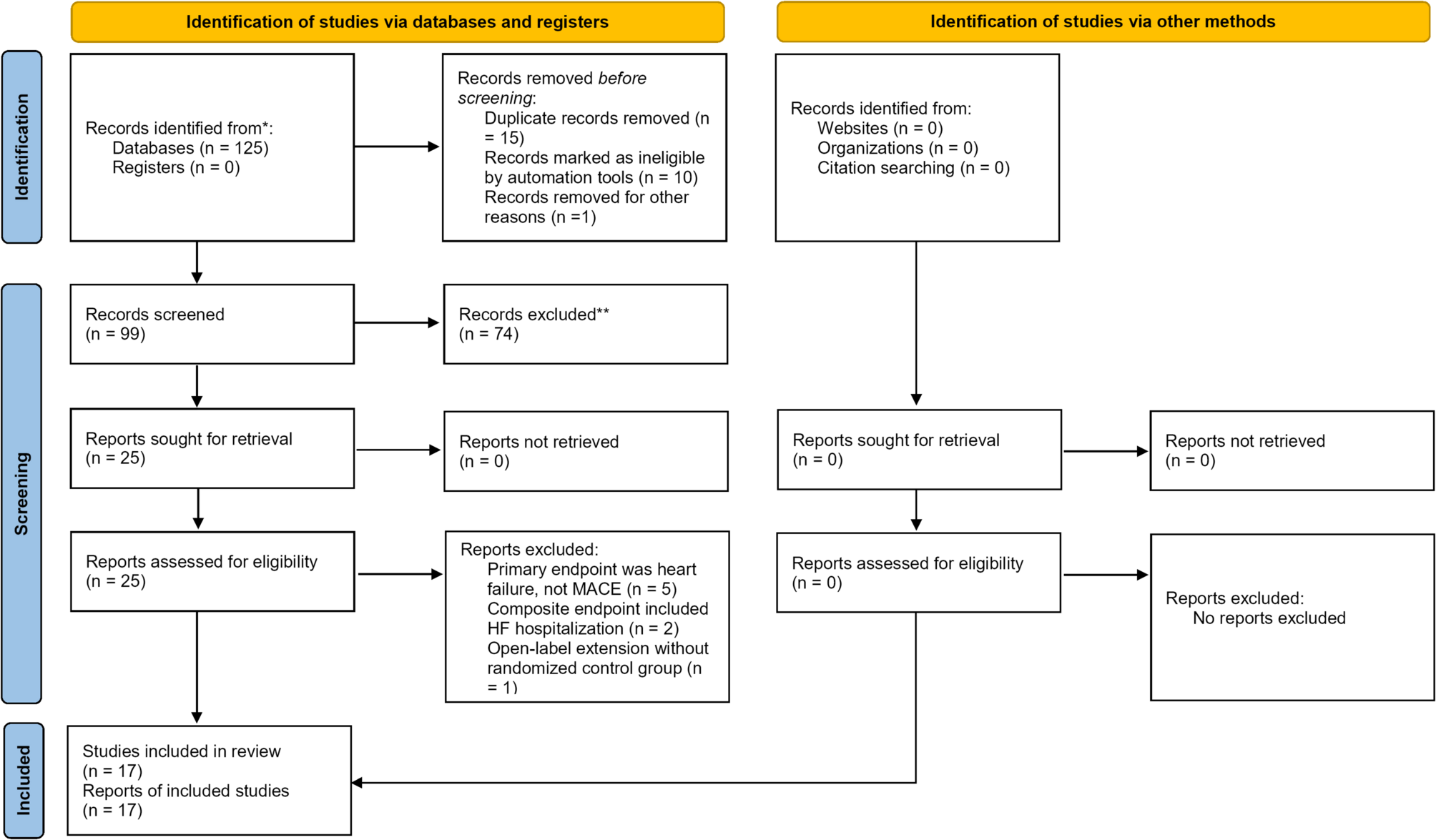
Residual cardiovascular risk remains substantial despite contemporary preventive therapy. Multiple pharmacological strategies targeting metabolic, lipid-related, cardiorenal, and inflammatory pathways have shown cardiovascular benefit in randomized trials, but differences in endpoint definitions and composite outcome structures complicate cross-trial interpretation. We aimed to evaluate whether contemporary cardiometabolic and anti-inflammatory therapies are associated with lower major adverse cardiovascular event risk using an endpoint-harmonized framework. We conducted a systematic review and meta-analysis of randomized controlled trials evaluating sodium-glucose cotransporter-2 inhibitors, glucagon-like peptide-1 receptor agonists, proprotein convertase subtilisin/kexin type 9 inhibitors, omega-3 fatty acid-based therapies, and anti-inflammatory agents. Databases were searched from inception through February 2026. The primary outcome was endpoint-harmonized major adverse cardiovascular events (MACE), defined as the trial-reported cardiovascular composite endpoint judged most comparable across studies according to prespecified harmonization rules. A prespecified sensitivity analysis was restricted to strict 3-point MACE, defined as cardiovascular death, nonfatal myocardial infarction, and nonfatal stroke. Hazard ratios (HRs) were pooled on the log scale using random-effects models with restricted maximum likelihood estimation and Hartung–Knapp adjustment. Seventeen randomized trials involving 157,278 participants and 15,815 events contributed to the primary endpoint-harmonized analysis. Active therapy was associated with a lower risk of MACE than control (HR 0.84, 95% CI 0.79–0.88; I²=51%). In the sensitivity analysis restricted to strict 3-point MACE, 10 trials involving 98,973 participants and 9,067 events yielded a consistent pooled estimate with no observed heterogeneity (HR 0.83, 95% CI 0.80–0.86; I²=0%). Directionally consistent benefit was observed for sodium-glucose cotransporter-2 inhibitors, glucagon-like peptide-1 receptor agonists, and anti-inflammatory therapies. Estimates for proprotein convertase subtilisin/kexin type 9 inhibitors and omega-3 fatty acid-based therapies were based on limited trials and should be interpreted cautiously. No statistically significant effect modification by therapeutic class was detected, although the analysis was not designed to establish comparative equivalence across classes. Across randomized trials, contemporary cardiometabolic and anti-inflammatory therapies were associated with lower major adverse cardiovascular event risk. The consistency of findings in the strict 3-point MACE sensitivity analysis supports the robustness of the overall association. However, differences in heterogeneity and precision across therapeutic classes suggest that these therapies should not be assumed to be clinically interchangeable.
- Anti-inflammatory therapies
- Contemporary cardiometabolic and anti-inflammatory therapies
- GLP1R
- PCSK9
- Cardiovascular disease
- Humans
The paper
Scientific Reports, 15 Oct 2026, CC BY