Metabolic risk factors and leptin DNA methylation dynamics in a sample of Egyptian women with obesity
3 months
Abstract
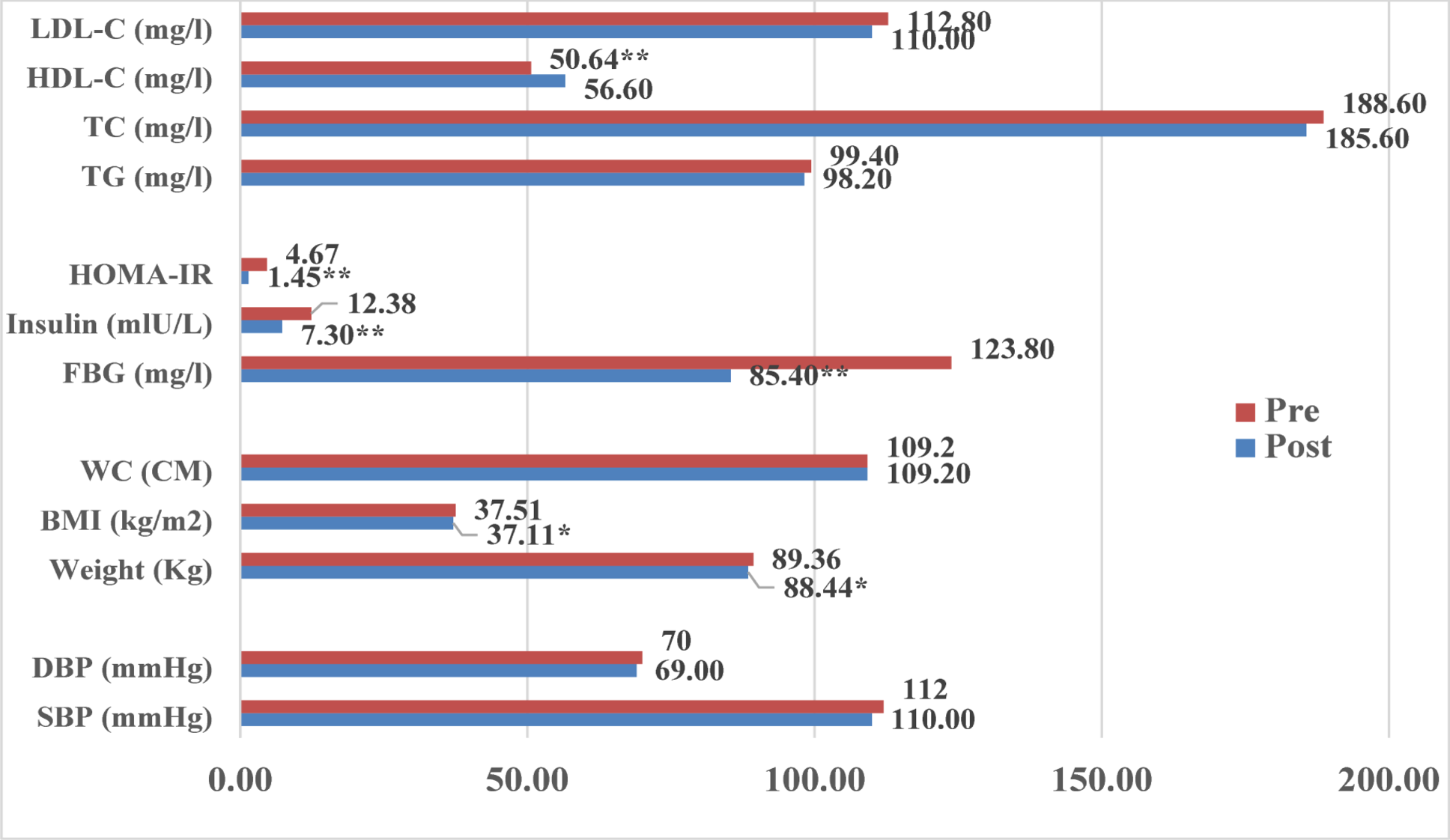
Metabolic health is negatively affected by obesity, causing a cluster of conditions known as metabolic syndrome that increase the risk for cardiovascular disease and type 2diabetes. Scientific research suggests that actions and expression of the Leptin hormone are strongly influenced by epigenetic changes such as methylation of promoter sites, which is linked to metabolic disorders occurring in obesity. The current study aimed to evaluate metabolic risk factors and its association with DNA methylation at the promoter region of the Leptin gene in a sample of Egyptian women with obesity pre and post dietary intervention. This longitudinal intervention study included 58 obese females aged 25–60 years. Participants were prescribed a 3-month weight loss program. Baseline and endpoint anthropometric parameters were measured and blood samples for metabolic assessment were drawn. The methylation of Leptin gene promoters was investigated using PCR as well as measured Leptin levels before and after the intervention program. The sample was classified into two groups: 35 metabolically healthy women with obesity (MHO) and 23 metabolically unhealthy women with obesity (MUO), based on the presence of three or more of the Metabolic Syndrome criteria. Pre-intervention: higher Leptin methylation was generally associated with better metabolic profiles in the MHO group. While post-intervention, the correlation patterns suggest different epigenetic responses between the two groups, with the MHO group maintaining protective associations, and the MUO group showing correlations indicating improved metabolic dysfunction. Current data suggest that Leptin gene methylation patterns serve as biomarkers for metabolic health status and therapeutic targets for intervention response in individuals with obesity.
The paper
Scientific Reports, 15 Oct 2026, CC BY


