Hormone therapy responses varied with women’s microbiomes
In a six-month trial of 356 perimenopausal women, starting vaginal and gut microbial communities were linked to differences in hormone therapy responses.
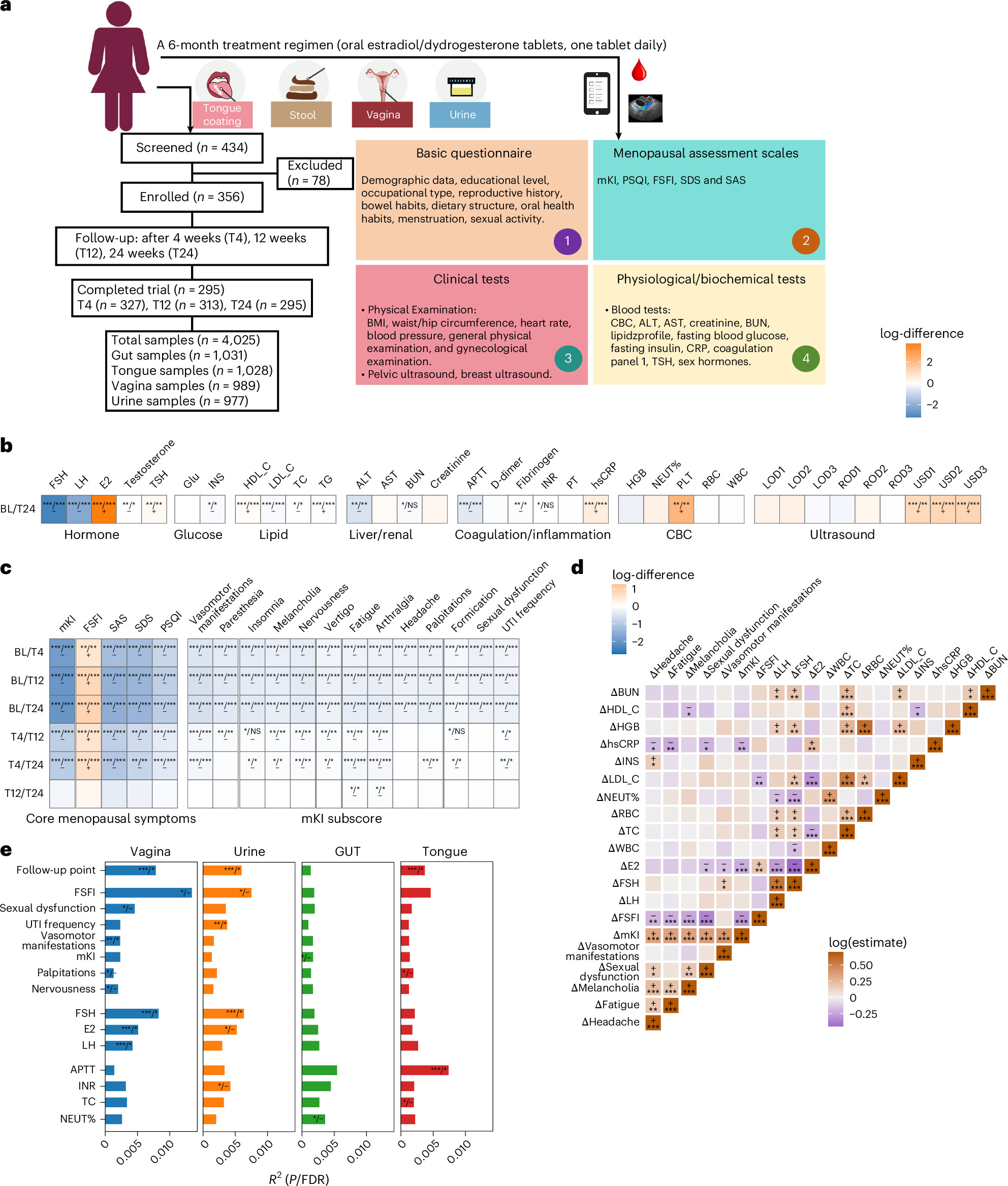
356 perimenopausal women, non-randomized trial, registered ChiCTR2100049768
Limit: Symptom improvements could reflect temporal trends, placebo effects, or regression to the mean
Edited by Boris Djordjevic · AgingResearch.News
The clinical trial enrolled 356 perimenopausal women, who were in the transition to menopause. They received oral hormone therapy containing estradiol and dydrogesterone for six months. Researchers reported improvements in symptoms and metabolic and hormone-related outcomes. Microbial communities changed most in the vagina, cervix and urinary tract, moderately in the mouth and minimally in the gut.
Higher starting levels of Lactobacillus crispatus, a bacterium in the vagina and cervix, predicted greater improvement on a sexual-function questionnaire. Starting vaginal and cervical community types were linked to different outcomes. Communities dominated by the bacterium Gardnerella vaginalis shifted most toward healthier communities, while diverse communities improved least. Starting gut community types were also linked to differences in hormonal responsiveness, clinical outcomes and the likelihood of clinical remission within four weeks.
Why it matters
The authors propose using gut and vaginal–cervical microbial community types to help personalize hormone therapy during the menopausal transition.
Caveats
The abstract does not report a control group, random assignment, treatment dose or adverse-event figures. The findings concern perimenopausal women, and the links with starting microbes do not establish that those microbes caused better responses.
Where the evidence stands
Estradiol + dydrogesterone
- 5 independent labs in 2 countries
Microbiome composition
- 163 independent labs in 32 countries
- 7 findings against
- Funders: National Natural Science Foundation of China and others
- 29 of 214 findings with company ties
From the paper
- Result
Mediation analysis showed that L. crispatus significantly mediated MHT-induced FSFI improvement (average causal mediation effect = 0.37, 95% confidence interval (CI): 0.19–0.59, P < 0.001) …
Results, BL urogenital microbiome associates with differential microbial restructuring
- Limitation
First, the absence of a placebo control group (primarily for ethical reasons) necessitated a self-controlled before-after design.
Quoted word for word from the full text on nature.com.

Comments
Be the first to comment.