Gut bacterium partly restores hormone levels in aging mice
Experiments in female mice also reported reversed cognitive decline and longer lifespan after researchers restored a bacterium that declined with ovarian failure.
Limit: Only 6 mice per group received the aging intervention
Edited by Boris Djordjevic · AgingResearch.News
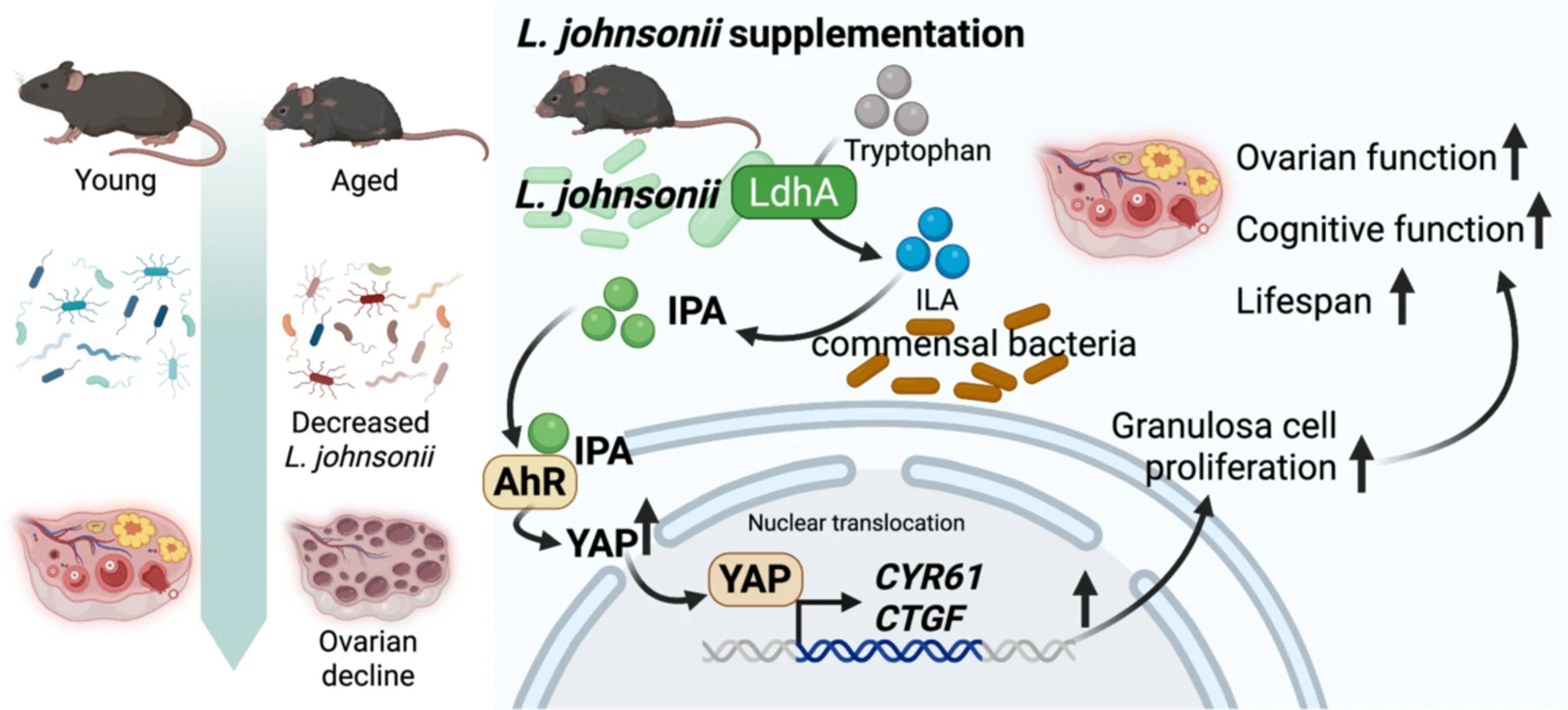
In experiments in aging female mice, researchers found that levels of the gut bacterium Lactobacillus johnsonii fell as ovarian function failed. Restoring the bacterium partly restored hormone levels in mouse models of age-related or chemically induced ovarian decline. The authors reported that this reversed cognitive decline and extended lifespan.
The researchers also reported that indole-3-propionic acid, a substance derived from the bacterium, encouraged granulosa cells to multiply and increase sex-hormone production. These ovarian cells support developing eggs. The authors described the bacterium as a promising probiotic—a live microbe intended to benefit health—for easing ovarian aging.
Why it matters
Ovarian aging changes sex-hormone levels and can affect health beyond reproduction. The work addresses whether signals from gut microbes could help preserve ovarian hormone production with age.
Caveats
These were mouse experiments, not a test in women. The abstract does not report the size of the lifespan benefit or how long the bacterium was given.


Comments
Be the first to comment.