Gut microbial DNA differences linked to health in people
An observational analysis of 10,781 people from six cohorts found 940 independent links between microbial DNA differences and 69 factors, including age and health measures.
Our read
Populations- Studied:
- Genetic association study of 10,781 people with gut microbial genetic data (Independent replication)
- What changed:
- Gut microbial DNA differences had 940 independent links to human traits and environmental exposures
- The catch:
- Association analyses excluded samples lacking a single dominant strain
- Why it’s aging research:
- Change across ages, or exceptional longevity.
Editor of record: Boris Djordjevic · AgingResearch.News
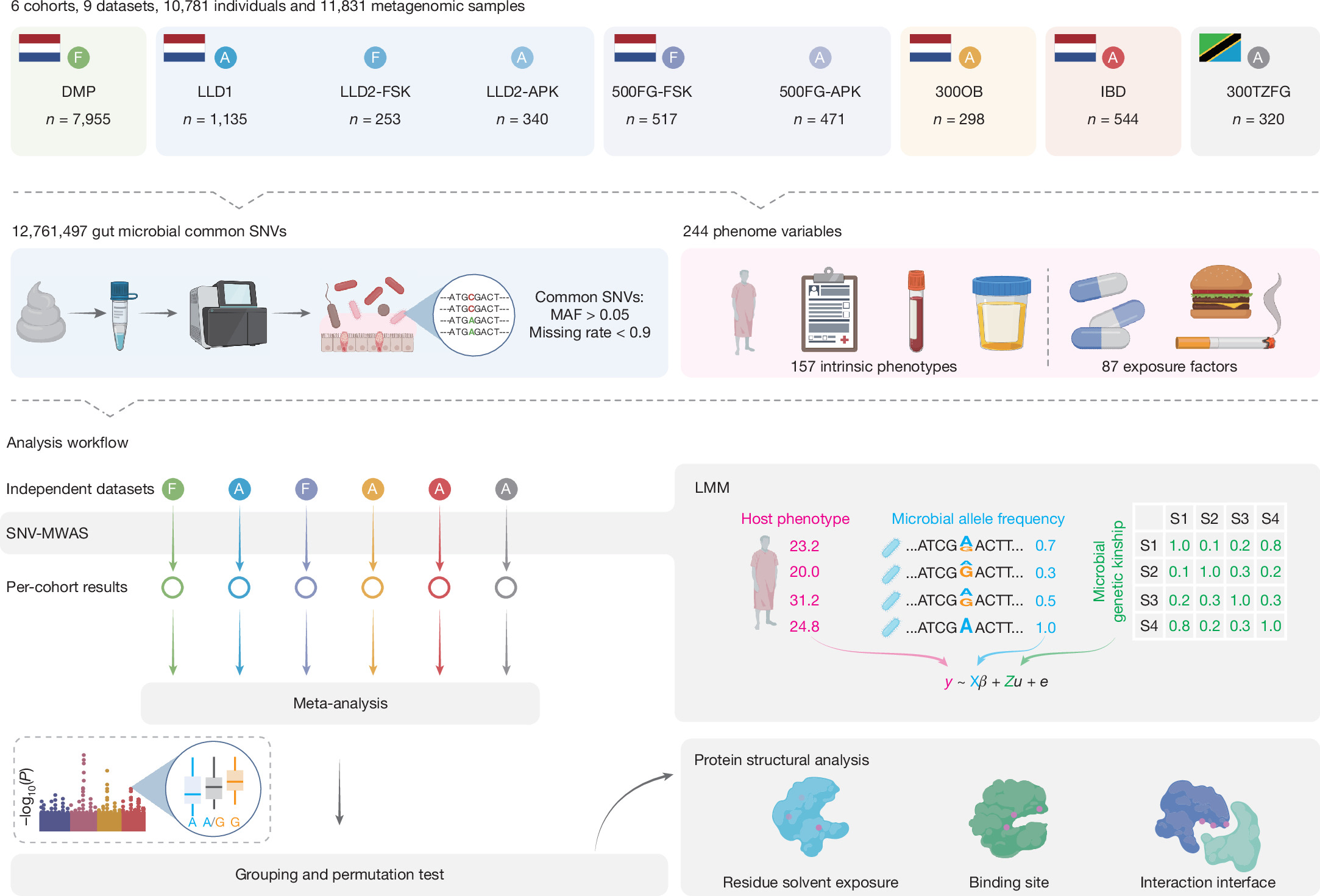
The 10,781 people from six independent cohorts were studied in an observational analysis comparing 12.8 million single-letter differences in gut microbial DNA with 244 health measures and environmental exposures. Participants included men and women, people with inflammatory bowel disease, which causes chronic gut inflammation, and older adults with high body mass index, a measure of weight relative to height.
The researchers identified 940 independent links involving 69 factors, including age, sex, and measures related to the heart, blood vessels and how the body uses nutrients. Computer analyses of protein structures placed some linked DNA differences in functionally important regions. The authors said these findings offered hypotheses about how microbial genetic differences relate to people's physiology and environment. They also released an online catalogue of the results.
Why it matters
Genetic diversity within gut microbial species offers a starting point for investigating connections between microbes and aging. The catalogue provides candidates for studying those connections beyond simply counting which species are present.
Caveats
The analysis could not distinguish microbial variants affecting health from health or exposures favoring particular microbial variants. The protein analyses used computer-predicted structures rather than experimental tests of the variants' functions.
Where the evidence stands
Microbiome composition
- 165 independent labs in 33 countries
- 7 findings against
- Funders: National Natural Science Foundation of China and others
- 29 of 218 findings with company ties
From the paper
- Participants
In total, 298 older individuals with metagenomic data (132 female and 166 male participants) with a high BMI > 27 kg m−2 were enrolled in 300OB.
Quoted word for word from the full text on nature.com.
Comments
Be the first to comment.