Some blood amino acids linked to lower Parkinson’s risk
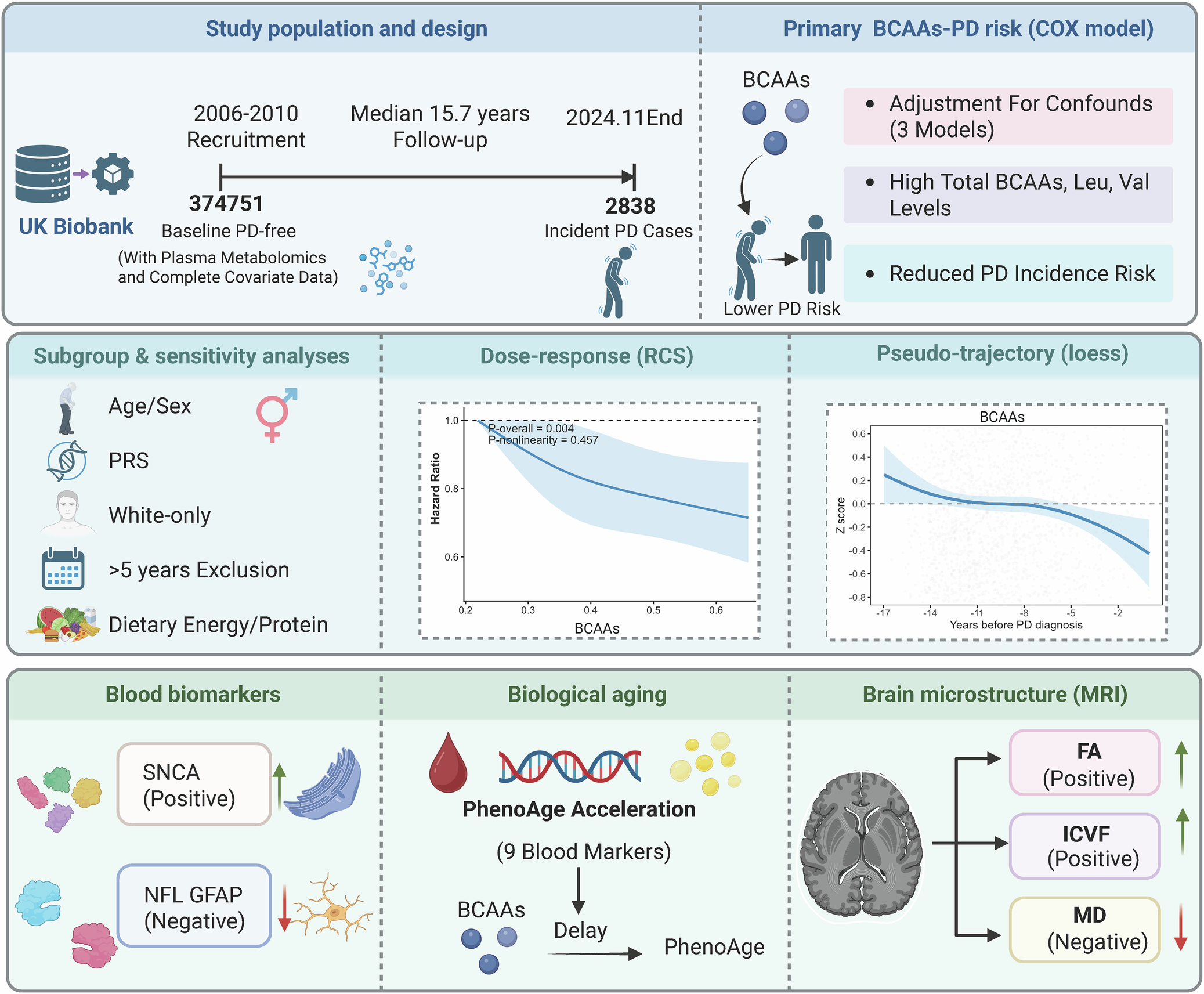
A prospective cohort study of 374,751 UK Biobank participants linked higher levels of certain protein building blocks to a lower risk of developing Parkinson’s disease.
Our read
Populations- Studied:
- Cohort study of 374,751 UK Biobank participants without neurodegenerative diseases (Dose-response)
- What changed:
- Higher blood levels of total branched-chain amino acids, leucine, and valine were linked to lower Parkinson’s disease risk
- The catch:
- Parkinson’s changes before diagnosis may alter amino acid levels, reversing the apparent causal direction
- In the record:
- One of 4 papers on total branched-chain amino acids on record: 3 with results in people.
- Why it’s aging research:
- It bears on staying healthy in midlife and later life.
Editor of record: Boris Djordjevic · AgingResearch.News
Among 374,751 UK Biobank participants initially free of Parkinson’s and other neurodegenerative diseases, a prospective cohort study examined blood levels of branched-chain amino acids, which help build proteins.
Higher total levels, and higher levels of the individual amino acids leucine and valine, were associated with a lower risk of developing Parkinson’s. Baseline levels were lower among participants assessed closer to their later diagnosis. Higher levels were also associated with lower scores on a measure of accelerated biological aging. In the brain-scan analysis, higher levels were linked to more favorable structural patterns in white matter, the tissue connecting brain regions.
Why it matters
Parkinson’s is an age-related disease. The authors suggested that altered amino acid metabolism may be a feature of the disease before diagnosis.
Caveats
Changes related to Parkinson’s before diagnosis may have influenced amino acid levels, rather than those levels affecting disease risk. The prediagnostic patterns came from baseline measurements, not repeated measurements tracking changes within individuals.

Comments
Be the first to comment.