Protein loss disrupts nuclear structure in primate cells
Restoring the protein’s activity restored nuclear structure and the ability to divide in cells from aged non-human primates and animals modeling a premature-aging disorder.

The catch: Health and lifespan outcomes were not measured
Edited by Boris Djordjevic · AgingResearch.News
Experiments used primary fibroblasts, connective-tissue cells from naturally aged non-human primates and primate models of Hutchinson-Gilford progeria syndrome, a premature-aging disorder. The researchers also examined skin tissue from animals modeling the disorder. The work focused on the nuclear lamina, a supporting layer lining the nucleus.
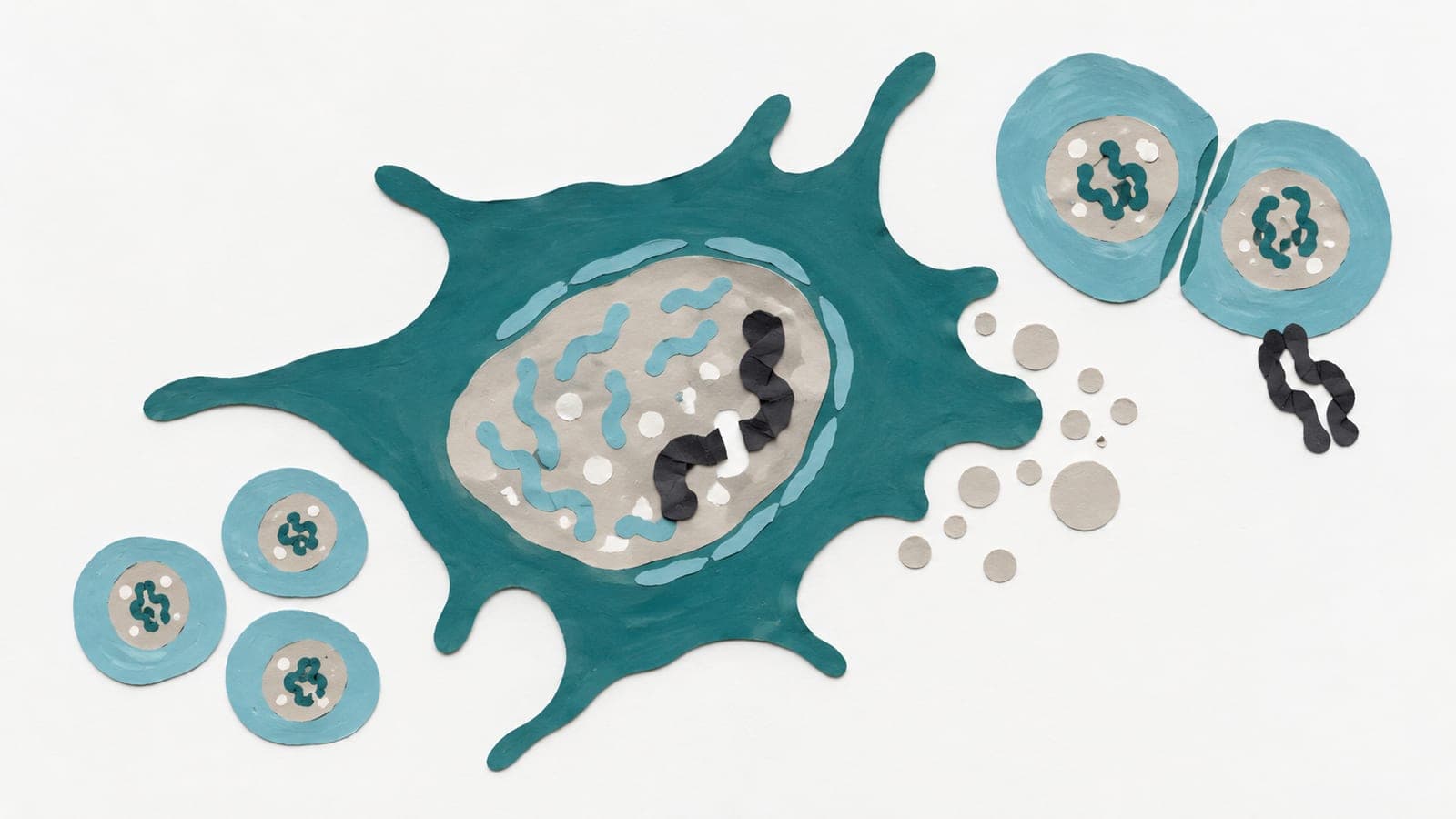
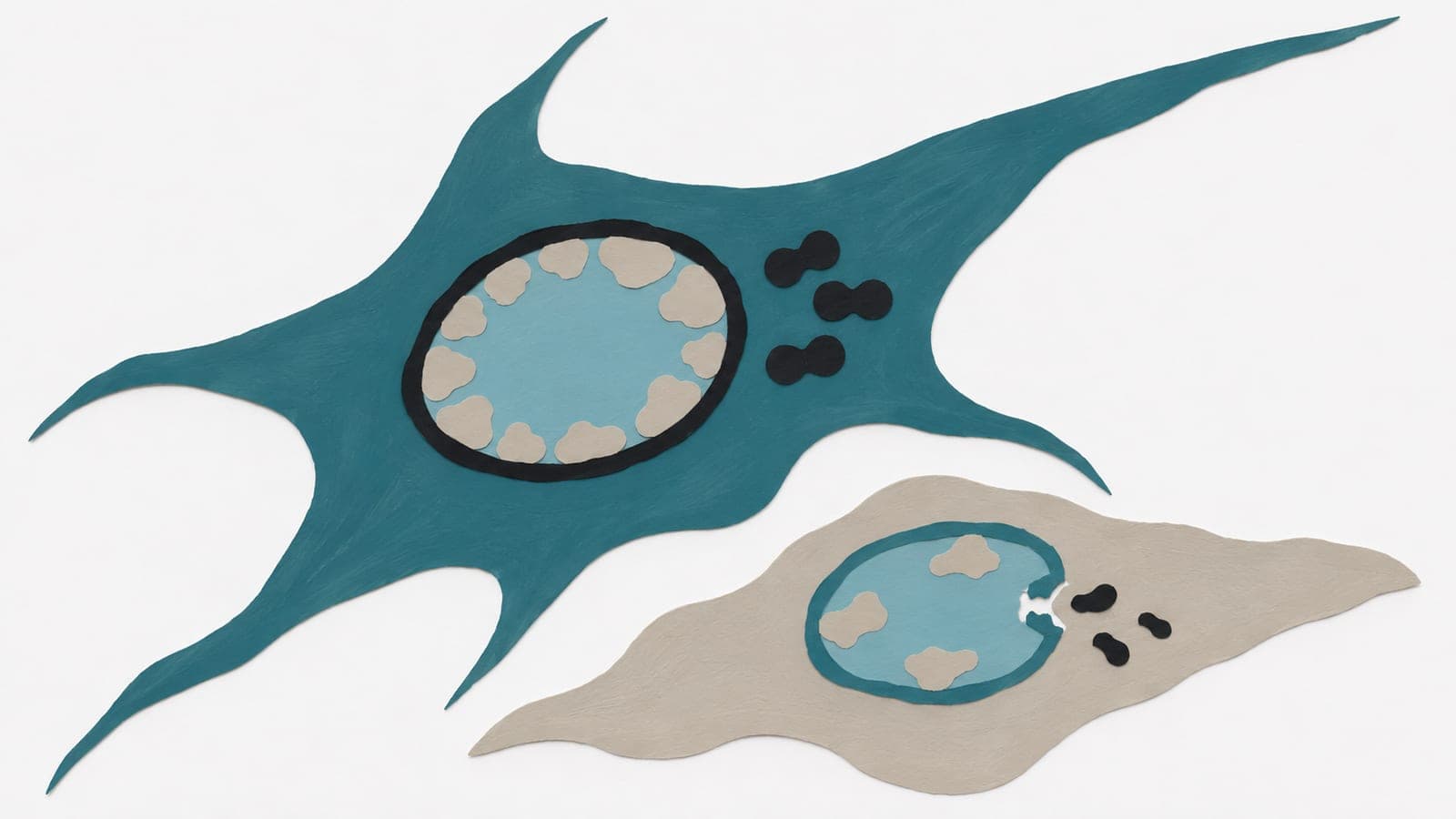
Depleting β-catenin, a cell-signaling protein, caused nuclear abnormalities and stopped cell division. Its depletion involved both reduced activity of its gene and breakdown by the cell’s protein-disposal system. Restoring β-catenin activity through three different approaches restored nuclear structure and the cells’ ability to divide.
Why it matters
Nuclear lamina deterioration is a hallmark of aging. The work addresses how changes in gene regulation and protein maintenance might contribute to that deterioration.
Caveats
The findings came mainly from cells grown in the lab, with supporting skin-tissue observations in animals modeling progeria. They do not establish benefits for health or lifespan.

Comments
Be the first to comment.