Reduced belief updating impairs adaptive step initiation in older adults
Abstract
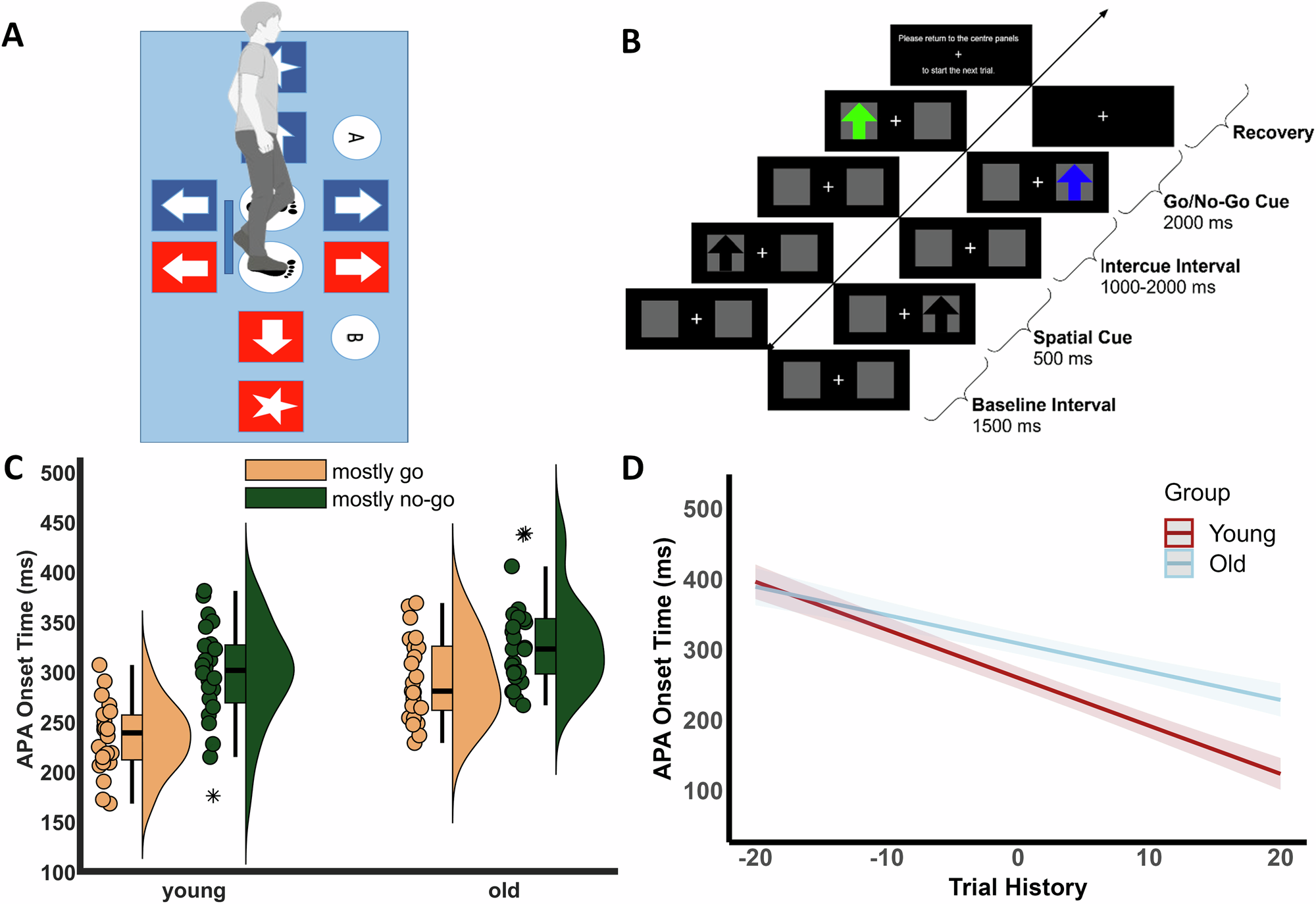
Ageing is associated with declines in mobility and balance that threaten independence and increase fall risk. These changes are multifactorial, resulting from interactions among peripheral, multisensory, and central nervous system processes. Among these factors, altered cognitive control plays an important role in contributing to postural instability and gait impairments. Here, we examined whether shifts in cognitive control strategy underlie impaired gait initiation in older adults by modelling how individuals update beliefs about upcoming actions. Older and younger adults performed a choice-stepping go/no-go task in which step likelihood was manipulated across trials. We measured anticipatory postural adjustments (APAs), the preparatory weight shifts preceding stepping and modelled age-related differences in APA onset using a hierarchical Bayesian framework. Older adults initiated slower APAs, particularly after repeated go trials. Computational modelling revealed reduced learning rates and heightened sensitivity to uncertainty in older adults, identifying altered belief updating as a cognitive mechanism shaping age-related changes in adaptive stepping.