A protein helps control fat breakdown in mouse livers
Experiments in mouse models of fatty liver disease showed that raising the protein’s levels protected against fat buildup and liver injury.
Our read
Mechanisms- Studied:
- Experiments in mice modeling fatty liver disease
- What changed:
- Raising ROMO1 levels reduced liver fat buildup in mouse models of fatty liver disease
- The catch:
- The text reports altered ROMO1 levels, but no effects of a ROMO1-targeting drug
- In the record:
- One of 5 papers on ROMO1 on record: 1 with results in people, 2 in animals.
Editor of record: Boris Djordjevic · AgingResearch.News
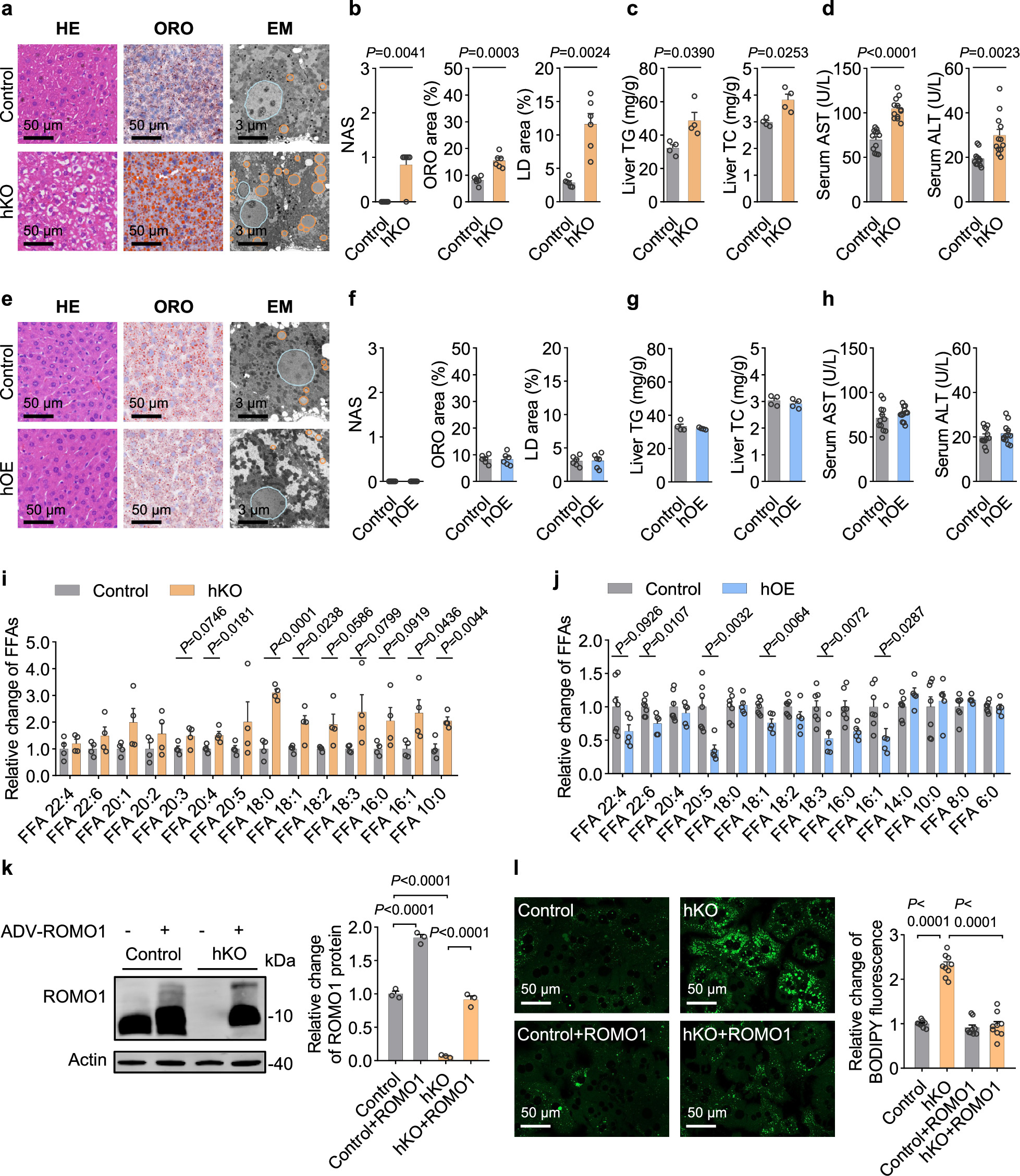
Mice lacking ROMO1 in their liver cells accumulated liver fat in animal experiments. ROMO1 is a protein in mitochondria, the energy-producing structures inside cells. Removing it impaired those structures’ ability to burn free fatty acids, a form of fat.
ROMO1 loss triggered chemical changes in an enzyme that breaks down proteins. The enzyme then broke down too much SIRT3, another mitochondrial protein, leading to further chemical changes in proteins involved in fat burning. Raising ROMO1 levels protected against liver fat buildup and liver injury in several mouse models of fatty liver disease. ROMO1 deficiency worsened disease progression. In aged rhesus macaques, naturally occurring fatty liver was associated with lower ROMO1 levels and loss of SIRT3 protein.
Why it matters
The findings in aged monkeys connect this pathway to questions about liver health in later life. The authors identify the pathway as a potential treatment target for fatty liver disease.
Caveats
The experiments changed ROMO1 levels in mice, leaving open whether the same approach would help people with fatty liver disease.
Where the evidence stands
ROMO1
- 2 independent labs in 2 countries
- Funder: National Natural Science Foundation of China
- 1 of 5 findings with company ties
SIRT3
- 125 independent labs in 27 countries
- 5 findings against
- Funders: National Natural Science Foundation of China and others
- 13 of 352 findings with company ties
The paper
A redox-coupled ROMO1–LONP1–SIRT3 axis controls hepatic lipid catabolism
Nature Communications, Nov 16, 2026, CC BY-NC-ND
Comments
Be the first to comment.