Neuron loss may weaken the brain’s spatial maps in aging mice
Silencing a neuron subgroup in young mice impaired how brain cells responded to location; older mice had fewer cells in this subgroup.
Limit: Age-related neuron loss was observed; the intervention only silenced neurons in young mice
Edited by Boris Djordjevic · AgingResearch.News
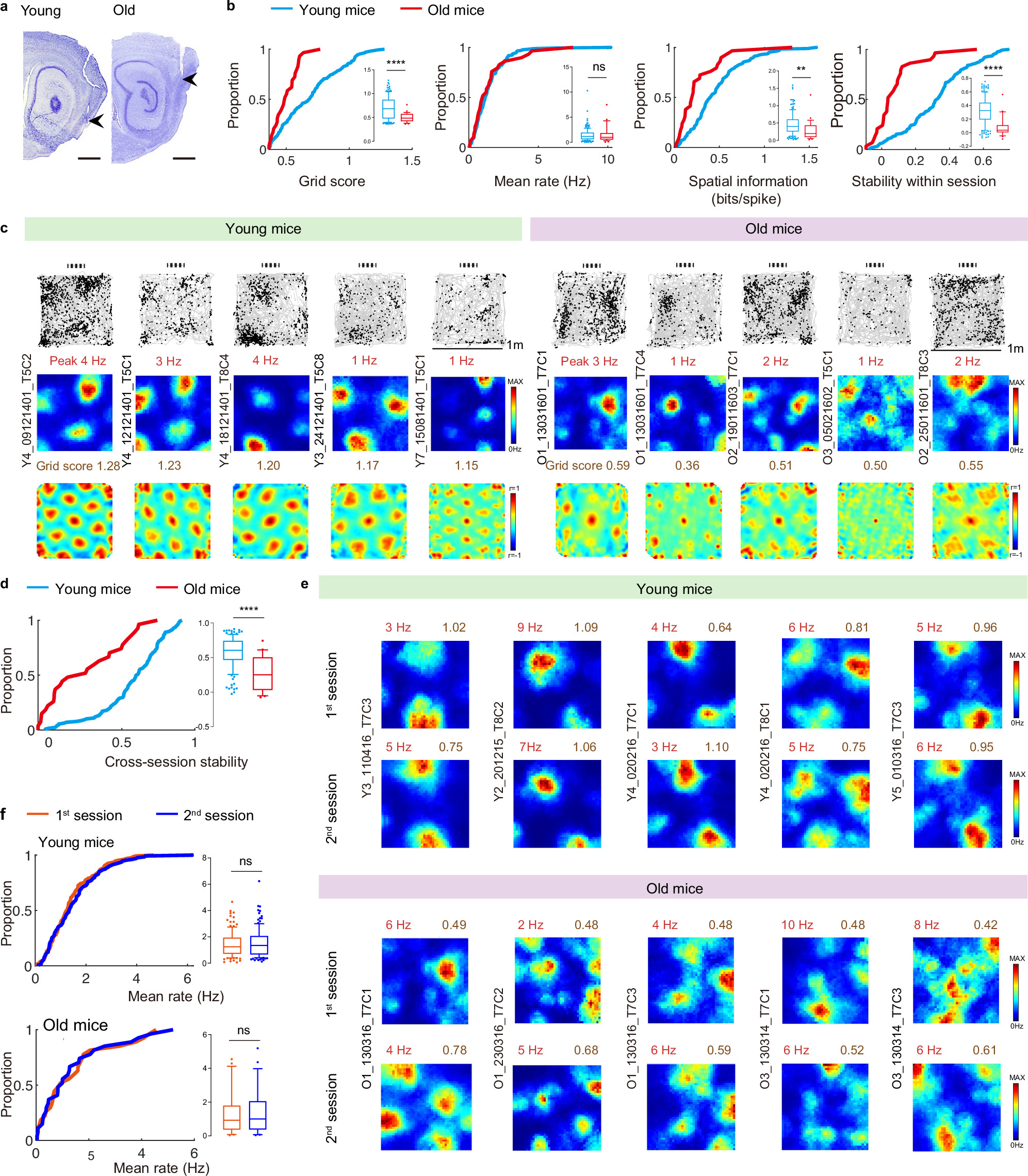
Old mice had a smaller share of grid cells, neurons that help map locations, and less stable spatial activity in the medial entorhinal cortex, a brain region involved in navigation. In animal experiments, researchers compared gene activity in this region between young and old mice. They identified 1,664 genes with different activity levels.
One gene, Bglap3, marked a subgroup of neurons in the region’s third layer. This subgroup showed an age-associated decline in cell number. Experimentally silencing these neurons in young mice impaired how precisely neurons in the region responded to location. The authors suggested that loss of the Bglap3-marked neurons may underlie age-related deficits in spatial coding, the brain’s representation of location.
Why it matters
Spatial orientation and memory can decline with age. This work addresses which cellular changes in a navigation-related brain region may contribute to that decline.
Caveats
Silencing neurons in young mice does not establish that their age-related loss caused the changes observed in old mice. The findings came from mice, not people.
- Chemogenetic silencing of bglap3-positive neurons
- BGLAP3
- Age-related cognitive decline
- Bglap3-positive neuron count
- Grid-cell proportion
- Mice
The paper
Nature Communications, Nov 3, 2026, CC BY-NC-ND
Comments
Be the first to comment.