Sleep-wave changes are linked to Alzheimer’s proteins in aging
In two human cohorts, a shift toward slower waves during rapid eye movement sleep was associated with Alzheimer’s-related proteins and poorer overnight memory consolidation.
Independent replication
Edited by Boris Djordjevic · AgingResearch.News
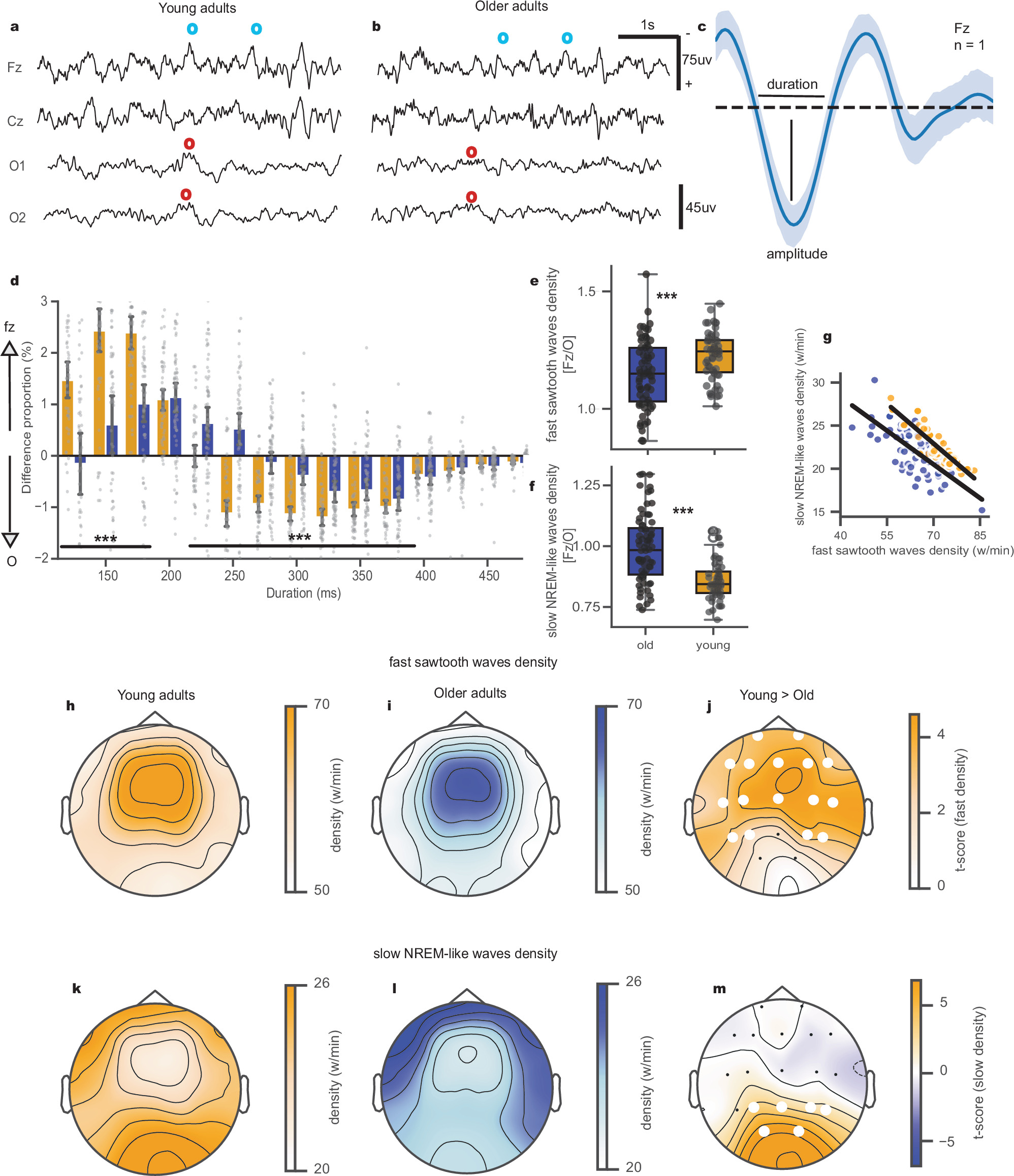
Researchers examined rapid eye movement (REM) sleep in people from two independent cohorts in an observational study. Older age was associated with a shift from faster, sawtooth-shaped brain waves to slower waves resembling those in non-REM sleep. The shift was especially apparent during REM periods when the brain is usually highly active.
Beyond age, this shift was linked to the burden of amyloid-beta and tau, two proteins associated with Alzheimer’s disease. It was also linked to poorer overnight memory consolidation—the process of making memories more stable—independent of non-REM sleep quality. Variants of APOE, a gene that affects Alzheimer’s risk, were independently linked to a lower density of fast sawtooth waves.
Why it matters
Rapid eye movement sleep deteriorates with age, especially in Alzheimer’s disease. The authors suggest that disruptions during this sleep stage may be one way Alzheimer’s pathology impairs brain function.
Caveats
These observational findings cannot establish whether the sleep-wave changes cause memory problems or result from Alzheimer’s pathology. The abstract does not report cohort sizes or participants’ ages.