Aged human T cells briefly regain young-like patrol behaviour
In laboratory experiments, thicker fluid temporarily restored young-like monitoring behaviour, particularly in a subgroup of aged human memory T cells.
Limit: Infection clearance was not measured alongside the single-cell behaviours
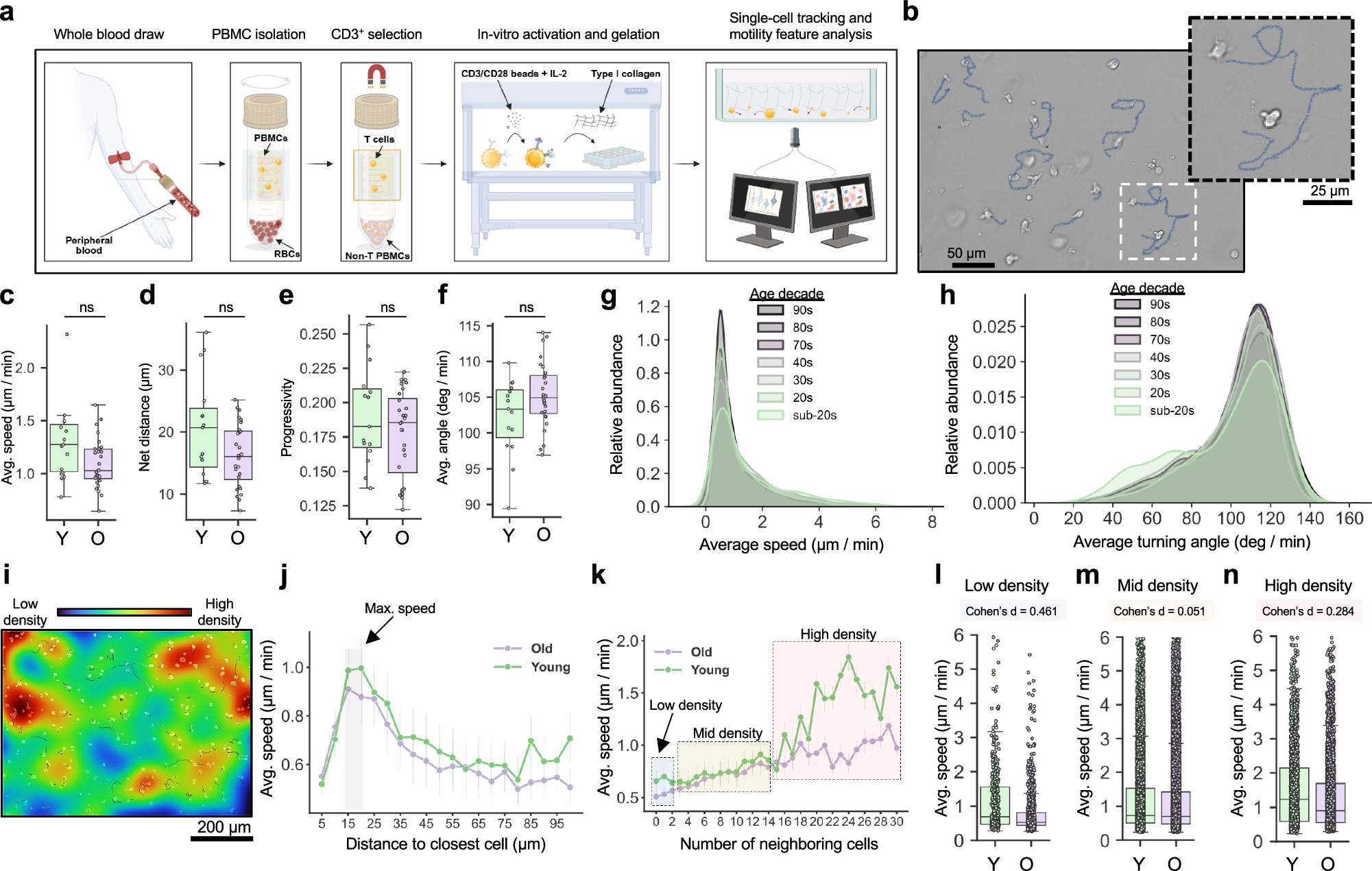
In experiments on aged human T cells, immune cells that help fight infections, researchers tested whether thicker fluid could alter how individual cells monitored their surroundings. They compared three abilities in aged and young cells: moving, changing shape and sensing nearby biological signals.
The aged cells could still move when tested outside the body. However, they were less able to change shape and sense local signals. Brief exposure to thicker fluid temporarily restored young-like monitoring behaviour. This response was most prominent in a subgroup of memory T cells, which help the immune system remember previous encounters.
Why it matters
Declining immune function is linked to greater vulnerability to infection with age. This work addresses whether the cell behaviours involved remain responsive to changes in their physical surroundings.
Caveats
These experiments tested cells outside the body, not a treatment in people. The temporary changes do not establish a benefit against infections in people.
The paper
Johns Hopkins University
Nature Communications, 15 Oct 2026, Open access, CC BY-NC-ND