Lab-grown pancreatic cell clusters reversed diabetes in mice
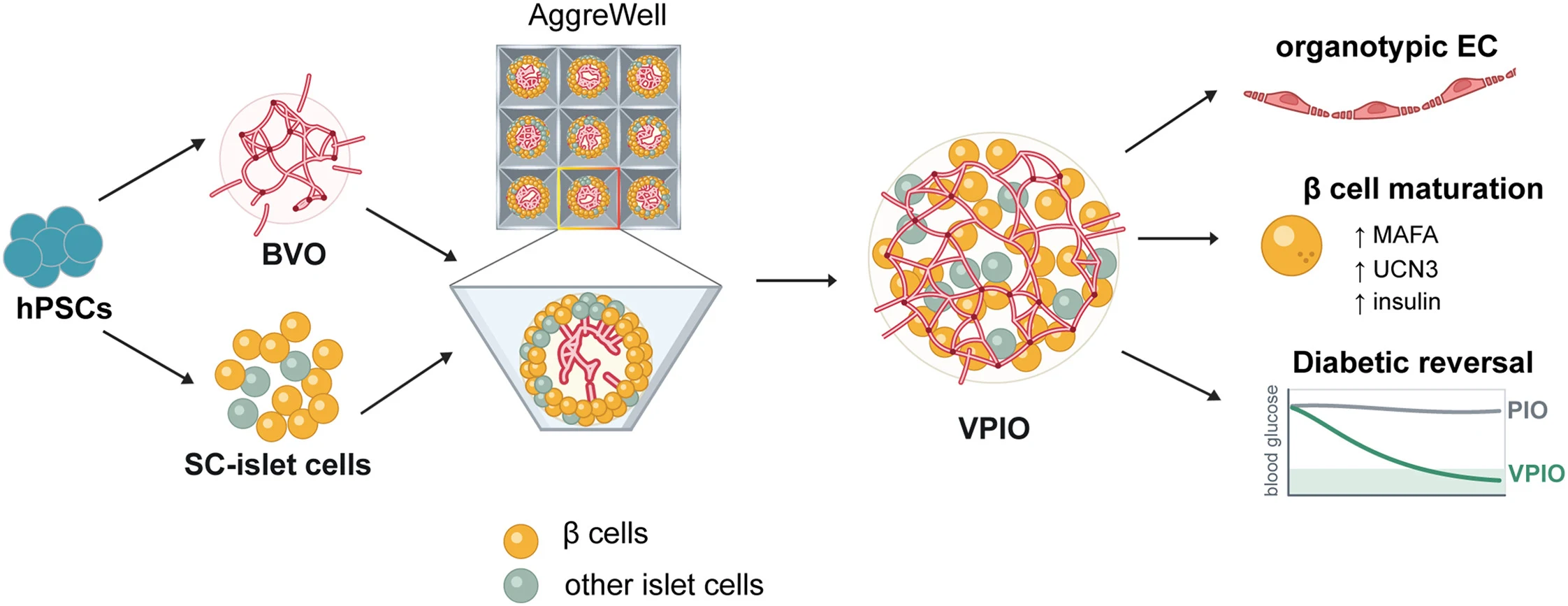
The mouse experiments used pancreatic cell clusters joined with blood vessel models, all grown from stem cells.
Our read
Interventions- Studied:
- Experiments in mice with diabetes
- What changed:
- Stem-cell-derived pancreatic organoids joined with blood vessel organoids reversed diabetes in mice
- The catch:
- The duration of diabetes reversal is not reported
Editor of record: Boris Djordjevic · AgingResearch.News
Pancreatic islet organoids, lab-grown models of the pancreas’s hormone-producing cell clusters, were joined with blood vessel organoids in laboratory experiments by Wang and colleagues. This commentary describes their work. Both kinds of organoid came from stem cells. The blood vessel organoids provided a way to add blood vessels to the islet models.
The approach enhanced the maturation and resilience of beta cells, the cells that make insulin. The resulting organoids reversed diabetes in mice. The commentary presented the combined model as a platform for studying how pancreatic islets and blood vessels interact in the lab and for advancing transplantation therapies.
Why it matters
Diabetes therapies are relevant to health in later life. The commentary presents this approach as a platform for advancing transplantation research.
Caveats
Diabetes reversal was reported in mice, not people receiving transplants. The abstract does not say how long the reversal lasted.
Where the evidence stands
Angiogenesis
- 207 independent labs in 33 countries
- 17 findings against
- Funders: National Natural Science Foundation of China and others
- 25 of 403 findings with company ties


Comments
Be the first to comment.