Diabetes drug and gene deletion changed protein patterns in mice
Experiments in mice fed a high-fat diet linked genetic deletion or drug inhibition of a sugar transporter to protein patterns involving oxidative stress and energy production.
Our read
Mechanisms- Studied:
- Experiments in high-fat diet-fed mice
- What changed:
- SGLT2 deletion and dapagliflozin changed protein patterns across mouse tissues, with responses differing across organs
- The catch:
- Effects on aging were not measured
- In the record:
- One of 444 papers on dapagliflozin on record: 182 with results in people, 75 in animals.
- Why it’s aging research:
- It studies an intervention with evidence of extending healthy life.
Editor of record: Boris Djordjevic · AgingResearch.News
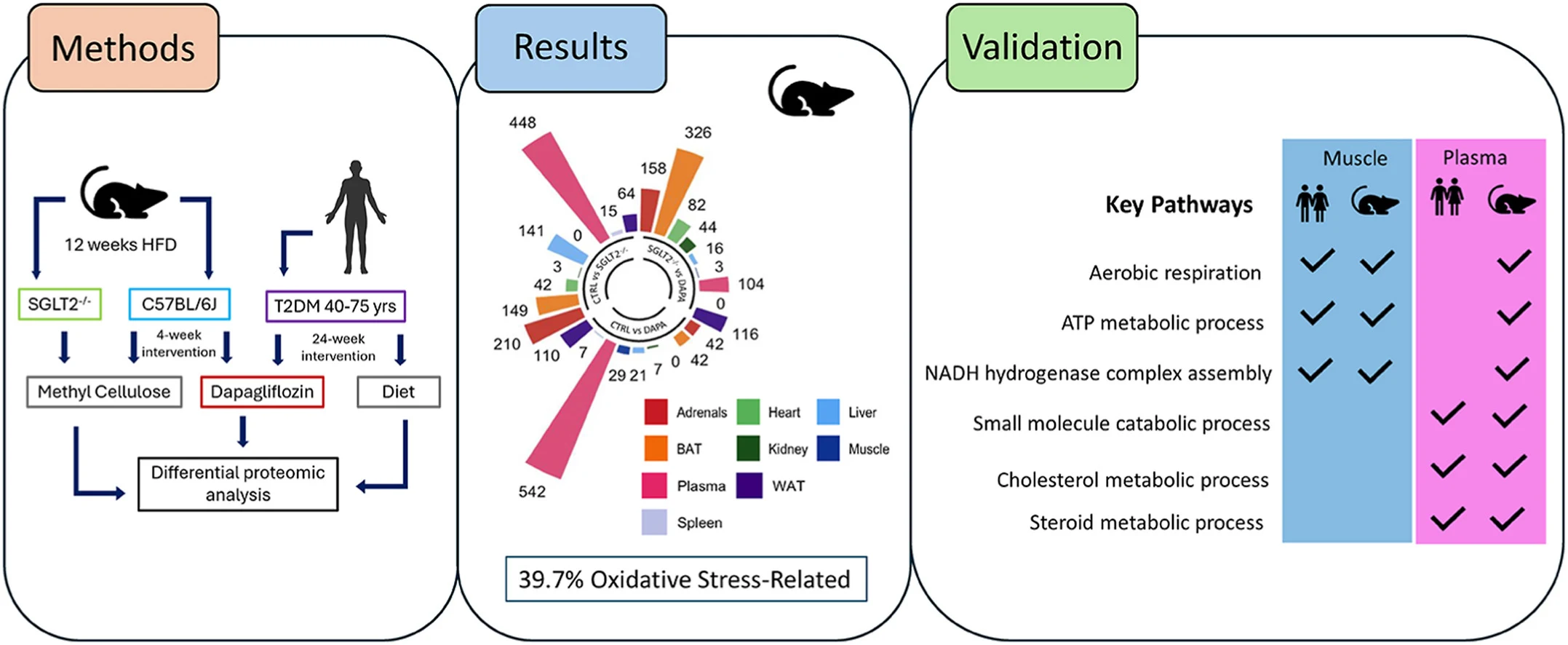
Mice fed a high-fat diet underwent experiments using either genetic deletion of SGLT2, a sugar-transporting protein, or inhibition with the drug dapagliflozin. Researchers measured proteins in eight tissues and blood plasma, the liquid part of blood.
Both approaches changed protein patterns across tissues, especially in the liver, hormone-producing adrenal glands and fat tissue. Analyses highlighted oxidative stress, an imbalance involving potentially damaging oxygen-containing molecules, and mitochondria, the energy-producing structures inside cells. Responses differed across tissues rather than following a single pattern. Comparisons with protein datasets from people with type 2 diabetes treated with dapagliflozin identified overlapping pathways related to oxidative stress and energy use. The authors concluded that the shared patterns supported a body-wide mechanism behind the drugs’ benefits beyond blood sugar control.
Why it matters
Understanding why diabetes drugs have benefits beyond blood sugar control matters for studying metabolic health in later life. The work identifies biological processes to investigate, rather than testing effects on aging itself.
Caveats
The protein-pattern analyses did not establish which changes explained the drugs’ benefits. Human comparisons used plasma and muscle datasets, not the full set of mouse tissues.
The paper
University of Leicester
Redox Biology, Nov 3, 2026, Open access, CC BY-NC-ND

Comments
Be the first to comment.