Canagliflozin reduced calcium buildup in mouse arteries
In experiments in mice fed a high-phosphate diet, canagliflozin reduced artery calcification while two related drugs did not.

Our read
Interventions- Studied:
- Preprint: experiments in mice fed a high-phosphate diet, against mice receiving dapagliflozin or empagliflozin (Dose-response)
- What changed:
- Canagliflozin reduced calcium buildup in mouse arteries, while dapagliflozin and empagliflozin did not
- The catch:
- Drug doses are missing from the abstract, limiting assessment of exposure relevance
- In the record:
- The 47th paper on canagliflozin with results in people; 169 on record in all.
Editor of record: Boris Djordjevic · AgingResearch.News
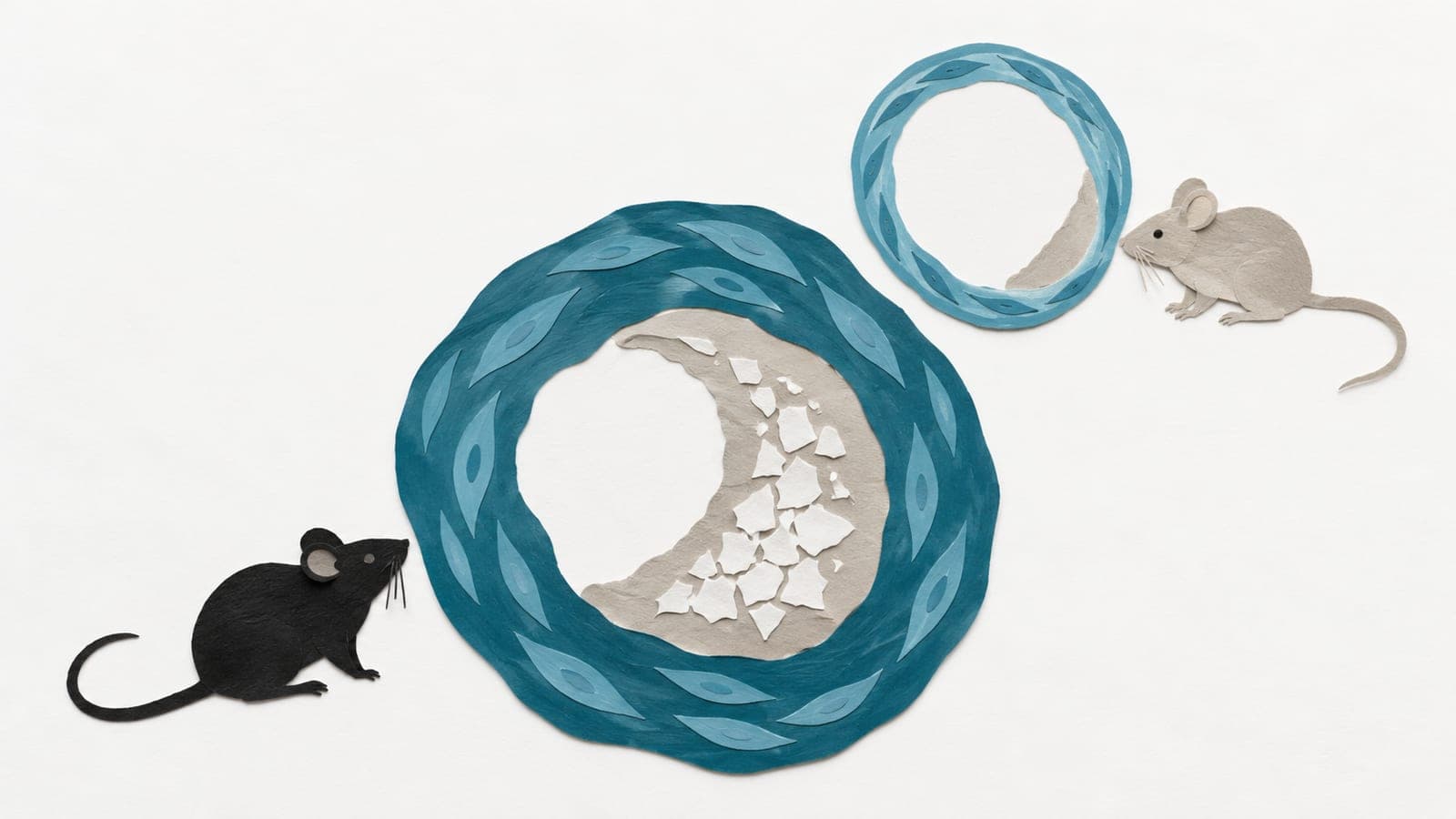
Mice fed a high-phosphate diet received canagliflozin, dapagliflozin or empagliflozin in an animal experiment comparing their effects on artery calcification. Only canagliflozin reduced calcium buildup in the aorta, the body’s main artery. Its anti-calcifying effect also appeared in rodent artery samples and pieces of human blood vessels studied outside the body.
In mouse vascular smooth muscle cells—the muscle cells in blood vessel walls—canagliflozin reduced calcification at every tested concentration. It also reduced cell multiplication, movement and glucose uptake. Higher concentrations increased the share of dying and damaged cells, but lower concentrations did not. Dapagliflozin and empagliflozin did not reproduce these cellular effects at any tested concentration.
Why it matters
These drugs offer heart and kidney benefits in chronic kidney disease. The authors suggest canagliflozin’s effects on arteries may involve mechanisms beyond blocking its usual sugar-transport target.
Caveats
The human results came from isolated blood vessel samples, not people taking the drug. The preprint has not been peer-reviewed, and the abstract does not give mouse group sizes or drug doses.
The paper
Institut National de la Sante et de la Recherche Medicale (INSERM), U1297, Institute of Cardiovascular and Metabolic Disease, Toulouse, France; Universite de To
bioRxiv, Nov 6, 2026, Open access, Preprint, not yet peer-reviewed
Comments
Be the first to comment.