Combination gene therapy extended lifespan in aged obese mice
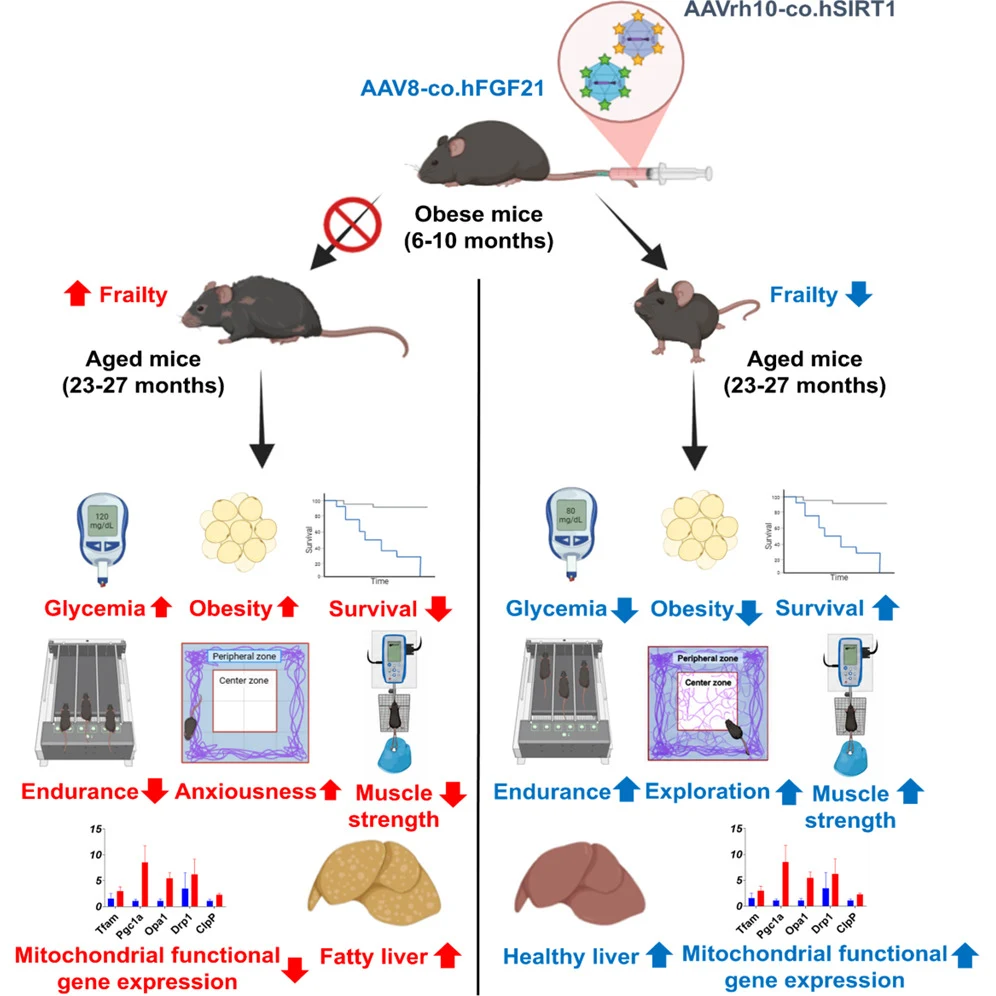
Over 70 weeks of follow-up, aged obese mice given the combination had a 60% increase in lifespan compared with mice given control viral carriers.
Our read
Interventions- Studied:
- Experiments in mice
Editor of record: Boris Djordjevic · AgingResearch.News
Aged obese mice received a combination gene therapy in an animal experiment with a 70-week follow-up. Engineered viral carriers delivered human genes for fibroblast growth factor 21 and sirtuin 1, proteins involved in metabolism. Lifespan increased by 60% compared with mice given control viral carriers. The combination also improved metabolic measures, reduced fat buildup in the liver and reduced enlargement of the heart. Muscle function and quality improved.
In a separate experiment, aged lean mice received the fibroblast growth factor 21 gene alone. Over 50 weeks, they had less age-related frailty, moderate control of obesity and better muscle function. The researchers reported no signs of immune reactions linked to the viral carriers.
Why it matters
Age-related obesity and diabetes were targets of this approach. The authors suggest that combining the two genes may help extend both lifespan and the period of life spent in good health.
Caveats
The experiments tested gene therapy in aged obese and lean mice, leaving open whether it would provide similar benefits in people.
Where the evidence stands
FGF21 gene therapy
- 2 independent labs in 1 country
- Funders: Division of Cancer Prevention, National Cancer Institute and 6 more
- 9 of 9 findings with company ties
Immune response
- 302 independent labs in 46 countries
- 30 findings against
- Funders: National Institutes of Health and others
- 84 of 548 findings with company ties
- FGF21 + SIRT1 gene therapy
- FGF21 gene therapy
- Immune response
- Mitochondrial biogenesis (PGC-1α)
- Obesity
- Mice
The paper
Molecular Therapy Nucleic Acids, Nov 2026, CC BY-NC-ND
Comments
Be the first to comment.