Chemical tags mark ribosomes for recycling in yeast
Experiments in nutrient-deprived yeast identified how an enzyme labels the cell’s protein-making machinery for breakdown through a recycling process.
Our read
Mechanisms- Studied:
- Experiments in yeast
- In the record:
- One of 3 papers on DOT1 on record: none yet with results in people.
Editor of record: Boris Djordjevic · AgingResearch.News
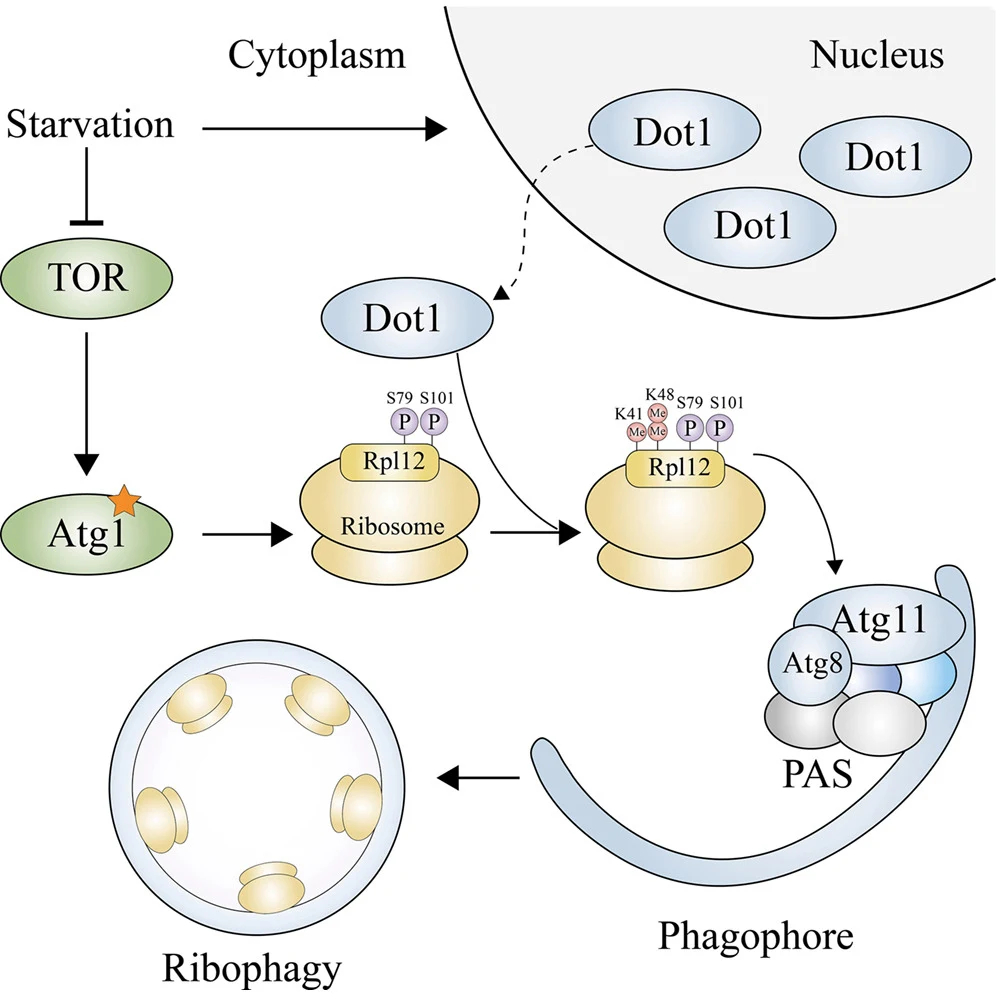
Saccharomyces cerevisiae yeast experiments identified a chemical signal that marked ribosomes, the cell’s protein-making machinery, for recycling. Under nutrient deprivation, the enzyme Dot1 added chemical tags to Rpl12, a ribosome protein. This strengthened its interaction with a protein that helps initiate ribophagy, the breakdown of ribosomes through cellular recycling.
In mammals, starvation moved some of the corresponding enzyme into the cytoplasm, the space outside the nucleus, where it tagged the corresponding ribosome protein. In fruit flies, ribosomes containing the tagged protein strongly overlapped with a marker of cellular recycling structures. Flies with altered versions of the ribosome protein that could not receive these tags had impaired ribophagy. They also showed developmental abnormalities, accelerated aging, muscle degeneration and reduced resistance to stress.
Why it matters
The authors conclude that this recycling signal links nutrient availability to the quality of cells’ protein-making machinery and lifespan regulation.
Caveats
The aging results came from mutant flies and do not establish whether boosting this signal would extend lifespan in normal flies or people.

Comments
Be the first to comment.