Calcium, vitamin D not tied to less bone loss on aromatase inhibitors
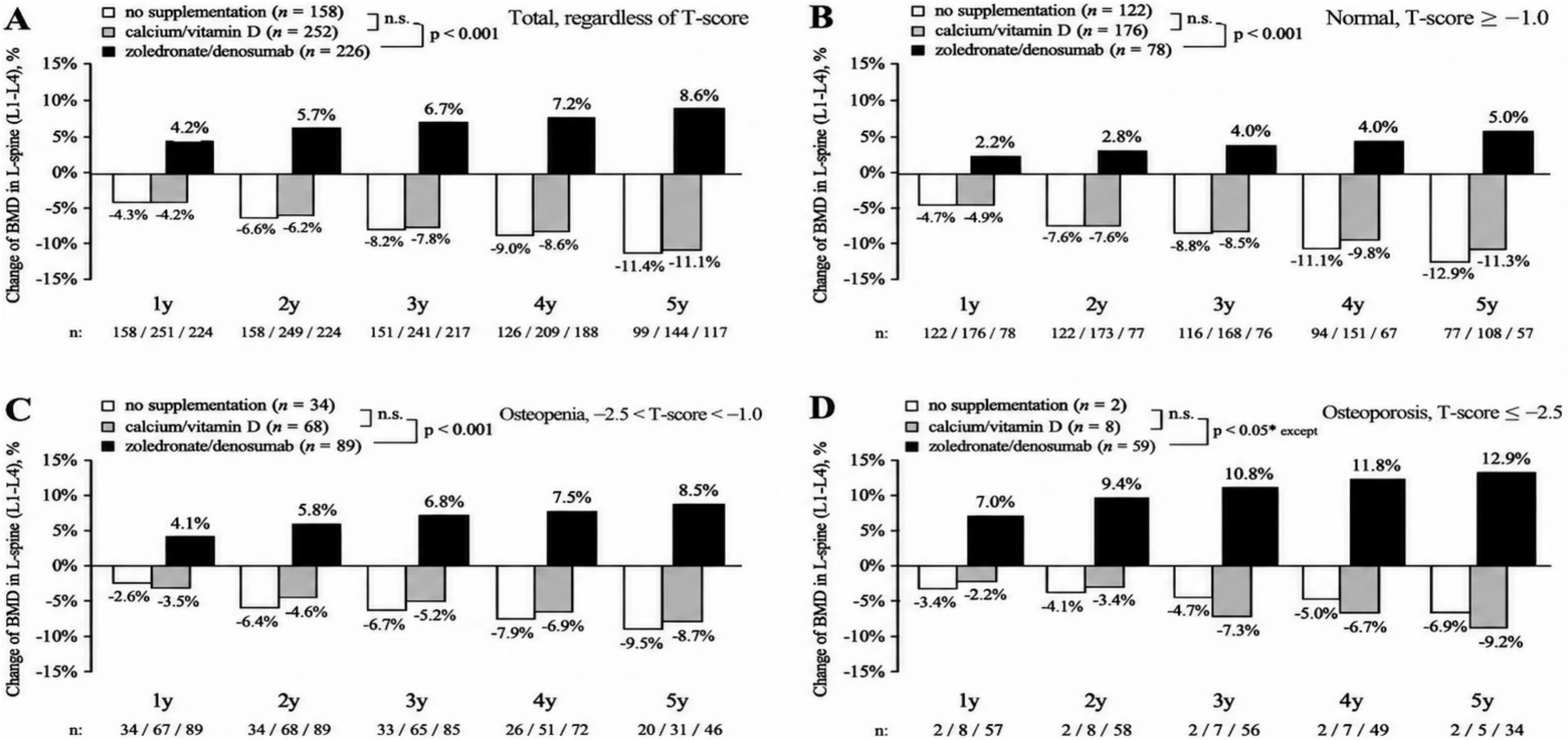
Over five years, spine bone density fell 11.1% with calcium and vitamin D and 11.4% without supplements in postmenopausal women taking breast cancer hormone therapy.
Our read
Interventions- Studied:
- Cohort study of 636 postmenopausal women with hormone receptor-positive breast cancer, up to 5 years
- What changed:
- Spine bone density fell 11.1% with calcium and vitamin D versus 11.4% without supplements over five years
- The catch:
- Antiresorptive recipients started with lower bone density; adjustment may not account for all group differences
- In the record:
- The 5th paper on antiresorptive therapy with results in people; 13 on record in all.
Editor of record: Boris Djordjevic · AgingResearch.News
Among 636 postmenopausal women with hormone receptor-positive breast cancer, whose cancer cells carry hormone-binding proteins, researchers compared bone changes in a retrospective cohort study. The women started aromatase inhibitors, a type of hormone therapy, after surgery. Annual scans tracked bone density for up to five years.
Women received no supplements, calcium and vitamin D, or zoledronate or denosumab, medicines that slow bone breakdown. After accounting for starting bone density and other factors, supplementation was not associated with less lower-spine bone loss. The adjusted five-year difference versus no supplementation was 0.9 percentage points; the range of likely values included no difference. Spine bone density rose 8.6% in women receiving zoledronate or denosumab. These medicines were associated with bone-density gains across starting bone-density categories, including normal density.
Why it matters
For postmenopausal women, aromatase inhibitor therapy brings concerns about bone loss and fracture risk. The authors recommend regular bone-density checks and advise against relying on calcium and vitamin D alone to protect bones during this therapy.
Caveats
Treatment was not randomly assigned, and women receiving zoledronate or denosumab started with lower bone density; adjustment may not have accounted for all differences between groups. The results do not address premenopausal women.
- Zoledronic acid
- Denosumab
- Antiresorptive therapy
- Bone loss
- Hormone-receptor-positive breast cancer
- Humans
The paper
Journal of Bone Oncology, Nov 2026, CC BY-NC-ND



Comments
Be the first to comment.