Two or three births linked to lower osteoporosis risk
Osteoporosis hazard ratios—measures of relative risk—were 0.894 for two live births and 0.892 for three, compared with women with none.
Our read
Populations- Studied:
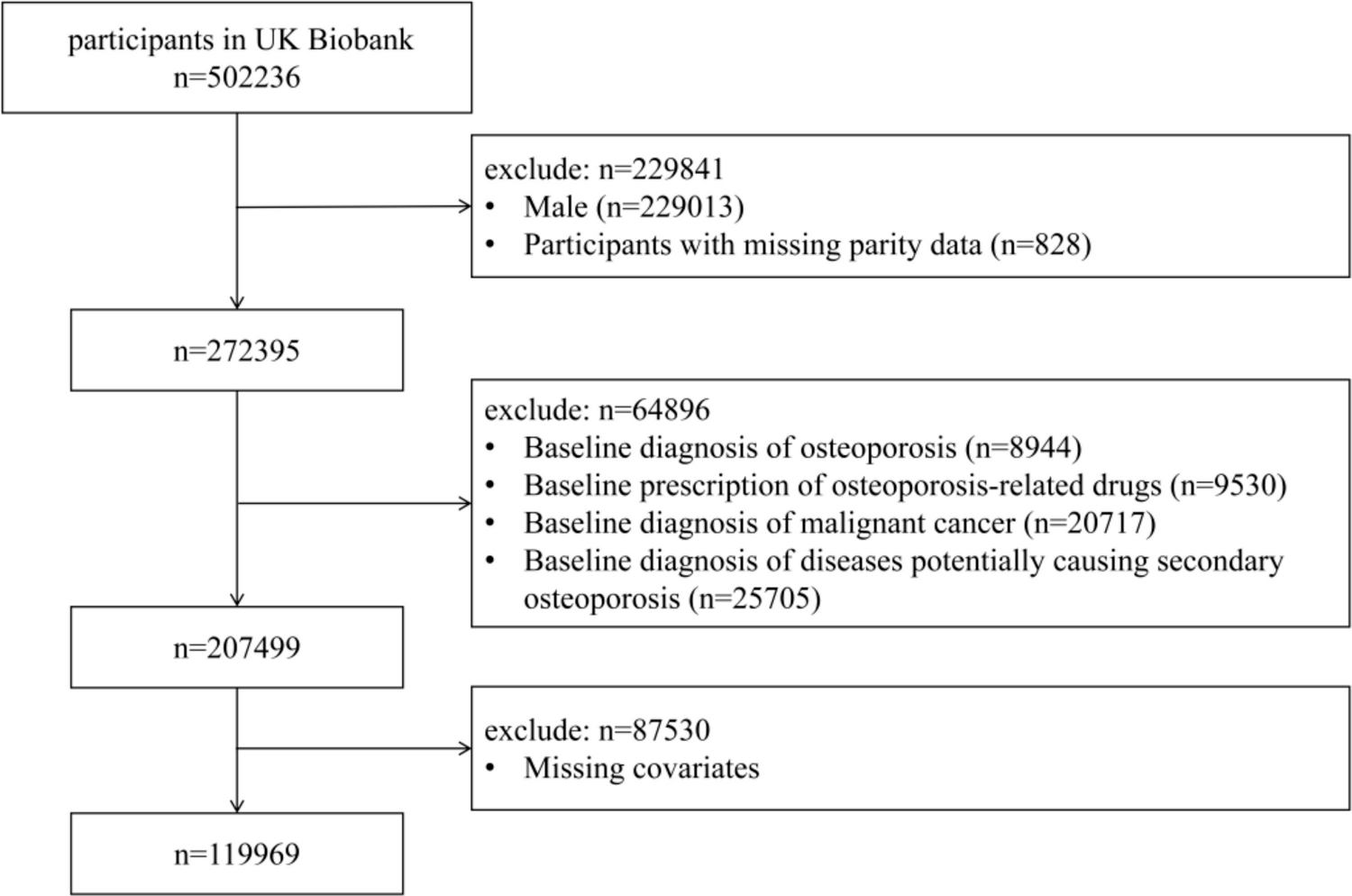
- Cohort study of 119,969 women in the UK Biobank, against women with no live births (Multicenter)
- What changed:
- Osteoporosis risk was lower with 2 births (hazard ratio 0.894) or 3 births (0.892) than with no births
- The catch:
- Unmeasured genetic factors affecting fertility and bone strength could explain the association
- In the record:
- The 66th paper on parity with results in people; 114 on record in all.
- Why it’s aging research:
- It bears on staying healthy in midlife and later life.
Editor of record: Boris Djordjevic · AgingResearch.News
The 119,969 UK Biobank women in this observational cohort analysis were aged 40–69 when they enrolled. They enrolled in 2006–2010 and reported their number of live births. Researchers tracked diagnoses of osteoporosis, a condition that weakens bones, until November 30, 2022, at the latest.
Women with two or three live births had lower osteoporosis risk than those with none after adjustment for demographic, genetic, lifestyle and health factors. Three live births were also linked to lower risk of fractures related to osteoporosis. The osteoporosis association was evident in women aged 60 or older and those with normal body mass index, a weight-to-height measure. Among 12,579 women with bone density measurements, the fully adjusted analysis found no significant link between births and bone mineral density, the amount of mineral in bones.
Why it matters
Pregnancy-related bone loss raises questions about bone health later in life. The authors suggested including birth history in clinical osteoporosis risk assessment.
Caveats
Women with different numbers of births may have differed in health or life circumstances not fully captured by the adjustments. The results do not cover women who already had osteoporosis or prior osteoporosis medication prescriptions at enrollment.
Where the evidence stands
Parity
- 61 independent labs in 19 countries
- 14 findings against
- Funders: National Institutes of Health and others
- 3 of 119 findings with company ties
From the paper
- Participants
We next examined the association between parity and bone mineral density; a total of 12,579 participants were included.
Results, Association between parity and osteoporotic fracture and bone density
- Result
In the fully adjusted model (Model 3), the hazard ratios (HRs) were 0.904 (95% CI, 0.837–0.976; P = 0.010) for parity of 2 and 0.894 (95% CI, 0.817–0.979; P = 0.0158) for parity of 3.
Quoted word for word from the full text on link.springer.com.
- Parity
- Osteoporosis
- Osteoporotic fractures
- Areal bone mineral density
- Femoral neck bone mineral density
- Humans
The paper
Non-linear associations between parity and long-term risk of osteoporosis
Peking University Third Hospital
Archives of Osteoporosis, Nov 5, 2026, Open access, CC BY

Comments
Be the first to comment.