Aging alters metabolism in some gut immune cells
Some immune cells in the small intestine showed metabolic changes with aging, while those in the colon were relatively resistant to fat buildup.
Our read
Mechanisms- Studied:
- Experiments in animals
Editor of record: Boris Djordjevic · AgingResearch.News
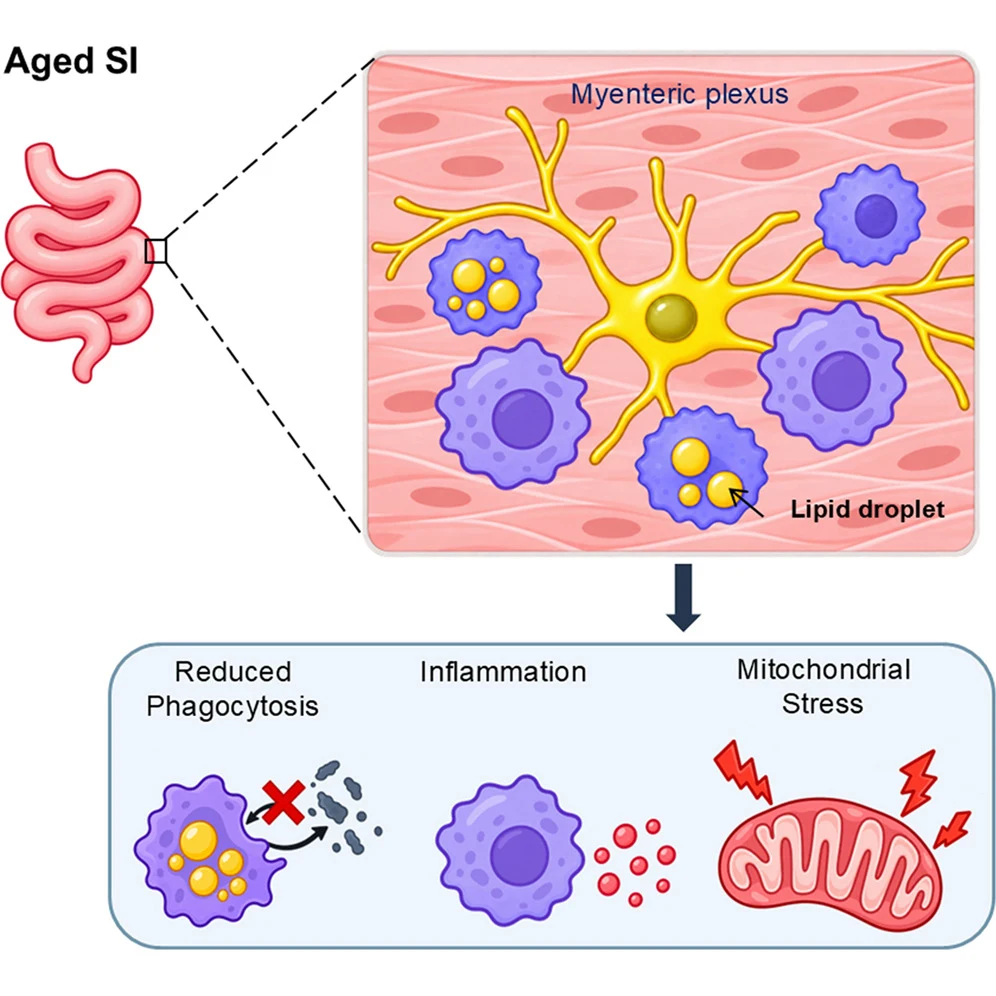
Some macrophages, immune cells embedded in the gut muscle layer, underwent changes in metabolism with aging. These cells help regulate the gut’s nerve and muscle function. The changes affected selected groups of macrophages in the small intestine, rather than all gut macrophages alike.
The affected cells accumulated fat droplets and showed stronger signs of sugar-based energy production and fat handling. They also showed stress in mitochondria, the cells’ energy-producing structures. Inflammatory gene activity increased, while the cells’ ability to engulf material declined. Macrophages in the colon were relatively resistant to the fat-droplet buildup.
Why it matters
The aging of these gut immune cells may depend on local intestinal conditions and differences among cell groups, the authors suggest.
Caveats
The findings concern selected groups of macrophages in the gut muscle layer, not a uniform change across all gut macrophages.

Comments
Be the first to comment.