Blood protein frailty score aided heart failure risk prediction
In UK Biobank, a measure of how well scores distinguished five-year heart failure risk was 0.756 for blood proteins versus 0.595 for clinical frailty.
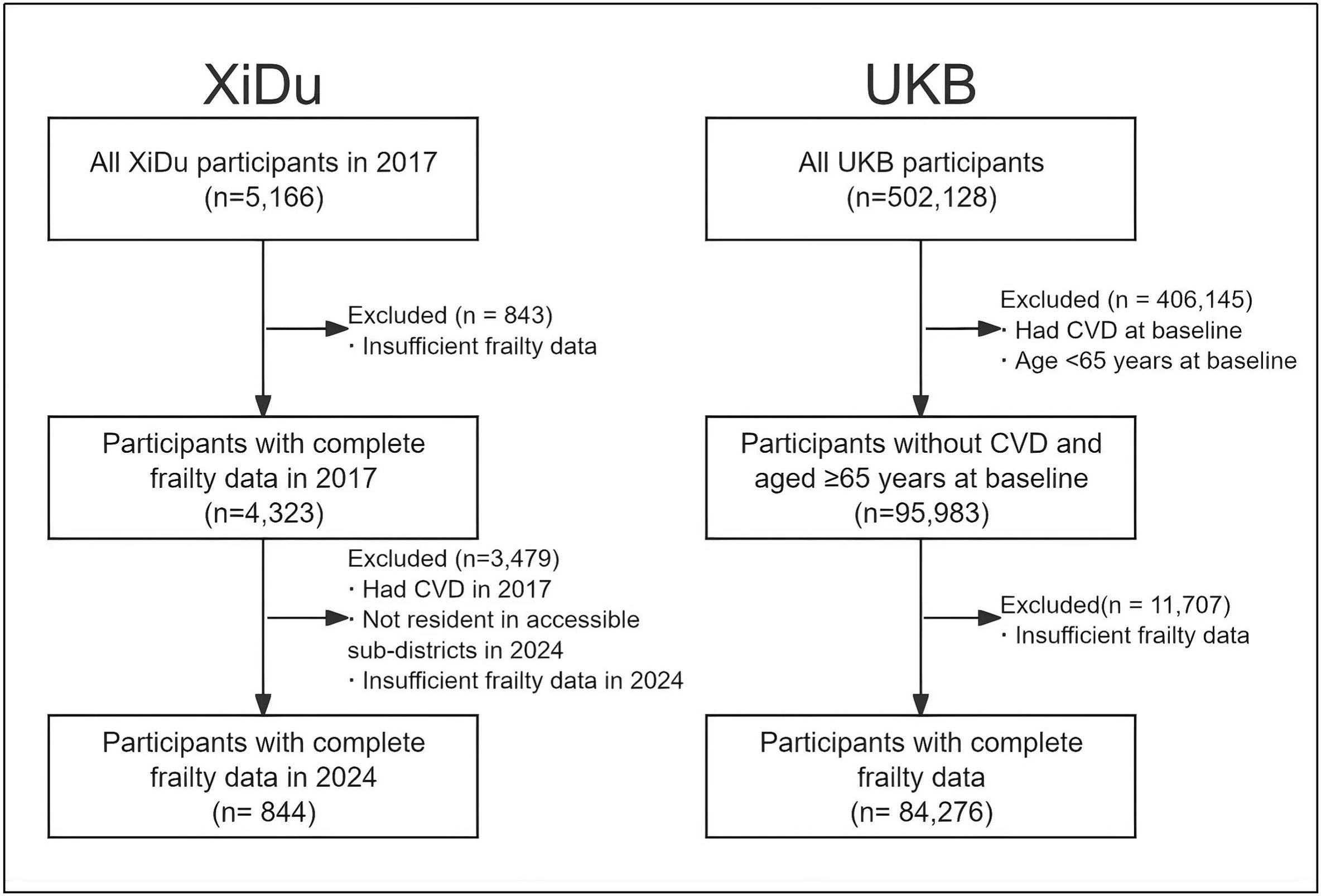
84,276 participants
Limit: The analysis measured prediction, not whether using the score improved care
Edited by Boris Djordjevic · AgingResearch.News
An observational study examined frailty and cardiovascular disease in 4,323 XiDu2017 participants and 84,276 UK Biobank participants. Higher frailty categories were associated with existing cardiovascular disease in XiDu2017. Frail UK Biobank participants were more likely to develop cardiovascular disease than robust participants. The adjusted hazard ratio, a relative measure of this association, was 1.38.
In a UK Biobank subgroup with blood protein measurements, researchers compared a score based on 20 proteins with clinical frailty assessments and conventional cardiovascular risk factors. They measured how well each approach distinguished people who developed heart failure from those who did not over five years. Adding the protein score to conventional risk factors increased this measure by 0.113 after correction for overly optimistic estimates.
Why it matters
Frailty concerns vulnerability as people age. The work addresses whether blood measurements can add useful cardiovascular risk information beyond clinical signs of frailty.
Caveats
This observational analysis assessed prediction, not whether using the score improved care. The authors called for validation in independent populations and evaluation of clinical usefulness before clinical application.
The paper
A plasma proteomic frailty signature for cardiovascular risk stratification: A multi-cohort study
International Journal of Cardiology Heart & Vasculature, Nov 1, 2026, CC BY-NC-ND


Comments
Be the first to comment.