Heart health linked to lower death risk in cancer survivors
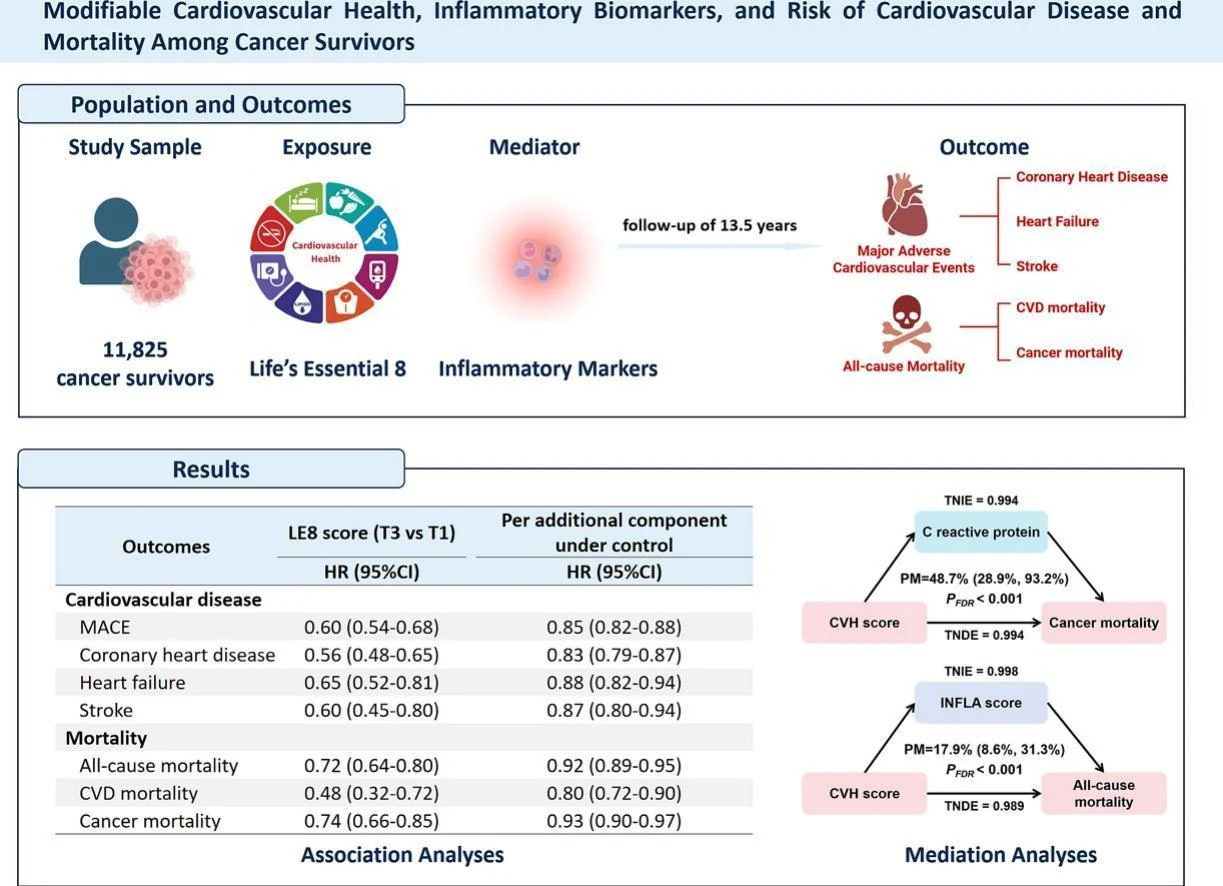
Compared with the lowest heart-health score group, the highest had hazard ratios, measures of relative risk, of 0.60 for major cardiovascular events and 0.72 for death.
Our read
Populations- Studied:
- Cohort study of 11,825 cancer survivors without major cardiovascular events, median 13.5 years
- What changed:
- Death from any cause was lower in the highest heart-health score group than the lowest (hazard ratio 0.72)
- The catch:
- Effects of lowering inflammation on cardiovascular events and deaths were not measured
- Why it’s aging research:
- It bears on staying healthy in midlife and later life.
Editor of record: Boris Djordjevic · AgingResearch.News
The 11,825 cancer survivors in this prospective observational cohort had no major adverse cardiovascular events at entry. Researchers assessed their heart health using Life’s Essential 8, an eight-component score, and counted how many components met guideline thresholds.
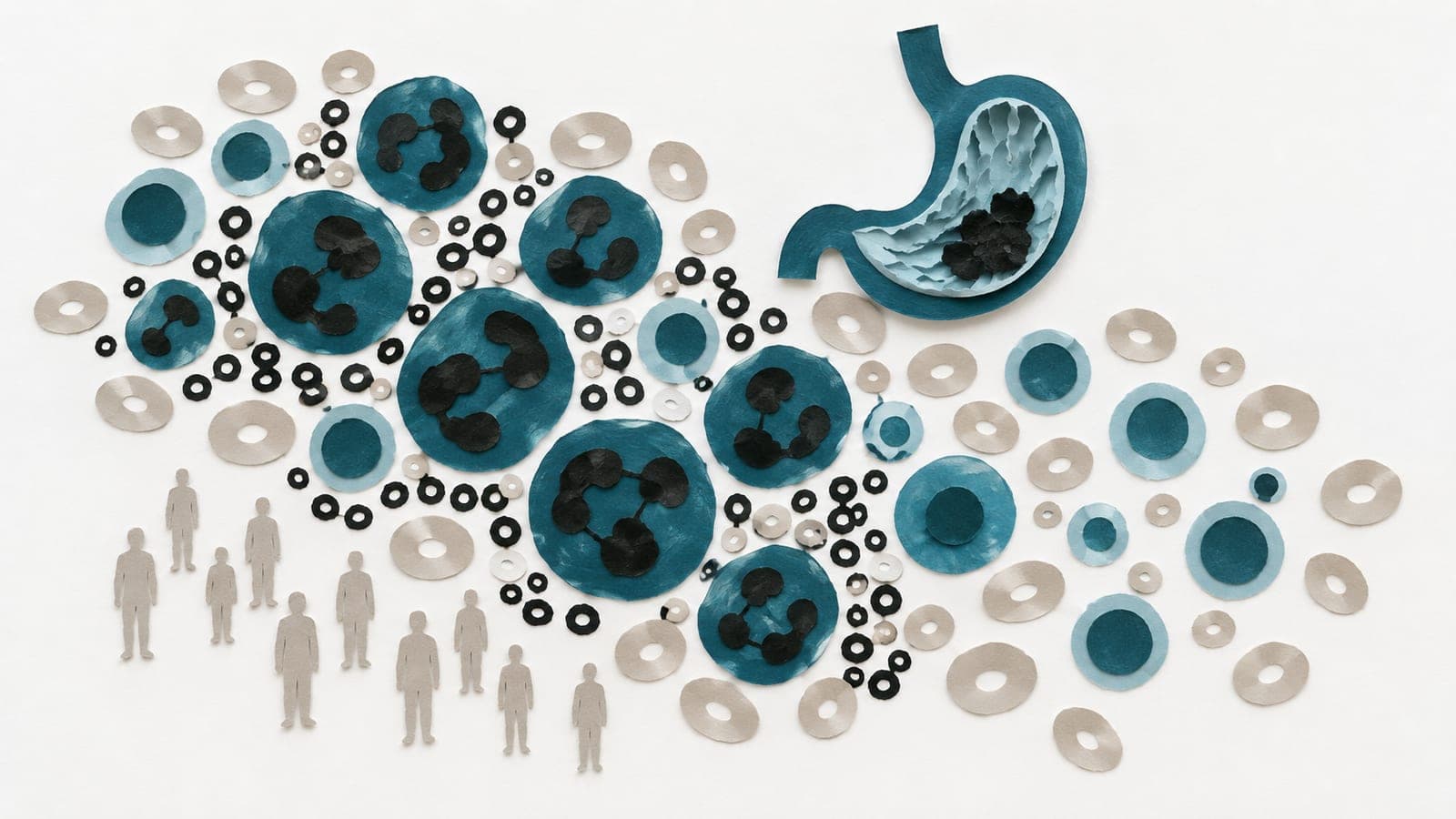
During a median follow-up of 13.5 years, 1,923 major cardiovascular events and 2,082 deaths occurred. The highest-scoring third had lower risks of coronary heart disease, heart failure and stroke than the lowest-scoring third. They also had lower risks of death from any cause, cardiovascular disease and cancer. In statistical analyses, blood markers of inflammation partly accounted for these associations. The authors interpreted these results as pointing to inflammation as a key biological pathway.
Why it matters
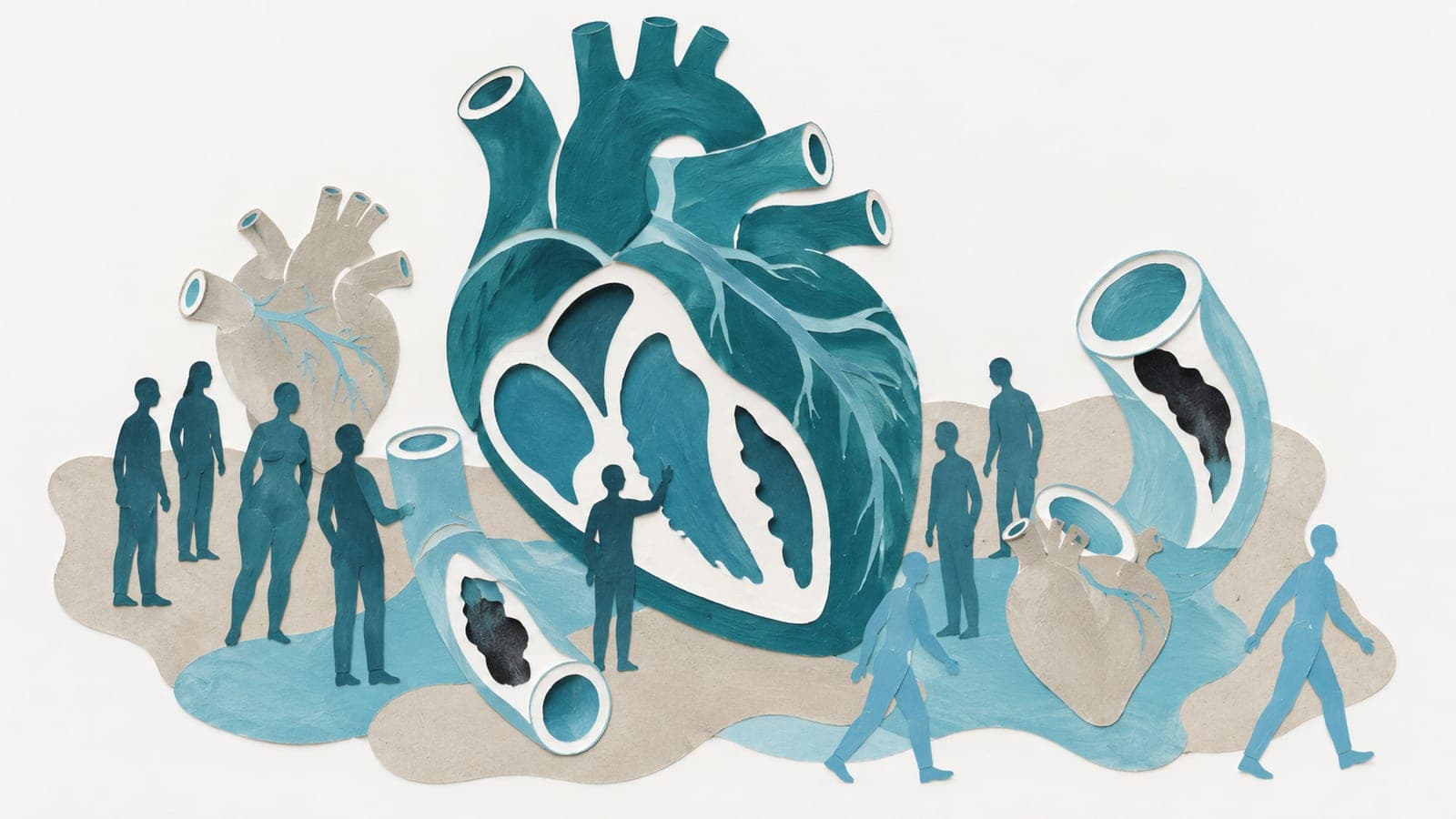
Cardiovascular disease is a concern as cancer survivors age. These findings identify modifiable health factors worth investigating for their long-term survival.
Caveats
Other health differences between higher- and lower-scoring survivors may have contributed to the associations. The cohort excluded survivors with major cardiovascular events at entry, and the inflammation analysis did not test whether lowering inflammation changed outcomes.
The paper
International Journal of Cardiology, Nov 5, 2026
Comments
Be the first to comment.