Calorie restriction lowered early virus levels in macaques
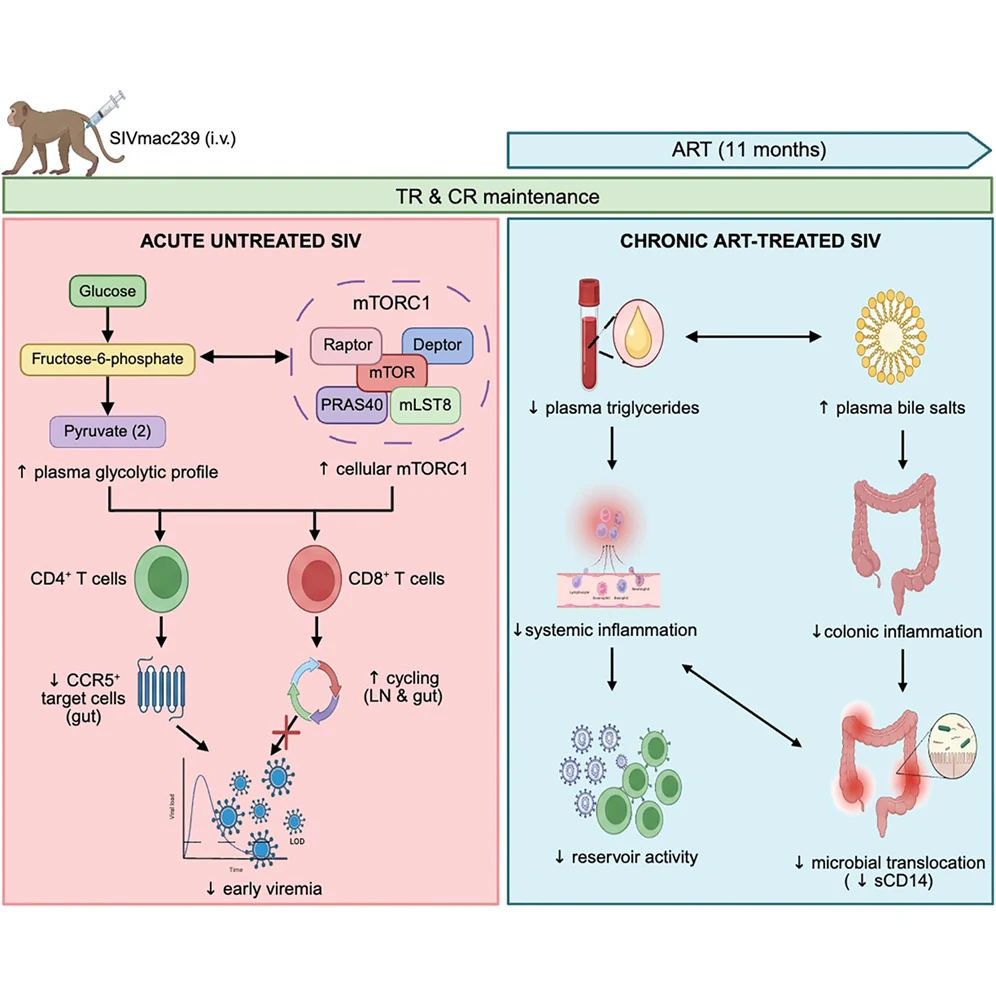
An experiment using four months of 30% calorie restriction found less gut immune activation in rhesus macaques after infection and antiviral drug therapy.
Our read
Interventions- Studied:
- Experiments in rhesus macaques, four months, against animals allowed to eat freely
- What changed:
- Calorie-restricted macaques had lower early blood virus levels than animals allowed to eat freely
- The catch:
- The early reduction in blood virus levels waned over time
- In the record:
- One of 4,197 papers on caloric restriction on record: 639 with results in people, 1,500 in animals. Its result on Type I interferon signaling agrees with all 3 other findings on record.
Editor of record: Boris Djordjevic · AgingResearch.News
Rhesus macaques underwent 30% calorie restriction for four months in an experiment using simian immunodeficiency virus, which models human immunodeficiency virus infection. After infection, calorie-restricted animals had lower early levels of virus in their blood than animals allowed to eat freely. This advantage waned over time.
After antiretroviral therapy, the calorie-restricted macaques had less immune activation in the gut and lower blood levels of some inflammation-related molecules. The amount of viral DNA in blood remained unchanged. The authors suggested that gut inflammation could therefore be reduced without reducing viral persistence.
Why it matters
Chronic inflammation is relevant to aging research. This work addresses whether changing nutrient metabolism can limit ongoing inflammation separately from the persistence of a virus.
Caveats
The experiment tested calorie restriction in rhesus macaques infected with simian immunodeficiency virus, not in people with human immunodeficiency virus infection.
Caloric restriction is part of Bryan Johnson's Blueprint

Comments
Be the first to comment.