Health record models offer similar heart failure prediction
The base model scored 0.847 in Stanford records and 0.750 in Veterans Affairs records, performing comparably to two established heart failure prediction tools.
Our read
Biomarkers- Studied:
- Cohort study of Stanford Healthcare and Veterans Affairs patients, 10-year follow-up (Independent replication)
- What changed:
- Heart failure prediction scores were similar in VA records: base model 0.750 versus established tools 0.764 and 0.738
- The catch:
- Heart failure prevention through model-guided care was not measured
Editor of record: Boris Djordjevic · AgingResearch.News
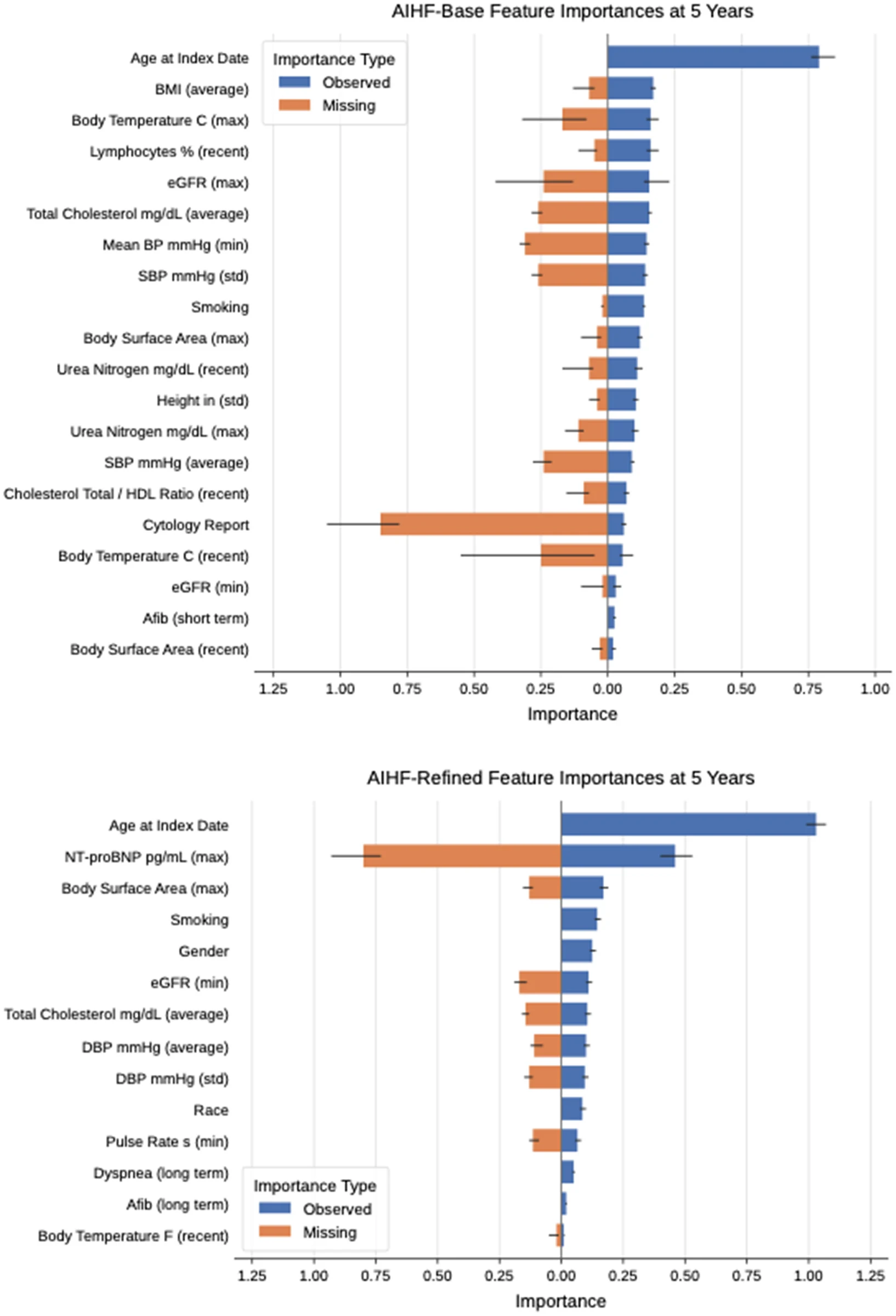
Stanford Healthcare patients’ routine electronic health records supported the development of machine-learning models to predict new heart failure within five years. Researchers tested the models in a separate Stanford sample and an independent national Veterans Affairs cohort followed for 10 years.
The models performed comparably to two established risk equations at distinguishing people who developed heart failure from those who did not. The base model’s area-under-the-curve score, which measures that distinction, was 0.847 at Stanford and 0.750 in Veterans Affairs records. The established tools scored 0.764 and 0.738 in Veterans Affairs records. A refined model excluded predictors judged implausible. Its 14 inputs represented 13 clinical variables; seven inputs used records collected over time.
Why it matters
Age appeared in every model, making risk assessment as people grow older relevant to this work. The authors propose using routine care records to help target heart failure prevention.
Caveats
Testing predictions against recorded outcomes leaves open whether using these models to guide care would prevent heart failure. Validation covered Stanford and Veterans Affairs records, not other health systems.


Comments
Be the first to comment.