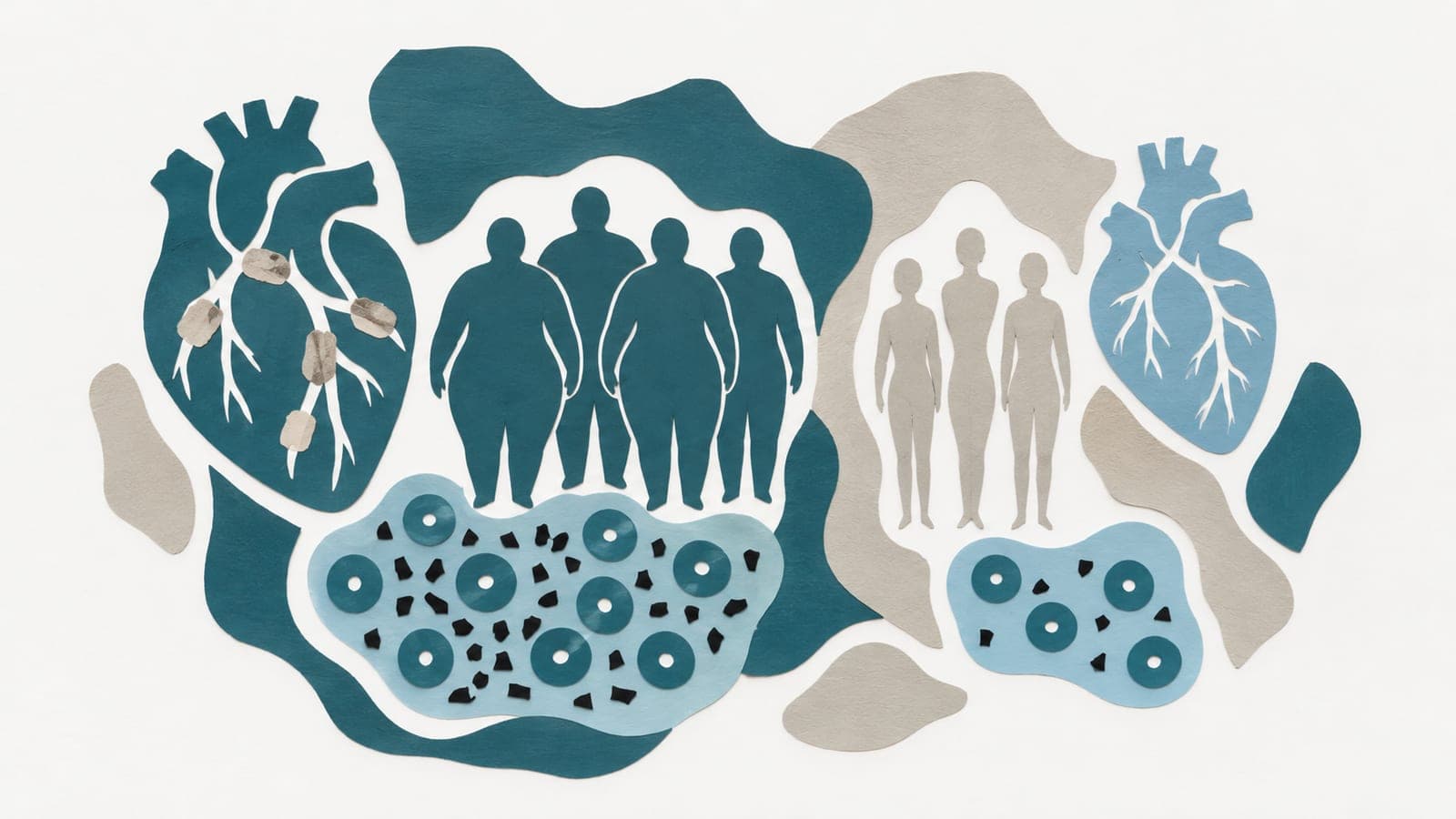
Effect of the high-sensitivity C-reactive protein to high-density lipoprotein cholesterol ratio on cardiometabolic multimorbidity in people aged 60 years and older
By 王晓娜, 李晨曦, 钟燕 et al.
Abstract
OBJECTIVE: To investigate the effect of the ratio of high-sensitivity C-reactive protein (high-sensitivity C-reactive protein,hs-CRP) to high-density lipoprotein cholesterol (highdensity lipoprotein cholesterol,HDL-C) (hs-CRP/HDL-C) on cardiometabolic multimorbidity (cardiometabolic multimorbidity,CMM) in people aged ≥60 years. METHODS: This retrospective cohort study included 2399 participants from the China Health and Retirement Longitudinal Study from 2011 to 2020 and 493 participants from Beijing communities from 2007 to 2009, all aged ≥60 years, for a total of 2892 participants, with a follow-up duration of 9.8(8.7,10.5) years. Older adults were divided into the Q1 (<11.02), Q2 (11.02~23.25), Q3 (23.26~61.93), and Q4 (≥61.94) groups according to hs-CRP/HDL-C quartiles, with 723 participants in each group. According to whether CMM developed during follow-up, older adults were divided into a group that developed CMM (154 participants) and a group that did not develop CMM (2738 participants). Multivariable logistic regression (stepwise covariate adjustment), ROC curves, and subgroup analyses were used to assess the association between hs-CRP/HDL-C and the development of CMM. RESULTS: The incidences of CMM in the Q1, Q2, Q3, and Q4 groups were 3.04%, 3.87%, 7.05%, and 7.33%, respectively, with statistically significant differences between groups (P<0.01). Compared with the group that did not develop CMM, the group that developed CMM had significantly lower proportions of men and smokers and a significantly lower estimated glomerular filtration rate, and a significantly higher proportion of participants with hypertension and significantly higher fasting blood glucose, hs-CRP, and hs-CRP/HDL-C, with statistically significant differences (P<0.01). Multivariable logistic regression analysis showed that, compared with the Q1 group, the risks of developing CMM were significantly higher in the Q3 and Q4 groups (OR=1.233,95%CI:1.033~1.390,P<0.05;OR=1.241,95%CI:1.108~1.473, P<0.01), whereas the difference between the Q2 and Q1 groups was not statistically significant (OR=1.040,95%CI:0.699~1.547,P>0.05). Subgroup analyses showed that hs-CRP/HDL-C had greater predictive value for CMM in men, smokers, people without hypertension, and people with impaired renal function (P<0.05,P<0.01). ROC curve analysis showed that the area under the curve for hs-CRP/HDL-C in predicting CMM was 0.615, superior to prediction using hs-CRP(0.604) or HDL-C(0.411) alone. CONCLUSIONS: Elevated hs-CRP/HDL-C is significantly associated with the risk of developing CMM in people aged ≥60 years, with greater predictive value particularly in older men, smokers, people without hypertension, and people with impaired renal function, and can serve as an effective indicator for assessing CMM risk in this population.
- C-reactive protein
- High-density lipoprotein cholesterol
- Cardiometabolic multimorbidity
- Estimated glomerular filtration rate
- Fasting blood glucose
- Humans
The paper
王晓娜, 李晨曦, 钟燕 et al.
Chinese Journal of Geriatric Heart Brain and Vessel Diseases, 15 Sep 2026