Blood-cell mutations had opposite effects on breast tumors in mice
As mice aged, mutations in the Dnmt3a gene prevented breast cancer progression, while mutations in the Tet2 gene drove it.
Our read
Mechanisms- Studied:
- Preprint: experiments in mice with engineered blood-cell mutations
- What changed:
- In aging mice, Dnmt3a-mutant blood cells prevented breast cancer progression, while Tet2-mutant blood cells drove it
- The catch:
- Progression of naturally arising breast tumors was not measured; tumors were implanted
Editor of record: Boris Djordjevic · AgingResearch.News
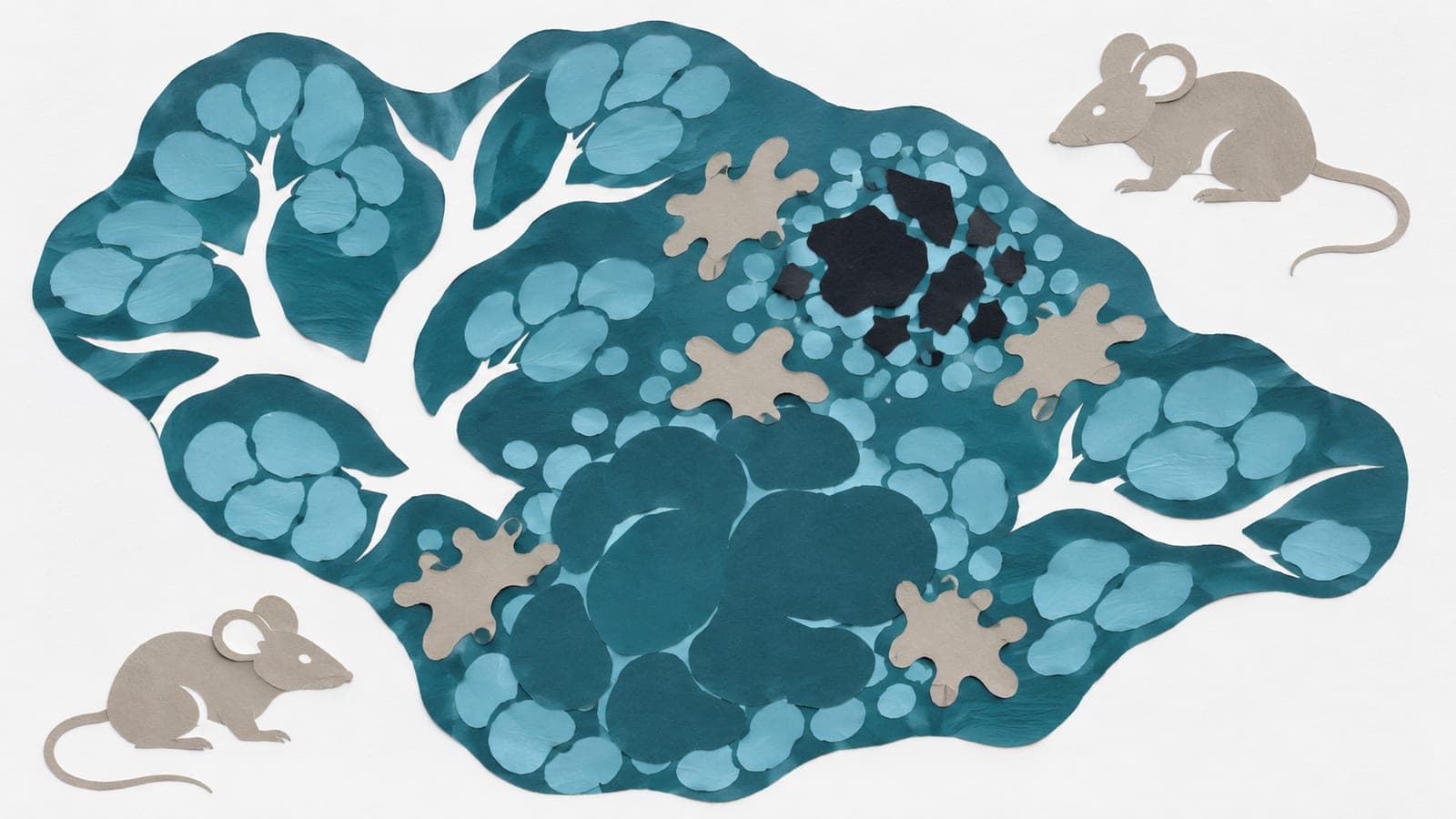
Mice engineered to develop mutations in either the Dnmt3a or Tet2 gene in blood cells received breast cancer cells from genetically matched mice in animal experiments. The experiments modeled clonal hematopoiesis, the expansion of groups of blood cells carrying acquired mutations.
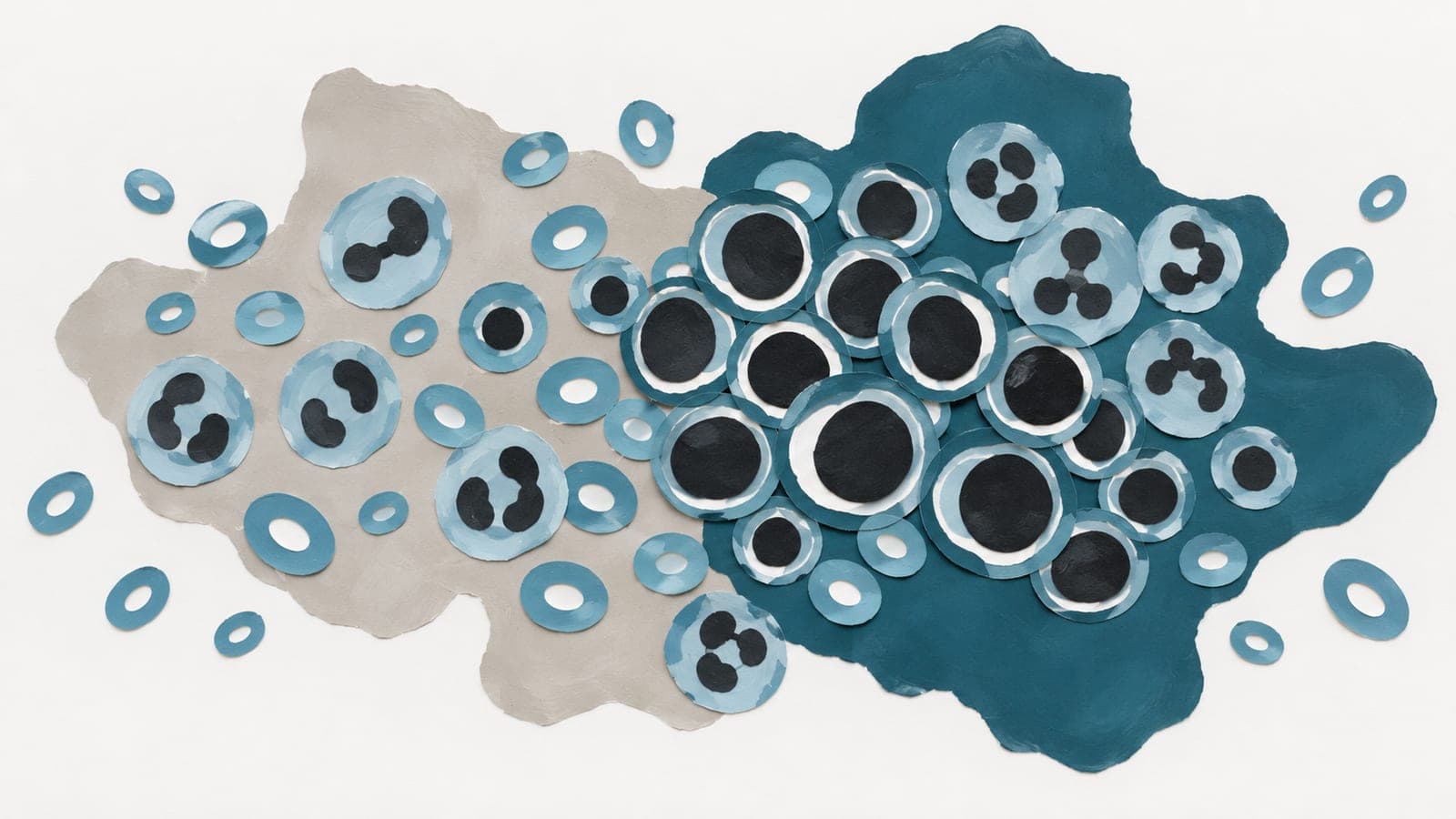
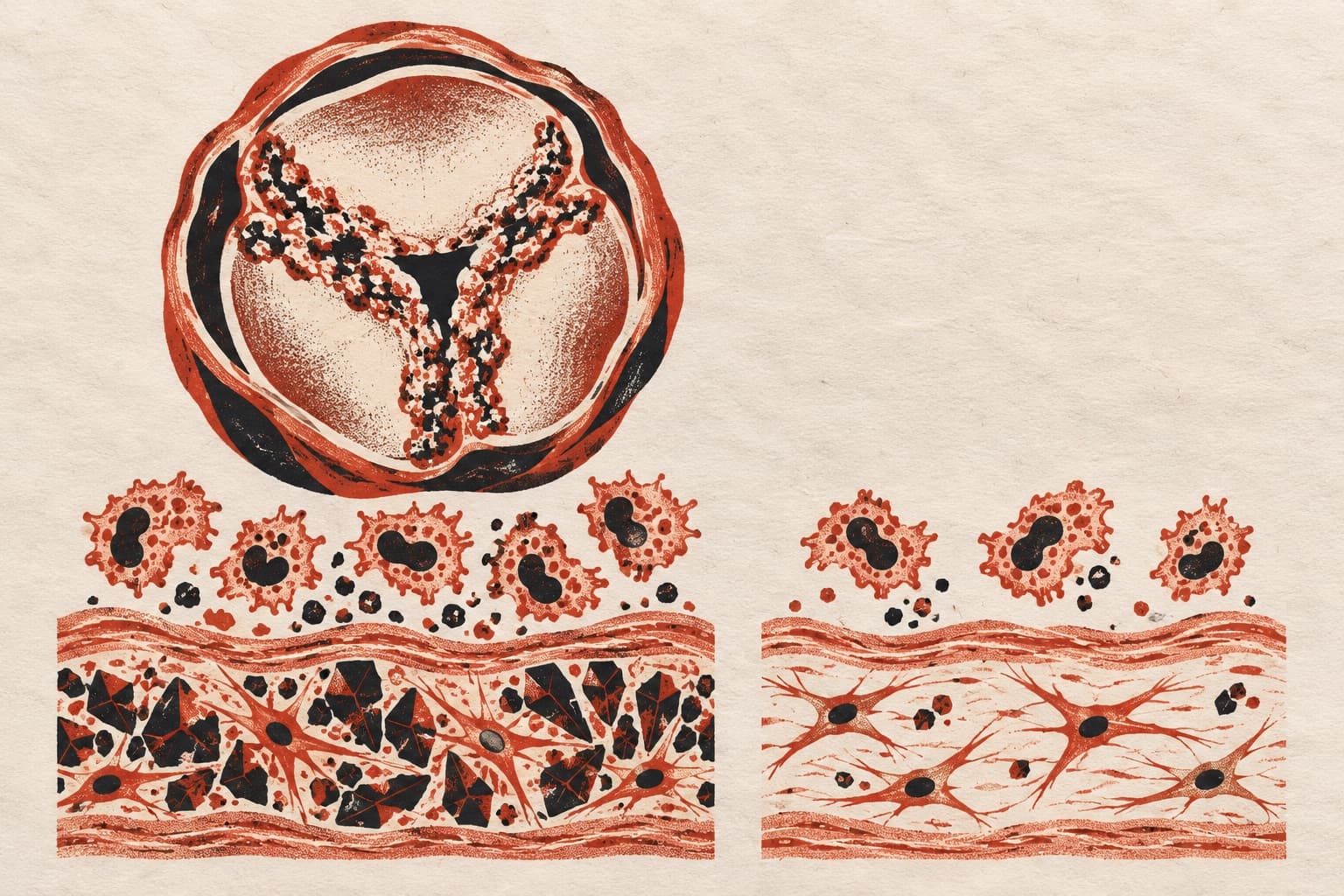
As the mice aged, Dnmt3a-mutant blood cells prevented breast cancer progression, while Tet2-mutant blood cells drove it. In the Dnmt3a model, macrophages, a type of immune cell within tumors, supported cancer-killing immune cells called T cells. In the Tet2 model, macrophages instead took on an inflammatory state that suppressed immune defenses. Blocking inflammation-related signals reduced tumor progression in aged Tet2-mutant mice and partly restored immune activity against tumors.
Why it matters
The age-related expansion of mutated blood cells is linked to worse outcomes in people with cancer. The authors identify inflammation linked to Tet2-mutant blood cells as a possible therapeutic target.
Caveats
Engineered blood-cell mutations and implanted mouse tumors leave open whether the same opposing effects occur in people with naturally arising mutations. The findings come from a preprint that has not been peer-reviewed.
Where the evidence stands
Il-1r1 blockade
- 2 independent labs in 1 country
- Funders: Fondation Brain Canada and 5 more
- 1 of 2 findings with company ties
DNMT3A
- 44 independent labs in 15 countries
- 1 finding against
- 22 trials, 4 with no results posted
- Funders: National Cancer Institute and others
- 19 of 78 findings with company ties
- 6 of 22 trials sponsored by developers of drugs aimed at it
The paper
Tet2-Clonal Hematopoiesis Promotes Whereas Dnmt3a-CH Inhibits Breast Cancer Progression During Aging
University Hospital Zurich and University of Zurich
bioRxiv, Nov 12, 2026, Open access, CC BY-ND, Preprint, not yet peer-reviewed
Comments
Be the first to comment.