Protein deposits rise in the human brain’s fluid-producing cells
Across 77 human cases, the average share of cells with deposits was near zero until age 40 and exceeded 50% after age 70.
Our read
Mechanisms- Studied:
- Preprint: cross-sectional study of 77 people
- In the record:
- The 984th paper on APOE with results in people; 3,683 on record in all.
- Why it’s aging research:
- It looks at how biology varies with age or lifespan.
Editor of record: Boris Djordjevic · AgingResearch.News
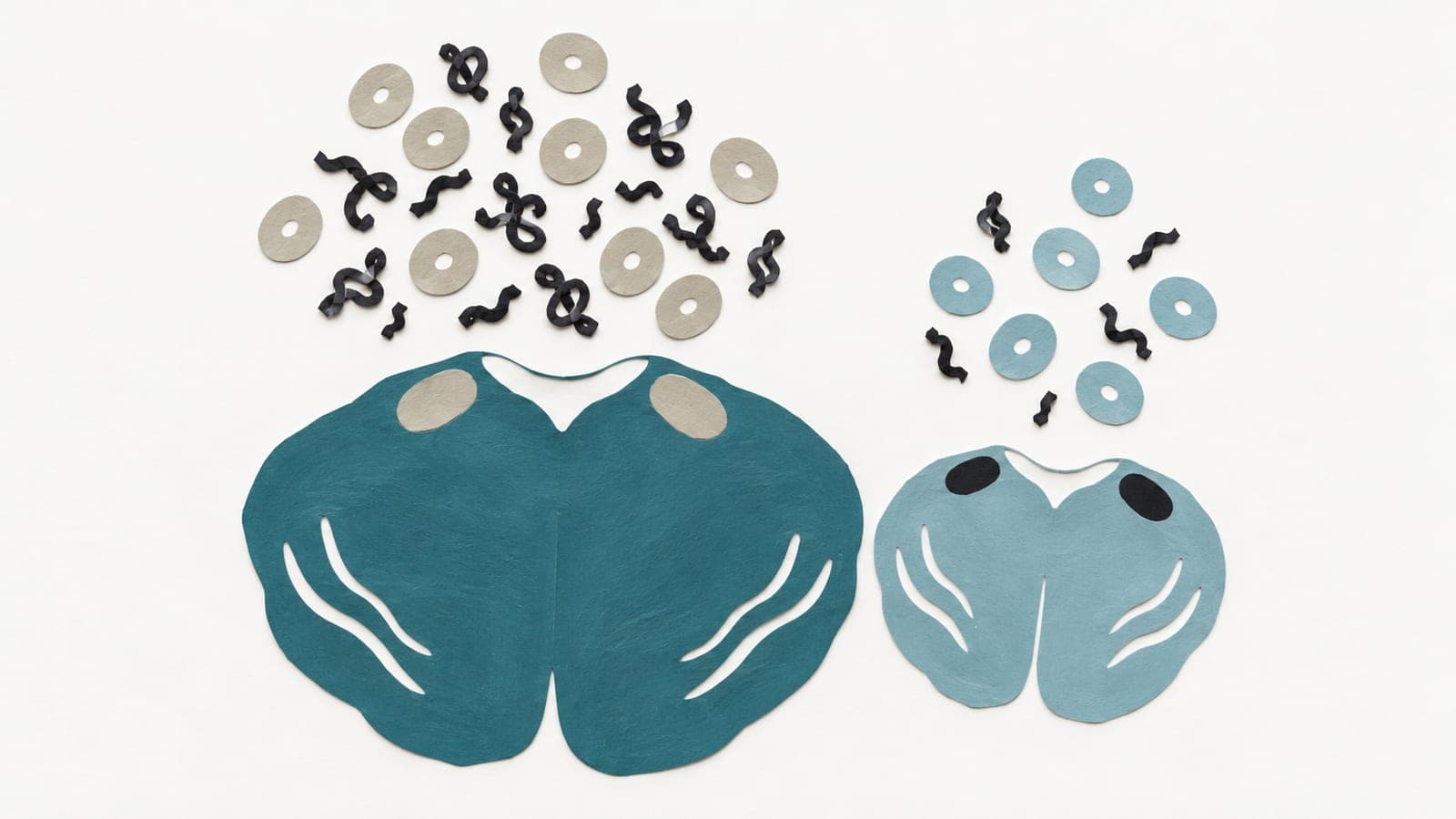
Human choroid plexus epithelial cells, which produce the fluid surrounding the brain and spinal cord, showed an age-linked rise in protein deposits called Biondi bodies in an observational study of 77 cases. Researchers used manual assessment and machine learning to examine stained tissue images from across the human lifespan.
On average, the share of cells with deposits was near zero until age 40, then rose steeply during people's 40s and 50s. It exceeded 50% after age 70. As this share leveled off, the amount of deposited material continued to rise with age. Deposits clustered in every case. Patterns among neighboring cells suggested cell-to-cell spread, which the authors proposed could account for the changing pace of accumulation. The share of cells with deposits was not associated with Alzheimer's disease.
Why it matters
The choroid plexus also forms a barrier between blood and cerebrospinal fluid. The authors suggested that these deposits and the choroid plexus may contribute to brain aging and disease.
Caveats
Comparisons across ages did not track changes within individuals, and the suggested cell-to-cell spread rested on spatial patterns. The work is a preprint and has not been peer-reviewed.
The paper
Midlife nonlinearities across scale in Biondi body amyloid formation in the human choroid plexus
Department of Pathology & Laboratory Medicine, University of California Irvine, Irvine, CA, USA
bioRxiv, Nov 6, 2026, Open access, Preprint, not yet peer-reviewed

Comments
Be the first to comment.