Suppressing nerve signals increased muscle mass in aged mice
Experiments in mice aged 1–25 months linked excessive signaling by norepinephrine, a nerve messenger, to age-related deterioration of nerves and muscles.
Our read
Mechanisms- Studied:
- Preprint: experiments in aged mice
- What changed:
- Suppressing norepinephrine-producing nerve cells increased hindlimb muscle mass in aged mice
- The catch:
- Strength and physical function results are absent from the abstract
- Why it’s aging research:
- It measures an outcome that worsens with age.
Editor of record: Boris Djordjevic · AgingResearch.News
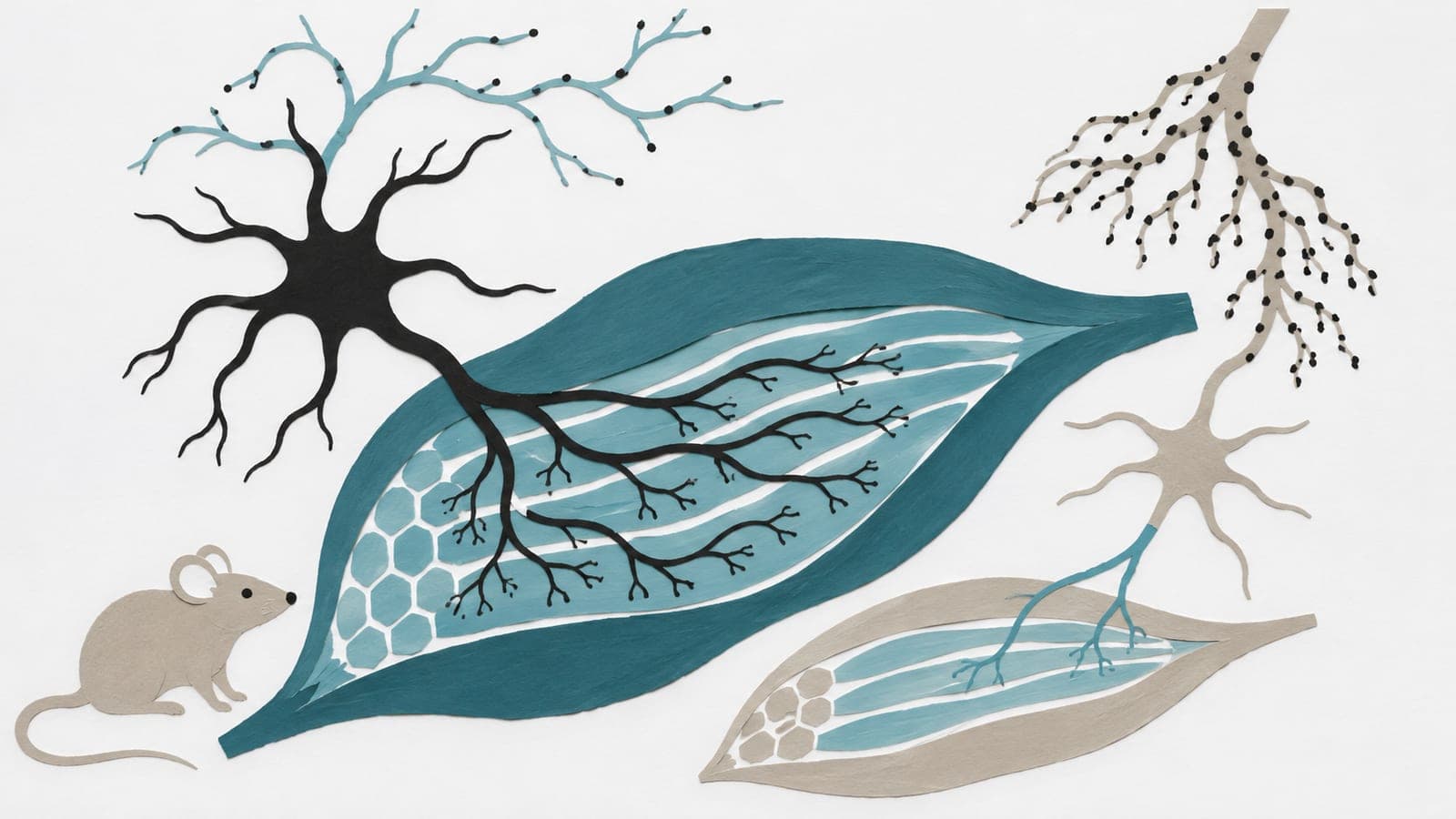
Mice aged 1–25 months were studied in experiments on how norepinephrine, a chemical messenger used by nerve cells, affects the spinal cord and muscles. The researchers examined electrical properties in 135 motor neurons, the nerve cells that control movement, from 81 mice. These cells became more easily activated with age. Aging also increased norepinephrine storage and its release during stimulation, but did not change its levels outside cells at rest.
In aged mice, the team selectively suppressed norepinephrine-producing nerve cells that send signals to the spinal cord. This increased hindlimb muscle mass, muscle fiber size and the size of motor neurons’ cell bodies. It also increased nerve supply at the junctions where nerves meet muscles.
Why it matters
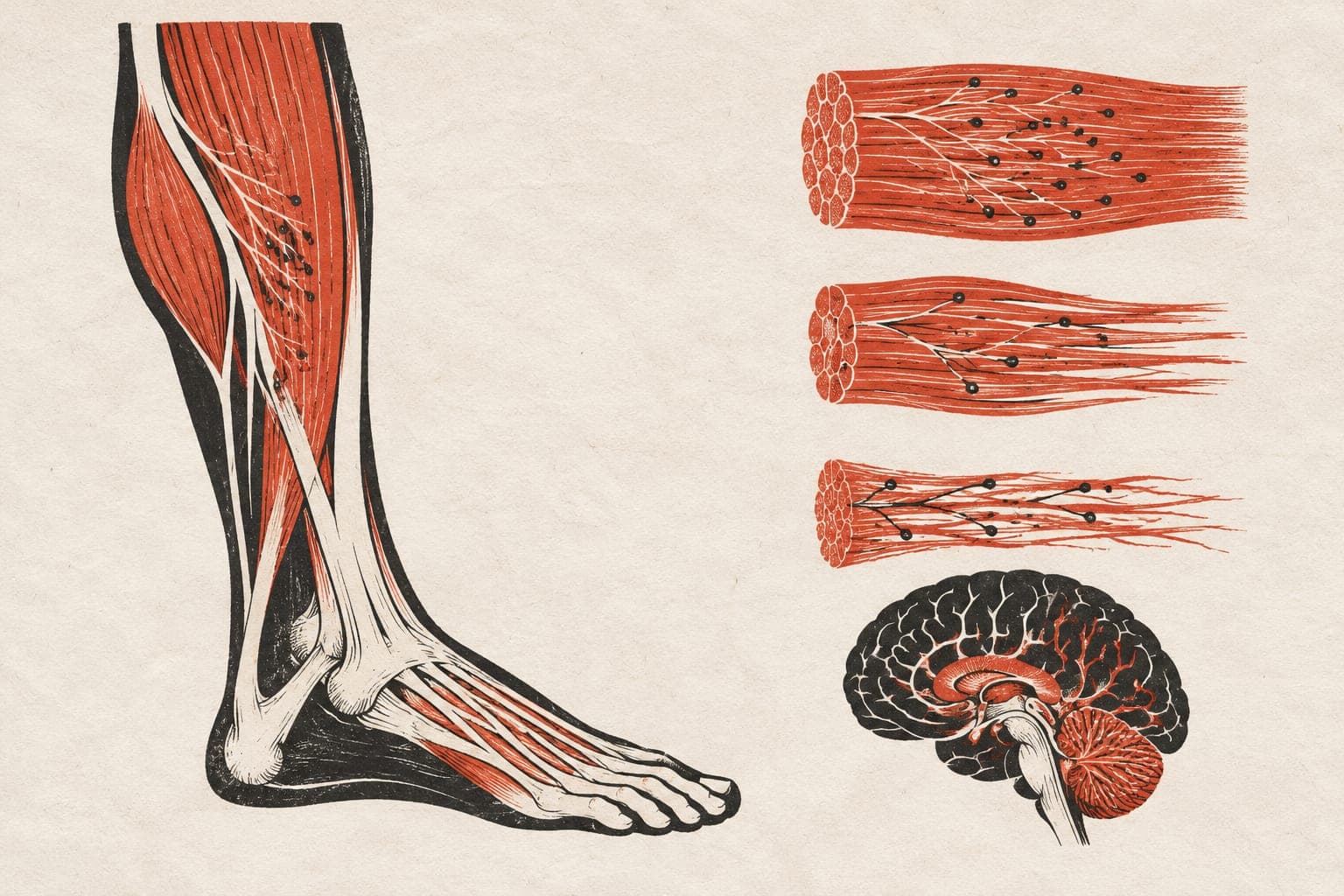
Sarcopenia, the age-related loss of muscle mass, strength and physical function, involves deterioration of the nerves controlling muscles. The authors identified spinal norepinephrine signaling as a potential target for this condition.
Caveats
The abstract does not report whether the structural improvements translated into better strength or physical function. The work was in mice and remains a preprint, not yet peer-reviewed.
- Chemogenetic suppression of descending noradrenergic neurons
- Synaptic transmission
- Synapse
- Norepinephrine
- Sarcopenia
- Mice
The paper
Spinal Noradrenergic Overdrive Promotes Reversible Motor Unit Aging and Sarcopenia
Wake Forest University Health Sciences
bioRxiv, Nov 3, 2026, Open access, Preprint, not yet peer-reviewed
Comments
Be the first to comment.